


You might not know that most preventable property damage starts as a small, documented maintenance miss—not a sudden failure. If you set a year-round calendar with seasonal inspections, routine HVAC and exterior care, and targeted preventative work on major systems, you’ll control costs instead of reacting to emergencies. You’ll also spot interior leaks, test safety devices, and track repair history so your budget matches real wear. The key is how you sequence the seven steps…
Build a Year-Round Property Maintenance Calendar
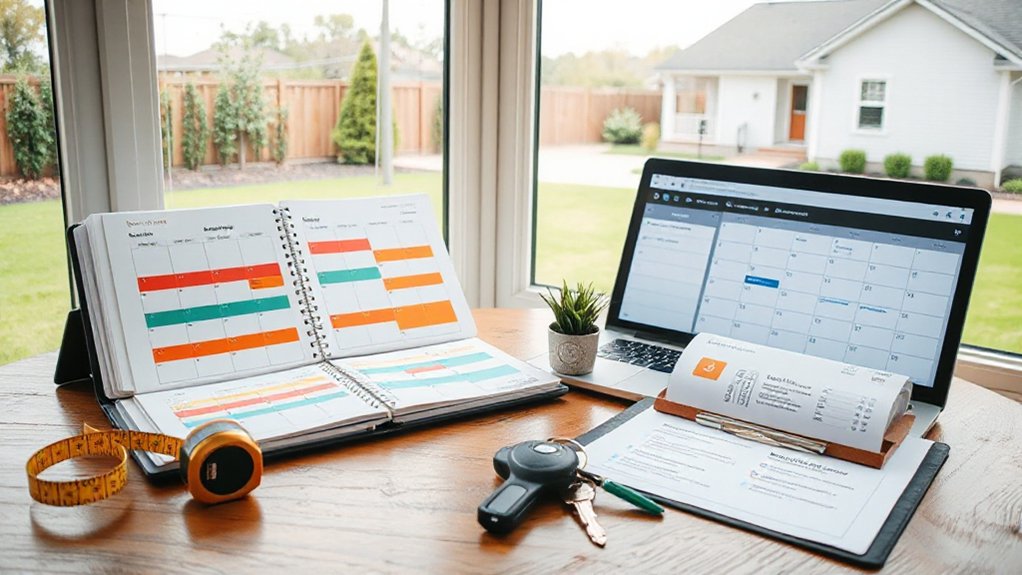
If you want to prevent small issues from turning into expensive repairs, build a year-round property maintenance calendar that breaks every task into monthly and seasonal checkpoints. Start by listing every recurring task, then assign due dates, materials, and estimated costs so you can batch purchases and avoid rush fees.
Set monthly reminders to change HVAC filters, test smoke/CO alarms, flush seldom-used drains, and log utility readings to spot spikes early.
Schedule quarterly Pest control with notes on bait stations, exclusion gaps, and treatment dates to keep warranties valid.
Map seasonal blocks for gutter cleaning, exterior caulking touch-ups, and Landscaping planning so planting, pruning, and irrigation adjustments align with local weather.
Track completion, vendors, and receipts to protect your budget and resale value.
Do Seasonal Property Maintenance Inspections Early
Schedule each seasonal inspection a few weeks before peak demand so you can book contractors at better rates and avoid rush fees. Walk the property with a checklist—roof, gutters, HVAC, exterior seals, drainage—and log any wear while conditions are still mild.
Fix small issues now so the next heatwave, freeze, or storm doesn’t turn them into expensive damage and emergency calls.
Schedule Inspections Before Peak
Before peak season hits, book your seasonal property inspections early so you can secure contractor availability, order parts with standard lead times, and fix small issues before they become urgent repairs. Set inspection timing on your calendar 30–60 days ahead of peak season, then confirm appointments in writing.
Create a checklist by system—roof, gutters, HVAC, plumbing, electrical, exterior lighting, pavement, and life-safety devices—so inspectors work efficiently and you avoid repeat visits.
Bundle units or buildings into one route to reduce trip charges and access volume pricing. Ask for photos, readings, and a prioritized quote with “must-do” versus “monitor” items.
Approve low-cost fixes immediately, and schedule larger work during off-peak windows to minimize labor premiums and downtime.
Track completion dates in a simple spreadsheet.
Spot Issues Before Weather
As seasonal weather shifts, you’ll save money and prevent downtime by running maintenance inspections early enough to catch minor defects while access is easy and parts are in stock. Walk the site with a checklist: roofs and flashing, gutters, grading, exterior seals, and sump pumps.
Test HVAC startup, change filters, and verify dampers and thermostats respond. Inspect electrical panels for moisture, label breakers, and confirm GFCIs work. Photograph issues, log measurements, and assign a fix-by date before contractors book out.
Prioritize low-cost repairs that prevent high-cost failures, like sealing penetrations and replacing brittle hoses. Tie findings to Weather preparedness: verify backup power, fuel, and drain paths.
Fold results into emergency planning by updating shutoff maps, contact lists, and spare-part minimums. Review progress weekly.
Prioritize Preventative Property Maintenance for Big Systems
Where do the biggest maintenance costs usually hide? In your property’s core systems—electrical panels, plumbing mains, roofs, fire protection, elevators, and security. You’ll cut surprises by treating them like assets with calendars, not reactions.
Build a 12‑month preventative plan that lists inspections, test intervals, and expected service life for each system, then assign owners and budget lines.
Track readings (pressure, amperage, leak rates), log small anomalies, and approve fixes before they cascade.
Schedule vendor site walks quarterly and require written condition reports with photos.
Plan System upgrades based on lifecycle data, not breakdowns, and price them into next year’s capex.
Strengthen emergency preparedness with shutoff maps, spare parts, and after-hours contacts.
Review costs monthly and adjust priorities based on risk.
Keep HVAC Property Maintenance on a Set Schedule

If you put HVAC maintenance on a fixed calendar instead of waiting for comfort complaints, you’ll reduce emergency calls, extend equipment life, and keep utility costs predictable. Set quarterly inspections and lock them into your CMMS with reminders, vendor contacts, and a not-to-exceed budget.
Each visit, you should replace filters, clean coils, verify thermostat calibration, test safeties, inspect belts, check refrigerant charge, and tighten electrical connections. Record amp draws, temperature splits, and static pressure so you can spot drift early and protect HVAC efficiency.
Schedule pre-season tune-ups: cooling in spring, heating in fall, plus a mid-summer check for high-load sites. Review trend logs monthly, and authorize minor fixes immediately to avoid costly failures. This disciplined cadence increases system lifespan and simplifies annual forecasting.
Protect Your Property With Routine Exterior Maintenance
Even though exterior issues start small, you can prevent expensive water intrusion and safety hazards by putting the outside of the building on the same fixed schedule as your interiors. Walk the perimeter monthly and log cracks, loose flashing, and clogged downspouts. Clear gutters each spring and fall, then test drainage by running a hose to confirm water exits 6 feet from foundations.
Follow seasonal Landscaping tips: trim branches 3 feet from siding, keep mulch below weep holes, and grade soil away from walls. Inspect caulking around windows and doors every quarter and replace failed beads before storms hit.
For exterior paint care, wash siding annually, spot-prime bare areas, and plan full repaint cycles before peeling exposes wood or metal. Budget small touch-ups now to avoid big envelope repairs later.
Stay on Top of Interior Property Maintenance and Safety
Put interior inspections on your calendar—monthly quick checks and a quarterly walkthrough—to catch wear, leaks, and small repairs before they turn into big bills.
Test smoke and CO alarms, GFCIs, and emergency lighting on a set schedule, and replace batteries or faulty units immediately.
Keep moisture in check by inspecting under sinks, around appliances, and in bathrooms, then fix drips fast and run ventilation to prevent mold.
Schedule Routine Interior Inspections
While exterior issues often show up first, your interior can hide the leaks, wear, and safety hazards that cost the most to fix when they’re missed. Put interior inspections on your calendar: monthly quick checks and a deeper quarterly walk-through.
Start at the entry and move room by room, noting stains on ceilings, soft flooring, peeling caulk, slow drains, and sticking doors that signal moisture or settling. Check under sinks, around appliances, and near windows for condensation, warped trim, or pest activity.
Review interior decor and furniture arrangement so vents aren’t blocked and heavy pieces aren’t stressing floors or walls. Log findings, price materials, and schedule small repairs within seven days to prevent expensive callbacks. Keep photos for comparisons.
Test Safety Devices Regularly
Because a dead battery or clogged sensor can turn a minor incident into a major loss, test your smoke and carbon monoxide alarms, GFCI/AFCI outlets, and fire extinguishers on a set schedule: run alarm test buttons monthly, replace batteries at least annually (or sooner if you hear chirping).
Verify GFCIs with the built-in TEST/RESET monthly, and check extinguisher pressure gauges and seals quarterly. Log each result in a simple checklist so you don’t double-buy supplies or miss a date.
During alarm testing, confirm each unit sounds clearly from bedrooms and hallways, and replace any device past its labeled end-of-life.
For outlets, trip and reset once per receptacle, then verify power returns.
For fire safety, keep extinguishers mounted, unobstructed, and serviced when gauges drift or seals break.
Prevent Moisture And Mold
Even small leaks or damp air can seed mold behind walls and under flooring, so you’ll save money by treating moisture control as a scheduled task instead of a one-off fix. Each month, scan under sinks, around toilets, and at water heater fittings for drips; tighten connections and replace worn supply lines before they burst.
Quarterly, check attic and crawlspace insulation for damp spots and confirm gutters discharge at least 6 feet from the foundation. Add Ventilation improvements by cleaning bath fan grilles, confirming fans vent outdoors, and running them 20 minutes after showers.
Compare Dehumidifier options for basements: set 45–50% RH, empty or drain to a sump, and clean filters. Log readings to spot trends early and avoid costly remediation.
Track Property Maintenance Requests and Repair History
If you track every maintenance request from intake to closeout, you’ll prevent small issues from turning into expensive repairs and missed deadlines. Use Maintenance technology to centralize Request tracking, assign priority codes, and stamp each ticket with dates, photos, and unit/asset IDs.
Set response and completion SLAs, then auto-route work to the right trade so nothing sits in someone’s inbox.
Log repair history the moment you close a ticket: parts used, labor hours, vendor cost, warranty status, and root cause. Review monthly trends to spot repeat failures, renegotiate vendor rates, and schedule preventive work before peak seasons.
Keep a rolling 12-month backlog report, and budget replacements using real failure data, not guesswork.
Frequently Asked Questions
What Maintenance Tasks Are Tenants Responsible for Versus Property Managers?
You handle Tenant responsibilities: keep your unit clean, report issues fast, replace bulbs/batteries, follow filter and trash schedules, avoid damage. Your Property manager duties: repairs, inspections, landscaping, systems servicing, compliance, and cost-tracked vendor scheduling.
How Do I Budget Annually for Unexpected Property Repairs and Emergencies?
You should set an Emergency fund equal to 1–3% of property value or three months’ rent, then schedule monthly transfers. You’ll track repairs quarterly, price quotes annually, and prioritize Preventive measures to reduce surprise costs.
Which Software Tools Best Streamline Maintenance Scheduling and Work Orders?
You’ll streamline scheduling with MaintainX, UpKeep, or Fiix—fast mobile checklists versus costly downtime. For Maintenance planning, pick recurring calendars, SLA alerts, and parts tracking. Guarantee Software integration with QuickBooks, Google Calendar, and asset IoT.
What Insurance Coverage Gaps Should I Check Related to Property Maintenance?
Check your Insurance policies for Coverage exclusions on wear-and-tear, mold, sewer backup, and contractor errors. Confirm limits for roof, HVAC, and liability. Schedule annual reviews, document inspections, and add riders before renewals increase premiums.
How Can I Vet and Hire Reliable Contractors for Ongoing Maintenance?
You can vet and hire reliable contractors by using a contractor vetting process: verify licensing, insurance, references, and written bids. Set SLAs, maintenance calendars, and fixed-rate pricing. Match Landlord responsibilities, require lien waivers, and warranties.
Conclusion
Treat your property like a lighthouse you’re sworn to keep lit. You don’t wait for the storm; you check the lens, seal the door, and log each repair before night falls. Build your calendar, run early seasonal inspections, and schedule HVAC, exterior, and interior checks on set dates. Test alarms, watch for leaks, and prioritize big systems first. Track every request and cost, so small fixes don’t become shipwreck bills.