
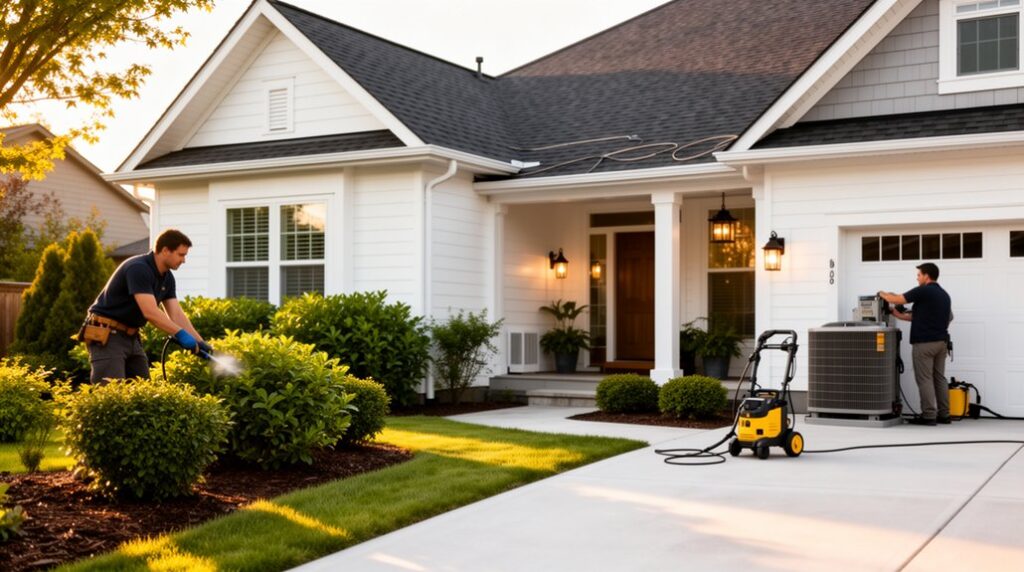

Studies estimate routine maintenance can cut long-term repair costs by 30% or more, and that savings often shows up in your resale price. You start by documenting today’s condition, then you run seasonal checklists that catch leaks, HVAC drift, and exterior wear early. You fix small defects fast, keep photos and receipts, and prioritize upgrades that protect safety, code compliance, and curb appeal. The next steps decide whether your budget prevents failures—or pays for them later.
Start With a Property Maintenance Baseline

Before you plan upgrades, document your property’s current condition with a maintenance baseline that’s specific, measurable, and easy to revisit. Walk every unit and common area, then log roof age, HVAC serials, water-heater capacity, panel amperage, plumbing material, window condition, and safety devices.
Capture photos, meter readings, and warranty dates, and store them in a single system of record.
Convert observations into KPIs: work-order volume per unit, average response time, repeat-repair rate, and capex spend versus budget.
This baseline supports a defensible Property appraisal because you can show asset health, remaining useful life, and risk reduction with evidence.
It also improves Tenant relations: you set service standards, communicate known issues, and track follow-through.
Reassess quarterly to flag drift early.
Build a Seasonal Property Maintenance Checklist
Turn your baseline into a seasonal checklist so you can schedule high-impact tasks, track completion dates, and reduce costly surprises.
In spring, you’ll prioritize cleaning and inspection—gutters, roof, grading, HVAC service, and moisture checks—to catch small defects before they escalate.
In summer and fall, you’ll shift to exterior upkeep and winterization, including siding/paint touch-ups, landscaping control, sealing gaps, servicing heating equipment, and protecting plumbing to prevent freeze damage.
Spring Cleaning And Inspection
Why wait for a costly repair to reveal itself? Use spring cleaning as your reset point and pair it with an inspection checklist that catches small issues before they hit your budget.
Start indoors: replace HVAC filters, vacuum return vents, and log thermostat readings; efficient airflow can cut energy waste.
Check under sinks for moisture, tighten supply lines, and test shutoff valves.
Inspect ceilings and window frames for staining that signals leaks.
Clean dryer vents end-to-end; lint buildup is a leading fire risk.
Test GFCI/AFCI outlets, smoke alarms, and CO detectors; record dates for compliance.
Flush a water heater briefly to remove sediment and note pressure changes.
Finish by documenting findings with photos and a repair timetable.
Summer Exterior Upkeep Tasks
As temperatures climb, your exterior takes the biggest seasonal hit—UV exposure, rapid material expansion, and heavy-use wear can accelerate paint failure, roof deterioration, and moisture intrusion.
Start with a midday walk-around: photograph siding, trim, and caulk lines, then spot-repair cracks before they widen.
Clean gutters and downspouts and confirm discharge flows 4–6 feet from the foundation.
Wash mildew off siding and decks, then re-seal high-traffic wood when water no longer beads.
Inspect shingles and flashing from the ground with binoculars, and replace missing fasteners on metal roofs.
For Landscaping aesthetics, mow at 3–4 inches, edge hardscapes, and refresh mulch to 2–3 inches, keeping it off siding.
Test exterior lighting at dusk; replace dim LEDs and aim fixtures to reduce glare.
Fall Winterization Checklist
Before the first freeze locks in minor defects, you’ll get the best ROI by sealing air and water paths that drive winter energy loss and moisture damage. Caulk exterior gaps, weatherstrip doors, and add foam gaskets behind outlets on exterior walls.
Clean gutters and extend downspouts 4–6 feet to prevent ice dams and foundation saturation. Service the furnace, replace filters (MERV 8–13 as compatible), and test CO/smoke alarms to protect Indoor air quality and reduce emergency calls.
Drain and shut off exterior spigots, blow out irrigation lines, and store hoses. Inspect roof flashing, chimney caps, and attic insulation depth.
For Holiday decorating, use LED strings, outdoor-rated cords, and avoid stapling through shingles or siding. Check sump pumps and backups.
Fix Small Issues Before They Become Big Repairs
If you catch minor defects early, you’ll protect your property value and avoid paying “emergency pricing” later. Track small red flags: hairline foundation cracks, slow drains, loose shingles, caulk gaps, and flickering breakers. Document date, location, photo, and severity so you can spot change over 30–60 days.
Set decision thresholds: any active leak, repeated tripped breaker, or crack widening beyond 1/8 inch gets same-week service. Request written scope, parts list, and labor hours for accurate Cost estimation, then compare at least two bids.
Bundle related fixes (seal + paint + trim) to reduce mobilization fees, but don’t defer safety items. This disciplined triage cuts Emergency repairs, lowers downtime, and keeps inspection reports clean.
Protect Property Value With Preventative Maintenance
When you treat maintenance like a scheduled system instead of a reaction, you protect resale value, reduce unplanned outages, and keep inspection findings minimal.
Build a calendar for HVAC servicing, water heater flushing, smoke/CO detector testing, and plumbing shutoff checks, then log dates, parts, and readings.
Use measurable triggers: replace filters by pressure drop, tighten electrical connections when thermal scans show hotspots, and clean drains when flow rates slow.
Document warranties and serial numbers to speed repairs and support Insurance claims if damage occurs.
Pair prevention with emergency preparedness: label shutoffs, store spare breakers and valves, and keep a vendor list with response times.
A simple checklist plus quarterly walk-throughs cuts deferred maintenance risk and preserves appraised condition.
Boost Property Value With Exterior Maintenance
You’ll boost property value faster when you treat exterior maintenance as an ROI checklist: enhance curb appeal with clean paint lines, clear windows, and a power-washed entry.
You’ll also protect the home’s highest-cost components by keeping shingles intact, sealing flashings, and clearing gutters and downspouts to prevent water damage.
Finish strong by revitalizing landscaping and hardscapes—trim trees off the roofline, edge beds, patch cracks, and repair pavers—so the exterior reads as low-risk and move-in ready.
Enhance Curb Appeal
How quickly can exterior upkeep translate into real dollars at closing? Appraisers and buyers anchor on first impressions within seconds, and small, measurable upgrades can lift perceived condition and reduce negotiation pressure.
Start with driveway sealing to prevent cracks, water intrusion, and edge breakup; a fresh, even finish signals “well-maintained” and photographs better in listings.
Refresh trim and doors with high-durability exterior paint, and replace warped house numbers and mailbox hardware for crisp legibility.
Add garden lighting to highlight pathways and entry points; consistent illumination improves safety scores during showings and extends viewing hours.
Keep shrubs trimmed below windows, edge beds, and maintain uniform mulch depth to frame the façade.
Wash siding and walkways, then spot-repair loose pavers and railings.
Maintain Roof And Gutters
Curb appeal gets buyers to the door, but roof and gutter condition protects the value they’re willing to pay once they look closer. Schedule roof inspections at least annually and after major storms to document shingle wear, flashing integrity, and penetrations around vents and chimneys.
Catching minor failures early helps you avoid sheathing rot, mold, and interior repairs that can erase thousands in equity.
Make gutter cleaning a routine: clear debris every spring and fall, confirm downspouts discharge 4–6 feet from the foundation, and check for sagging, leaks at seams, and standing water.
Install or repair drip edge and gutter guards only if they don’t trap granules or overflow. Keep inspection notes and invoices; buyers and appraisers treat maintenance records as risk reduction.
Refresh Landscaping And Hardscapes
Because buyers often equate exterior upkeep with overall maintenance quality, invigorating landscaping and hardscapes can lift perceived value and shorten days on market.
Start with landscaping design that reads “low risk”: edge beds, add fresh mulch, prune to clear windows, and reseed thin turf for even color. Replace dead plants with drought-tolerant perennials and add drip irrigation to cut water use and protect plantings.
Then audit hardscape features: pressure-wash walks, repair pavers, re-sand joints, and seal concrete to reduce staining and spalling. Regrade soil to slope away from the foundation and refresh gravel or stepping stones to eliminate trip hazards.
Add LED path lighting for safety and nighttime curb appeal. Aim for clean lines and consistent materials throughout.
Keep Property Value High With Interior Upkeep
When you stay ahead of interior wear and tear, you protect the finishes and systems buyers scrutinize most during showings and inspections. Patch nail holes, touch up baseboards, and re-caulk tubs before discoloration spreads. Replace HVAC filters every 1–3 months, test GFCI outlets monthly, and service smoke/CO detectors twice a year to reduce inspection flags.
Deep-clean high-traffic surfaces quarterly: grout, carpet edges, and vent registers. Fix slow drains and running toilets quickly; small leaks can waste hundreds of gallons monthly and signal neglect. Keep interior decor neutral and consistent, and optimize furniture arrangement to improve sightlines and perceived room size.
Use LED bulbs for uniform color temperature, and address squeaks, loose hinges, and door latches so every room feels tight, quiet, and well-cared-for.
Track Property Maintenance With Photos and Receipts
Even if you handle every repair promptly, you won’t capture the full value unless you can prove it with documentation. Use time-stamped photos before and after each job to show condition, scope, and finish quality.
Save receipts, warranties, and contractor invoices, then tag each file by system (HVAC, roof, plumbing), date, and cost for fast retrieval.
Rely on Digital documentation: store everything in cloud folders and back it up monthly. Track labor hours and materials so you can quantify upkeep totals and compare them year over year.
Connect records to Maintenance scheduling by linking each photo set and receipt to the task in your calendar or app. When inspectors, appraisers, or buyers ask, you’ll produce a clean audit trail in minutes, not days.
Plan Maintenance Upgrades That Raise Resale Value
Good documentation proves the work you’ve done; a smart upgrade plan guarantees the next dollars you spend show up in resale.
Start with a baseline condition audit: roof age, HVAC efficiency, plumbing materials, drainage, and electrical panel capacity.
Prioritize fixes that reduce buyer risk and inspection objections—water intrusion, outdated wiring, and deferred exterior maintenance.
Use renovation planning to stage projects: safety and code first, envelope second (windows, insulation, sealing), then kitchens and baths.
Track local comps and target upgrades that match neighborhood ceilings; over-improving can cap returns on your property investment.
Choose midrange materials with broad appeal, document permits and warranties, and set a 12–18 month timeline.
Reassess quarterly, comparing bids, energy bills, and expected ROI.
Frequently Asked Questions
What Maintenance Tasks Require Permits or Inspections in My Area?
You’ll typically need permits or inspections for structural changes, plumbing reroutes, HVAC replacements, and panel upgrades requiring electrical inspections. Check local codes for landscaping permits tied to grading, retaining walls, drainage, or tree removal.
How Much Should I Budget Annually for Routine Property Maintenance?
Budget 1%–3% of your home’s value annually; like tending a ship, you prevent costly leaks. Allocate 10%–20% to Landscaping upgrades and plan Exterior painting every 5–10 years to protect siding.
Should I Hire Professionals or Do Maintenance Tasks Myself?
You should mix both: tackle low-risk DIY projects, but hire pros for electrical, HVAC, roofing, and plumbing. Use contractor selection checklists—licenses, insurance, 3 bids, references—to cut defects, rework, and long-term costs.
Which Maintenance Improvements Offer the Best Return on Investment?
Landscaping upgrades and Exterior painting deliver the best ROI: REALTORS report landscaping can recover ~100% of costs. You’ll also boost curb appeal and reduce weathering; prep, quality materials, and seasonal timing improve results and appraisals.
How Do I Prioritize Maintenance When Planning to Sell Soon?
Prioritize safety and visible defects first: roof leaks, HVAC, electrical, plumbing. Then maximize curb appeal with low-cost landscape upgrades and paint. Focus on 1–3 week projects buyers notice. Document repairs, permit records, warranties.
Conclusion
Treat your property like a ship: if you log its condition, follow seasonal checklists, and patch small leaks fast, you won’t face a costly hull breach. You protect value by servicing HVAC, plumbing, and roofing on schedule, not by guessing. You boost resale with code-driven safety fixes and curb-appeal upgrades that pencil out. Keep photos, receipts, and dates—buyers trust evidence. Reassess quarterly, and you’ll stay seaworthy in any market.