
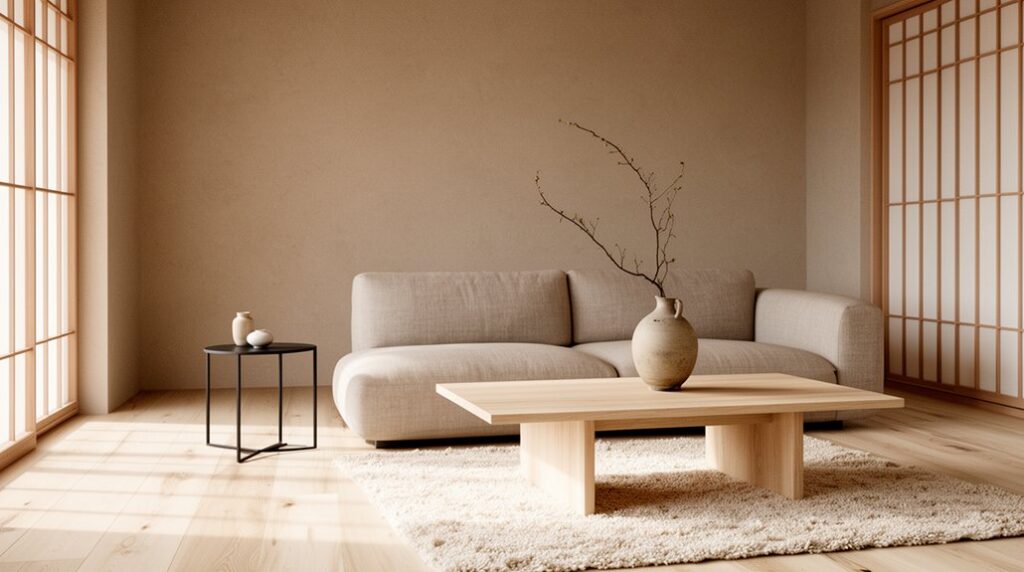

After you clear one tabletop and one corner, the room starts to feel like a quiet shoreline at low tide—open, steady, and easy to cross. You keep the palette soft with whites, greiges, and warm wood, then choose low-profile seating that lets the space breathe. You add texture through linen, wool, and subtle ceramics, not clutter. You layer warm light and hide storage in plain sight, but one choice still decides whether it feels calm or cold…
Japandi Living Room Essentials to Get Right
If you want your minimalist Japandi living room to feel calm and intentional, start by getting the essentials right: clean-lined seating, a low profile coffee table, layered natural textures, and a tight, warm-neutral palette.
Anchor the room with one well-made sofa and a pair of simple chairs, then keep circulation open so you can move easily and breathe.
Use feng shui principles by facing seating toward the entry without blocking it, and by avoiding sharp furniture corners in main pathways.
Choose a few honest materials—wood, linen, wool, ceramic—and repeat them for quiet cohesion.
For walls, practice art display techniques: hang one or two pieces at eye level, give them generous negative space, and align frames with key furniture edges.
Keep storage closed, clutter-free, and practical.
Choose a Minimalist Japandi Color Palette
Because color sets the room’s emotional temperature, you’ll want a minimalist Japandi palette that stays warm, quiet, and rooted in nature. Start with soft whites, oat, sand, and greige to keep the space calm and light.
Layer muted clay, sage, or ink as secondary tones so contrast feels measured, not busy.
Use natural wood undertones as your bridge between Japanese restraint and Scandinavian coziness; let them guide paint and textile choices.
Skip high-chroma brights, but don’t fear depth: charcoal, deep olive, or smoky navy can ground the room when used sparingly.
If you love Bold accent walls, choose one in a low-sheen, earthy hue. Then echo it in small details and statement art for balanced focus.
Pick Low-Profile Japandi Living Room Furniture
After you’ve set a calm, minimalist Japandi color palette, you can anchor the room with low-profile furniture that keeps sightlines open.
Choose a low-slung sofa with clean lines and supportive cushions so you can sit comfortably without visual weight.
Pair it with a streamlined coffee table in natural wood or matte finishes to hold essentials while staying quietly in the background.
Low-Slung Sofa Selection
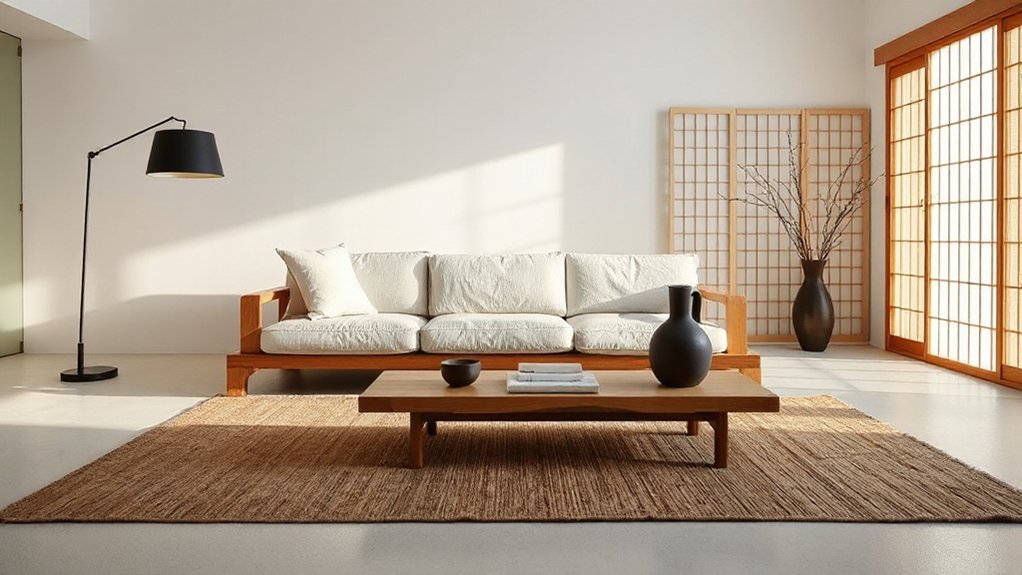
While a Japandi living room prizes calm above all, your sofa still needs to do the heavy lifting, so choose a low-slung profile that keeps sightlines open and the mood grounded. Aim for a firm seat and a simple frame in ash, oak, or walnut, then wrap it in linen, cotton, or textured wool in warm neutrals. Keep arms slim and cushions tailored so the silhouette stays quiet, not bulky.
If you host often, look at compact sectional styles that hug the perimeter and preserve breathing room. Pair the sofa with thoughtful ottoman arrangements—one large piece for stretching out, or two smaller cubes you can slide, stack, or tuck away. Choose durable, removable covers so daily living stays effortless.
Streamlined Coffee Tables
A low-slung sofa sets the calm baseline, and a streamlined coffee table keeps that open, grounded feeling intact. Choose a low-profile piece with clean edges so your sightlines stay clear and the room breathes.
Light oak, ash, or walnut brings warmth; matte black steel adds quiet structure without visual noise.
Keep the top thin and the footprint modest, but make it practical: rounded corners for easy flow, a lower shelf for trays and books, or hidden storage for remotes.
You’ll echo Scandinavian decor by favoring pale wood and honest joinery, and you’ll honor modern minimalism by limiting hardware and ornament.
Leave a few inches around the table, and you’ll create a gentle path that feels intentional and calm.
Use Natural Materials Without Adding Clutter
Because Japandi thrives on restraint, you can bring in natural materials by choosing a few high-quality, tactile pieces instead of many small accents. Let one solid-wood side table, a stone tray, or a ceramic vase carry the room, and keep surfaces clear so each material reads calm and intentional.
For Natural decor that stays minimal, repeat the same finish twice—like oak and matte clay—then stop. You’ll create cohesion without visual noise.
Practice clutter management by giving every organic object a job: a wood bowl for keys, a cork box for remotes, a rattan basket for magazines. Store duplicates out of sight and edit seasonally, keeping only what you use weekly.
When you add a new natural piece, remove another, so the space stays airy and grounded.
Build Cozy Texture With Japandi Textiles
Even if you keep furniture and decor pared back, Japandi textiles let you add warmth without adding clutter. Choose a tight palette—oat, charcoal, clay—and repeat it across cushions, a throw, and a low-pile rug so the room feels calm and cohesive.
Favor linen, cotton, wool, and washed canvas for a dry, tactile hand that reads natural.
Use Fabric layering with restraint: one throw over the sofa, one cushion in a different weave, and a rug that anchors seating. Keep Textile patterns subtle—thin stripes, small checks, or quiet herringbone—so texture leads and visual noise stays low.
Finish with clean edges, hidden zippers, and easy-care covers you can rotate seasonally without reworking the whole space.
Light a Minimalist Japandi Living Room Softly
You soften a minimalist Japandi living room by choosing a diffused ambient glow that feels calm and even. You layer warm lighting with a paper lantern, a low floor lamp, and a small table light to guide the room without glare.
You keep bulbs warm and dimmable so the space stays quiet, functional, and grounded.
Diffused Ambient Glow
When the sun dips and shadows soften, a diffused ambient glow sets the calm foundation a minimalist Japandi living room needs. You’ll want light that feels even, gentle, and quiet, so the room stays spacious and grounded.
Choose a simple ceiling fixture with an opaque shade, a rice-paper pendant, or a flush mount that spreads soft lighting without glare. Aim bulbs toward walls or a pale ceiling so illumination bounces naturally, reducing harsh contrast.
Keep color temperature warm-neutral and consistent, and use a dimmer to match evening rituals without shifting the mood. Let light reveal texture—wood grain, linen, matte plaster—rather than create hotspots.
With fewer sources and cleaner lines, your diffused ambient glow supports rest, conversation, and uncluttered focus every night.
Layered Warm Lighting
Although a diffused ceiling glow steadies the room, layered warm lighting gives your minimalist Japandi living room its quiet depth. Add a low ambient lamp near the sofa to soften edges and support reading without glare.
Place another, smaller ambient lamps on a shelf or side table to build gentle gradients and keep corners calm. Choose 2700K bulbs, linen shades, and dimmers so you can match morning clarity and evening hush.
Anchor the floor with a paper lantern or slim wood lamp, then echo that warmth with candle arrangements on a tray of stone or oak. Keep scents subtle and holders simple, so the flame feels like part of the architecture. You’ll guide the eye, not clutter it.
Style Shelves and Surfaces the Japandi Way
As the room settles into quiet balance, shelves and surfaces should carry only what earns its place. Choose a few tactile pieces: a ceramic bowl, a linen-covered book, a smooth stone, a quiet candle.
Build Artful shelf displays by mixing heights and leaving breathing room, letting wood grain and shadow do the work.
Anchor tables with Decorative plant arrangements that feel light and sculptural—one branch in a vase, moss in a shallow tray, or a small fern in clay.
Keep colors muted, then add contrast through texture: matte pottery beside glass, pale oak beside blackened metal.
Group objects in threes, align edges, and let negative space frame each item so the room stays calm and intentional.
Keep Your Japandi Living Room Easy to Maintain
To keep the calm feeling without constant upkeep, design your Japandi living room so cleaning takes minutes, not hours. Choose closed storage for remotes, cords, and loose items, and leave one open tray for daily essentials.
Pick washable slipcovers, wipeable wood finishes, and a low-pile rug that won’t trap dust. Place a lidded basket by the sofa so you can reset the room in one sweep.
Limit Decorative accents to a few tactile pieces—ceramic, linen, or light wood—so you dust less and appreciate more. Keep plants in simple pots with saucers to protect floors.
For Seasonal refreshes, rotate one throw, one cushion, or one branch arrangement, and donate what you replace. You’ll keep balance and breathe easier daily.
Frequently Asked Questions
How Do I Blend Japandi Style With Existing Traditional Furniture Pieces?
You blend Japandi with traditional pieces by keeping a calm palette, simplifying silhouettes, and choosing a few heirlooms as anchors. Focus on Balancing aesthetics, Mixing textures with wood, linen, ceramics, and open space.
Is Japandi Suitable for Small Apartments With Limited Natural Light?
Yes, you can make it work in small, dim apartments. You’ll choose warm, light color palettes, keep finishes matte, and optimize furniture placement for flow. You’ll add layered lighting and pale textiles.
What Are Budget-Friendly Ways to Achieve Japandi Without a Full Remodel?
You can transform your space on a shoestring—like magic. Choose Decor color palettes in warm neutrals, add thrifted wood accents, swap to linen textiles, and use Minimalist storage solutions: baskets, floating shelves, hidden bins.
How Can I Make a Japandi Living Room Kid- and Pet-Friendly?
Choose wipeable, rounded furniture; anchor shelves and TVs for child proofing tips. Use pet safe materials like performance linen, wool, and sealed wood. Add low baskets, washable rugs, gated plants, and calm, durable storage.
Where Can I Find Authentic Japandi Decor Brands and Artisans Online?
Sure, just “accidentally” find authentic shops on Etsy, 1stDibs, and Okasan’s online boutiques—then verify maker stories. Seek Japanese craftsmanship via Japan Objects and The Japanese Shop, pairing with Modern minimalism on MUJI and Menu.
Conclusion
You don’t need a big budget or a blank-slate home to create a minimalist Japandi living room. Start with a calm palette, choose low, simple furniture, and let wood, linen, and clay do the talking. Keep texture intentional, not busy, and layer soft, warm light for evenings that feel grounded. If you worry it’ll look cold, add one woven throw and a living branch—then keep surfaces clear.