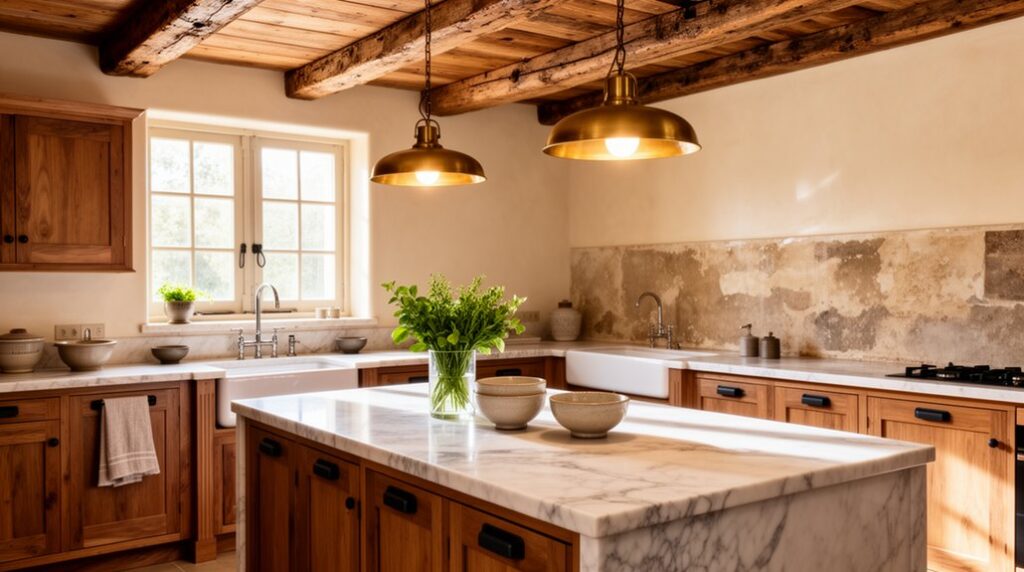

You’re after a kitchen that feels collected, not contrived—where weathered oak, honed stone, and aged brass carry real depth, and crisp cabinetry lines keep it tailored. You balance warm neutrals with quiet contrast, let patina show, and choose a few refined elements that sharpen the whole room. The trick is knowing which “imperfections” look intentional—and which choices instantly flatten the mood…
What Is the Rustic Luxe Kitchen Aesthetic?
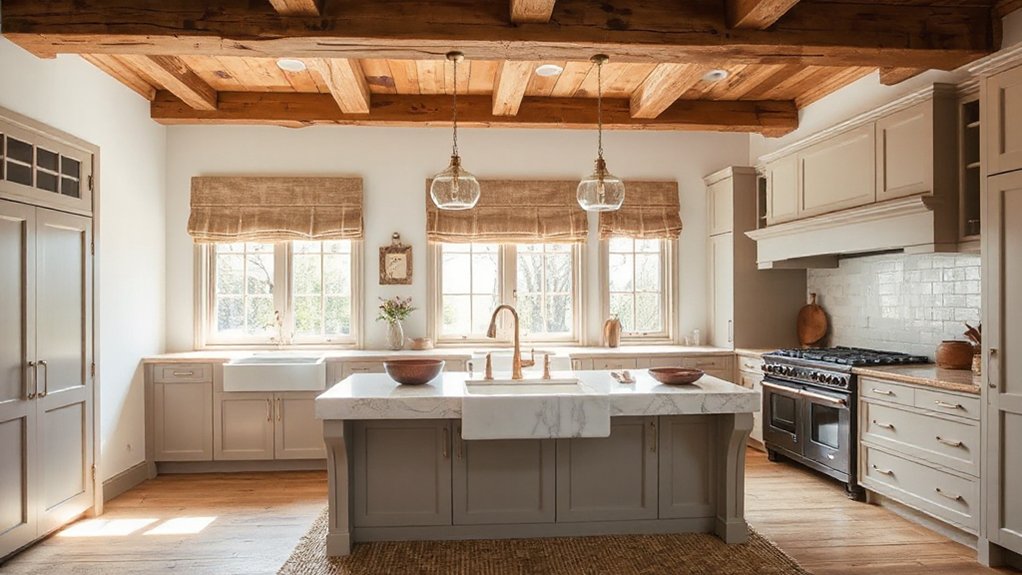
If you want a kitchen that feels both grounded and elevated, the rustic luxe aesthetic delivers by pairing raw, timeworn materials with refined finishes. You balance heritage character with tailored restraint, so every surface reads intentional, not themed.
Think softened edges, visible patina, and quiet imperfections set against crisp lines and polished details.
You design for contrast: warm, weathered tones beside clean silhouettes; artisanal presence alongside sleek function. Vintage charm shows up in collected forms, worn textures, and classic proportions, while modern elegance comes through disciplined edits, calibrated sheen, and precise geometry.
You keep the palette cohesive, layer tactile depth, and let a few statement elements anchor the room—so the space feels storied, serene, and confidently upscale.
Rustic Luxe Kitchen Materials That Feel Authentic
You get authenticity by choosing materials that wear their history well: reclaimed wood surfaces with visible grain and softened edges set the tone.
You anchor the room with natural stone countertops—honest veining, tactile honed finishes, and a weight that reads as permanent.
You finish it with aged metal accents in burnished brass or blackened steel, letting patina and hardware details sharpen the rustic-luxe contrast.
Reclaimed Wood Surfaces
Although reclaimed wood reads instantly rustic, it can deliver true luxe when you specify the details: tight-grain oak or heart pine for density, a matte hardwax oil that keeps the texture tactile, and a lightly wire-brushed finish that catches light without looking distressed.
You’ll get cleaner lines by choosing rift-sawn boards, book-matching long runs, and aligning cathedral grain only where you want drama. Specify eased edges over heavy chamfers, and conceal fasteners with underside battens so the surface stays calm.
For Reclaimed wood durability, ask for kiln-dried stock, moisture readings, and stabilized joins that resist seasonal movement. Let vintage wood craftsmanship show in butterfly keys, tight finger joints, and hand-planed gradual transitions around sinks, ranges, and islands.
Keep the patina; control the sheen.
Natural Stone Countertops
Prioritize Natural stone durability by matching use to geology: quartzite for high-traffic prep, honed granite for everyday resilience, marble where patina’s welcome.
Ask for a honed or leathered surface to mute glare and hide etching while keeping tactile depth.
Explore stone color options that echo your palette: warm taupes, smoky charcoals, creamy ivories, or green-tinged neutrals.
Seam placement and bookmatching should look intentional, aligned with key sightlines.
Aged Metal Accents
Once your stone surfaces set the palette and wear pattern, aged metal accents bring the hardware-level contrast that makes a rustic luxe kitchen feel earned, not themed. Choose unlacquered brass, blackened steel, or aged bronze so patina develops where you touch it most—pulls, latches, pot rails, and faucet levers. You’ll get depth without adding color noise.
Lean into distressed finishes, but keep the story believable: hammered pendant shades, riveted range hoods, and burnished edge trim that reads as worked, not factory “antiqued.” Mix sheen intentionally—matte iron against honed stone, satin brass against oak.
Add Vintage signage in a restrained way, like a single enamel plaque or stamped bin labels, to punctuate the metalwork and guide the eye.
Choose a Rustic Luxe Kitchen Color Palette
Start with a warm neutral foundation—creamy whites, oatmeal, and soft taupe—to let stone veining, plaster texture, and aged cabinetry read rich instead of busy.
Layer in earthy accent hues like clay, olive, and smoked terracotta through tile, textiles, and painted built-ins to add depth without losing the calm.
Then balance it all by coordinating metal and wood tones—brushed brass or blackened steel against walnut or weathered oak—so every finish feels intentional.
Warm Neutrals Foundation
If you want a rustic luxe kitchen that feels layered rather than loud, build your palette on warm neutrals—think creamy off-whites, putty, greige, camel, and soft taupe—then let materials do the heavy lifting.
Use a softly veined stone or honed quartzite to add depth without busyness, and choose matte paint to keep light calm and diffuse.
Ground the room with rift-sawn white oak, walnut accents, or reclaimed beams, and repeat tones across cabinetry, plaster walls, and linen Roman shades for cohesion.
Add Vintage charm through aged brass, unlacquered copper, or a burnished bridge faucet, then sharpen modern contrasts with blackened steel, slim-profile hardware, and crisp, simple silhouettes.
Keep sheen controlled: satin for trim, honed for counters, brushed for metalwork.
Earthy Accent Hues
Warm neutrals set the stage; earthy accent hues bring the rustic luxe mood into focus with quiet, grounded color. You’ll get depth from clay terracotta, smoked olive, deep umber, and muted ochre—tones that echo soil, bark, and fired ceramic.
Use them in disciplined doses: a terracotta backsplash tile with a satin glaze, an olive-painted pantry door, or cocoa-toned plaster around a range alcove. If you want drama, commit to Vibrant accent walls in iron-rich red or forest green, then keep adjacent surfaces calm and matte.
Layer Bold decorative patterns through encaustic-look floor tile, a printed Roman shade, or a textured runner—choose one hero motif, repeat it once, and stop. Balance sheen with brushed ceramics and stone.
Metal And Wood Tones
A rustic luxe palette lands or falls on how you pair metal finishes with wood tones. Start by choosing one dominant metal: unlacquered brass for warmth, burnished nickel for quiet shine, or matte black steel for graphic edge.
Then match it to wood grain that supports the mood—rift-sawn oak reads tailored, walnut feels moody, reclaimed pine leans storied. Keep undertones aligned: warm metals love honey or chestnut stains; cooler metals sharpen ash, smoked oak, or ebonized finishes.
Layer metal textures intentionally. Use a softer sheen on plumbing and pulls, then add a single high-gloss accent—pendants, a pot rack, or a toe-kick strip.
Let wood lead on large surfaces, and let metal punctuate details.
Rustic Luxe Kitchen Cabinets: Wood, Stain, Style
Because cabinetry dominates your sightlines and touchpoints, rustic luxe starts with wood species, stain depth, and the way the grain catches light. Choose quarter-sawn white oak for ray-fleck shimmer, walnut for inky richness, or alder for softer movement; let natural knots read intentional, not “unfinished.” Push stains toward layered neutrals—smoked umber, weathered espresso, or fumed gray—then lock in a low-sheen finish that feels hand-rubbed, not plastic.
For Vintage charm, specify inset doors, beaded frames, or a slim Shaker profile, and mix in reeded glass on a few uppers.
For modern functionality, you’ll want full-extension drawers, concealed hinges, pull-out trash, and interior organizers. Keep hardware weighty—aged brass or iron—and align reveals tightly for tailored calm.
Rustic Luxe Kitchen Countertops and Backsplashes
Once your cabinets set the tone, countertops and backsplashes sharpen the rustic‑luxe contrast with honest stone, tactile tile, and tight detailing. Choose honed marble or soapstone for a soft sheen, or leathered granite for grit with depth; keep edges slim to feel tailored.
If you love warmth, specify thick butcher block on an island, sealed matte so it reads refined, not shiny.
For backsplashes, stack handmade zellige with irregular glaze, or run a full-height slab behind Modern appliances to make them feel integrated. Match grout to tile for minimalist decor, or pick a darker grout to outline texture intentionally.
Carry one vein or color note from counter to splash, and cap it with a thin metal trim so the passage looks deliberate.
Rustic Luxe Kitchen Lighting That Sets the Mood
After you’ve nailed the stone-and-tile palette, lighting brings the rustic‑luxe tension to life by grazing texture and softening hard edges. Layer warm, dimmable sources so your kitchen shifts from prep-bright to dinner-glow without losing definition.
Start with statement pendants above the island: mouth-blown glass, aged ceramic, or linen-wrapped shades that add Vintage charm while diffusing glare. Add discreet under-cabinet LEDs to wash the backsplash, highlighting grout lines, veining, and hand-finished tile variation.
For Industrial influences, use linear beam lights or cage-style fixtures in matte black, then balance them with shaded sconces that throw a low, amber pool. Specify 2700–3000K lamps, high CRI, and smart scenes so wood reads rich, stone stays crisp, and shadows feel intentional.
Rustic Luxe Kitchen Hardware and Metal Finishes
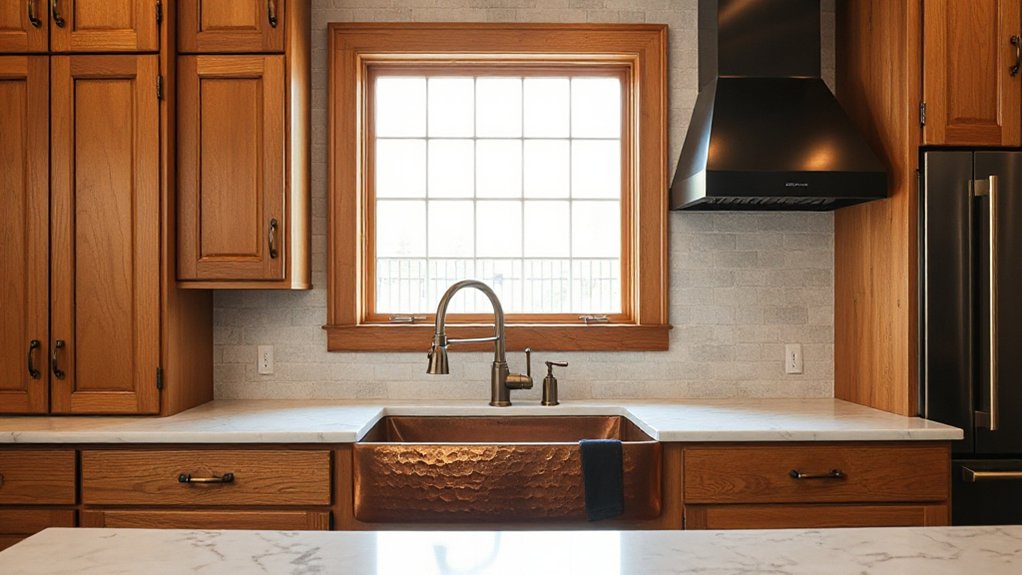
While stone and wood set the backdrop, hardware and metal finishes sharpen the rustic‑luxe contrast with tactile, touchpoint-level detail. Choose weighty pulls in unlacquered brass or burnished bronze so they’ll patina naturally, echoing Vintage decor without feeling theme-y.
Pair them with crisp, architectural knobs in satin nickel or matte black for Contemporary contrasts that read intentional.
For faucets, pick a solid brass body with a brushed finish to mute fingerprints and keep the sheen restrained.
If you want edge, specify aged iron on the range hood straps or cabinet corner brackets, then repeat that tone in open-shelf supports.
Keep sheen levels consistent within each metal family, and limit yourself to two dominant finishes plus one accent so the mix feels curated, not chaotic.
Rustic Luxe Kitchen Layout and Styling Moves
Where should rustic luxe land first—your layout or your styling? Start with a hardworking triangle and generous clearances, then anchor the room with a statement range wall. Frame it in honed stone or tumbled tile, and balance weighty beams with slim, flat-panel uppers.
Put your sink under a window, then stretch the counter in walnut or rift oak for a warm, tactile runway.
Style with restraint: group crocks, cutting boards, and linen towels in one zone, not everywhere. Mix Vintage appliances with modern technology by hiding a panel-ready dishwasher beside an enamel-look range.
Add a deep apron-front sink, oversized pendant in aged brass, and a runner in muted wool to soften footsteps.
Rustic Luxe Kitchen Mistakes That Ruin the Vibe
Even if you nail the triangle and clearances, rustic luxe falls apart fast when the materials and details fight each other. Don’t mix five wood tones, high-gloss quartz, and faux-distressed cabinets; pick one hero grain and let stone read quiet and honed.
Skip flimsy “farmhouse” lighting—thin black cages cheapen the room. Choose weighty metal with aged brass or dark bronze, and warm LEDs.
You also ruin the vibe when you chase Vintage charm but ignore modern functionality. Cluttered counters, mismatched open shelving, and exposed small appliances kill the tailored feel. Hide charging, trash, and coffee stations behind paneled doors.
Avoid shiny poly finishes on beams; use matte oil or wax. Finally, don’t undersize hardware—scaled pulls make rustic feel intentional, not crafty.
Frequently Asked Questions
What’s the Average Cost to Create a Rustic Luxe Kitchen Remodel?
You’ll typically spend $50,000–$150,000 on a rustic luxe kitchen remodel, depending on layout changes and finishes. Prioritize eco friendly materials, artisan cabinetry, stone counters, and a layered lighting design to elevate warmth.
How Do I Blend Rustic Luxe With Existing Modern Appliances?
Measure twice, cut once: you’ll blend rustic luxe with modern appliances by using panel-ready fronts, warm wood surrounds, and aged metals. Add Decorative lighting and smart Color palette selection—creamy neutrals, deep charcoals—to unify finishes, nicely.
Which Countertop Materials Need the Least Maintenance in Rustic Luxe Kitchens?
Choose quartz or porcelain slabs; you’ll wipe, not seal, and they resist stains, heat, and scratches. For Durability considerations and Material longevity, use honed finishes, tight seams, and eased edges to keep upkeep minimal.
How Do I Protect Reclaimed Wood Surfaces From Moisture and Heat?
Measure twice, cut once: seal reclaimed wood with penetrating epoxy, then hardwax oil. Add moisture barriers underneath and at joints. Use heat protection—trivets, silicone pads, and a clear matte topcoat—refresh annually.
Where Can I Find Authentic Vintage Fixtures and Decor for Rustic Luxe Kitchens?
You’ll find authentic pieces at architectural salvage yards, specialty antique dealers, estate sales, and curated online marketplaces like Chairish, 1stDibs, and Etsy. Prioritize Vintage lighting with original patina and Antique hardware in solid brass or iron.
Conclusion
You’ve built a rustic luxe kitchen by pairing honest, timeworn textures with tailored polish—like a well-cut jacket over lived-in denim. You choose warm neutrals, grained wood cabinetry, and stone with movement, then sharpen the story with aged metal, considered lighting, and crisp hardware. You layer patina without clutter, keeping sightlines clean and finishes cohesive. Avoid faux distressing and random mixed metals, and your space stays calm, confident, and quietly luxurious.