
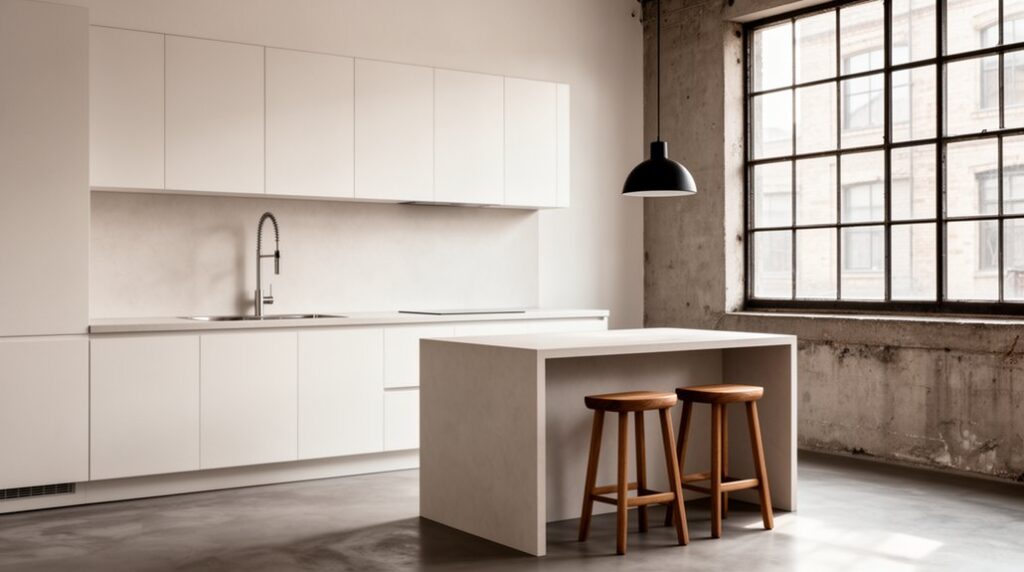

Like a well-cut suit in a tight city, you can make a small kitchen feel composed and capable. You start with a layout that keeps prep, cook, and clean zones tight, then rely on hidden storage, flat-front cabinets, and simple hardware to kill visual noise. You choose stainless, glass, and durable composites, plus compact appliances that earn their footprint. Keep the palette light with controlled contrast—but the real space gain comes next.
Start With an Urban Minimalist Kitchen Layout
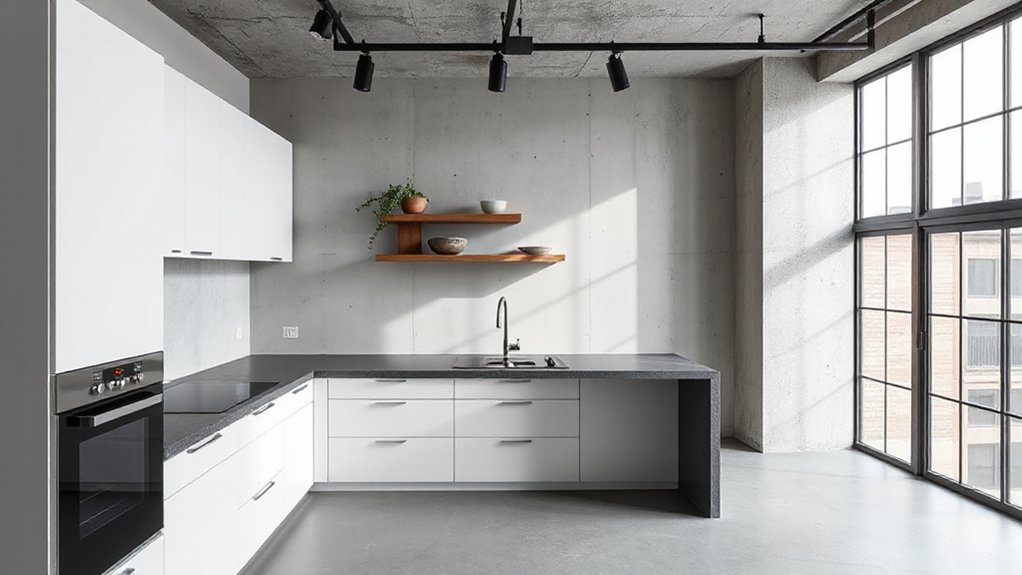
An urban minimalist kitchen layout starts by treating every inch as working space, not décor. You’ll map zones—prep, cook, clean—so steps stay tight and collisions don’t happen. Keep aisles clear, aim for a straight-line or L plan, and place the sink between fridge and cooktop to shorten reach.
Choose full-height, matte cabinetry and a thin-profile counter to reduce visual noise while staying durable. Specify stainless, quartz, or compact laminate for easy wipe-downs and long wear. Use integrated pulls and flush appliances to keep edges clean and movement smooth.
Let city views drive placement: keep the window wall open, put task lighting where shadows fall, and add restrained urban decor through one textured backsplash.
Urban Minimalist Kitchen Storage That Hides Clutter
You keep your counters clean by building storage behind flush fronts: concealed cabinet organizers in durable metal and hardwood put every tool on a track.
You reclaim tight wall space with pull-out pantry solutions that slide out smoothly and lock in, so staples stay sorted and invisible.
You hide daily-use machines in a hidden appliance garage with a lift-up or pocket door, so the room reads calm even when you cook hard.
Concealed Cabinet Organizers
Because open shelves can turn everyday essentials into visual noise, concealed cabinet organizers keep an urban minimalist kitchen looking calm while staying highly functional. Choose slim, full-extension trays in powder-coated steel to bring pots forward without wasted reach, and add soft-close hinges to prevent rattles in tight apartments.
Install hidden drawer dividers inside deep drawers so utensils, wraps, and lids stay separated yet invisible when closed. Mount magnetic spice racks on the inside of a cabinet door; you’ll free counter space and keep labels facing out for fast cooking.
Use clear, stackable bins in BPA-free acrylic to group snacks and baking staples, and opt for under-shelf wire inserts to double vertical capacity. Stick to matte finishes and consistent hardware so everything disappears behind clean fronts.
Pull-Out Pantry Solutions
Where can pantry storage go when square footage runs out—into a slim pull-out that disappears behind a flat front. You reclaim dead space beside the fridge or range with a 4–9 inch cabinet that glides out on full-extension, soft-close slides.
Specify powder-coated steel frames and Eco friendly materials like FSC birch trays or bamboo dividers to keep it light, durable, and wipe-clean.
Choose adjustable rails so jars, oils, and spices stand upright; add a top lip to stop tipping. Keep the heaviest items at mid-height for ergonomic design, so you lift less and see more.
Finish with a matte laminate or painted panel that matches surrounding doors, and clutter stays hidden while access stays instant.
Hidden Appliance Garages
One clean move keeps counters calm: build a hidden appliance garage that tucks the toaster, blender, and coffee gear behind a lift-up, tambour, or pocket door. You’ll get sleek countertop concealment without losing daily convenience.
Line the niche with durable laminate, stainless, or quartz to handle heat, splashes, and dings, and add a shallow lip to stop cords from snagging. Install an outlet strip inside, plus a switch, so you can leave tools plugged in but powered off.
Keep it 12–18 inches deep, match the door finish to your uppers, and use soft-close hardware for quiet function. With hidden appliance garages, you reclaim prep space, cut visual noise, and keep morning routines fast.
Add task lighting for clarity.
Choose Streamlined Cabinets and Simple Hardware
Start with two essentials: flat-front cabinets and no-fuss hardware. You’ll get clean lines that visually widen a tight city kitchen and make every inch feel intentional. Choose full-height doors to reduce seams, and pick durable finishes like matte laminate, stained oak, or powder-coated metal that shrug off fingerprints.
Keep pulls slim and consistent; go with edge pulls or small bars to avoid snagging hips in narrow walkways. Use soft-close hinges and full-extension drawers so you access tools fast without wasted motion.
Pair your cabinetry with creative lighting under uppers to eliminate shadows on prep zones. At the sink, match minimalist pulls with sleek faucet designs in brushed nickel or black for a cohesive, easy-clean workstation.
Keep toe-kicks flush and panels aligned for calm.
Space-Saving Appliances for Minimalist City Kitchens
Because counter space and clear walkways matter more in a city layout, choose appliances that compress footprint without sacrificing core performance. Go for an 18-inch dishwasher, a counter-depth fridge, and an induction cooktop that stays flush and wipes clean fast.
Pick a combi microwave-convection unit instead of two boxes, and mount it in a tall cabinet to free prep area. Use a slide-out range hood or a recirculating model with slim ducting to keep lines tight.
Choose multi-use tools: an immersion blender, a compact food processor, and a nesting cookware set.
Look for Eco friendly materials like stainless steel, glass, and recycled plastics.
Add Smart lighting under cabinets so small appliances don’t need dedicated task lamps.
Urban Minimalist Kitchen Colors That Open Space
You can open up a tight city kitchen by sticking to light neutral palettes—warm whites, soft grays, and pale oak tones that bounce light off matte paint, quartz, and satin tile.
Keep the base continuous across walls and cabinets so edges disappear and the room reads larger.
Then add monochrome contrast accents—black pulls, a charcoal faucet, or a graphite backsplash—to define work zones without adding visual clutter.
Light Neutral Palettes
How do you make a compact urban kitchen feel larger without adding a single inch? You choose light neutral palettes that bounce daylight across walls, fronts, and counters.
Start with warm whites or soft greige on cabinetry to reduce visual breaks, then match the backsplash in the same tone to keep sightlines continuous.
Pick matte, wipeable finishes that hide fingerprints and support daily use in tight quarters.
For counters, use pale quartz or sealed light wood to reflect task lighting while staying durable.
Specify eco-friendly materials like low-VOC paint, FSC wood, and recycled glass tile to keep the space healthy.
Tie in urban gardening with a slim herb rail and light ceramic planters that blend into the palette, not clutter it.
Monochrome Contrast Accents
Light neutrals set the backdrop; monochrome contrast accents sharpen the edges and make a compact kitchen read cleaner and larger. You’ll get that effect by pairing matte white walls with charcoal toe-kicks, black pulls, and a slim, dark grout line that frames tile without visual noise.
Keep contrasts linear: one black rail shelf, one dark faucet, one continuous shadow gap under uppers.
Choose materials that stay crisp—powder-coated steel, honed quartz, sealed concrete—and repeat them sparingly so the room feels edited.
Add Industrial lighting with black pendants or track heads to anchor work zones and cut glare.
Use geometric patterns only where they work: a small checkerboard floor or hex backsplash behind the range, then stop.
Contrast should guide movement, not clutter.
Minimalist Counters and Multifunctional Surfaces
While a busy kitchen begs for more storage, minimalist counters keep the room workable by reserving the surface for only what earns its footprint. You’ll get there faster by choosing countertop materials that do double duty: quartz for low-porosity prep, stainless for heat-safe landing zones, or compact laminate for budget, clean seams.
Prioritize surface durability so daily chopping, spills, and pans don’t force extra boards or trivets onto view. Add a slim overhang to create a perch for meals and laptop work without adding a table.
Specify an undermount sink and integrated drainboard to keep water contained. Use a flush induction cooktop and slide-out cutting board to convert one plane into three, then stow everything fast.
Frequently Asked Questions
What Lighting Fixtures Suit an Urban Minimalist Kitchen Without Feeling Sterile?
Choose matte-black or brushed-steel pendants, slim linear LEDs, and warm-dim under-cabinet strips to keep it clean, not cold. You’ll highlight sleek countertops and smart storage, using glass diffusers and concrete accents for texture.
Which Flooring Materials Are Best for Small City Kitchens and Easy Cleaning?
Like armor for your floors, you’ll choose porcelain tile, luxury vinyl plank, or sealed concrete for small city kitchens; they’re Durable surfaces. You’ll favor Eco friendly materials like cork or linoleum for easy cleaning.
How Can I Add Warmth to Minimalist Kitchens Without Adding Visual Clutter?
Add warmth by choosing color accents and cozy textures that work hard: oak or walnut fronts, matte brass pulls, a washable runner, linen towels, and under-cabinet lighting. You’ll keep surfaces clear and function-first.
What Budget-Friendly Upgrades Make the Biggest Minimalist Impact in Rentals?
Like polishing a river stone, you’ll see the biggest minimalist impact by swapping hardware, adding peel-and-stick backsplash in sustainable materials, using warm LEDs, and styling one thrifted tray of vintage decor. It’s functional, clean.
How Do I Reduce Kitchen Noise in Open-Plan Urban Apartments?
Reduce kitchen noise by adding rugs, felt pads, and soft-close hinges, plus door seals and magnetic catches. Use soundproofing tips like acoustic panels; try noise canceling solutions via quiet appliances and rubber mats.
Conclusion
You’ll get the most from an urban minimalist kitchen when you plan the layout, then let hidden storage and streamlined cabinets keep clutter out of sight. Choose simple hardware, durable stainless steel, glass, and quartz, and add space-saving appliances that work hard without taking over. Stick to light, neutral colors with subtle contrast to stretch the room visually. Remember, “less is more”: every surface should serve prep, dining, and cleaning with ease.