
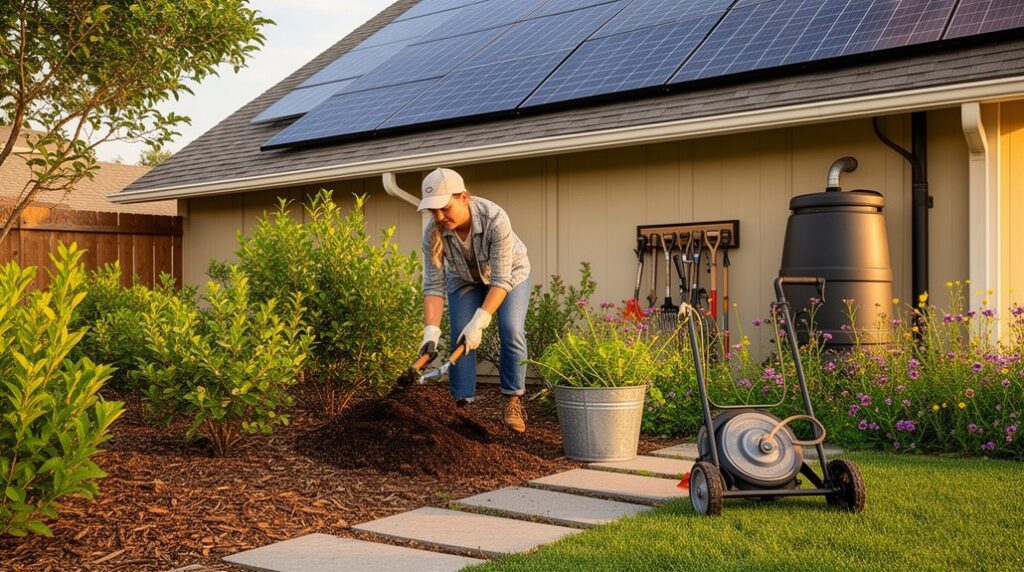

You track, you tune, and you prevent. Start with a simple checklist that logs inspections, utility spikes, and seasonal tasks, because small lapses often drive big bills. You’ll cut waste by switching to low-tox cleaners and reusable supplies, then target your largest loads with LEDs, insulation, and a smart thermostat. Add low-flow fixtures, native plants, and compost to shrink water use and boost soil health. Next, you’ll see where the fastest wins hide…
Start With an Eco-Friendly Property Maintenance Checklist
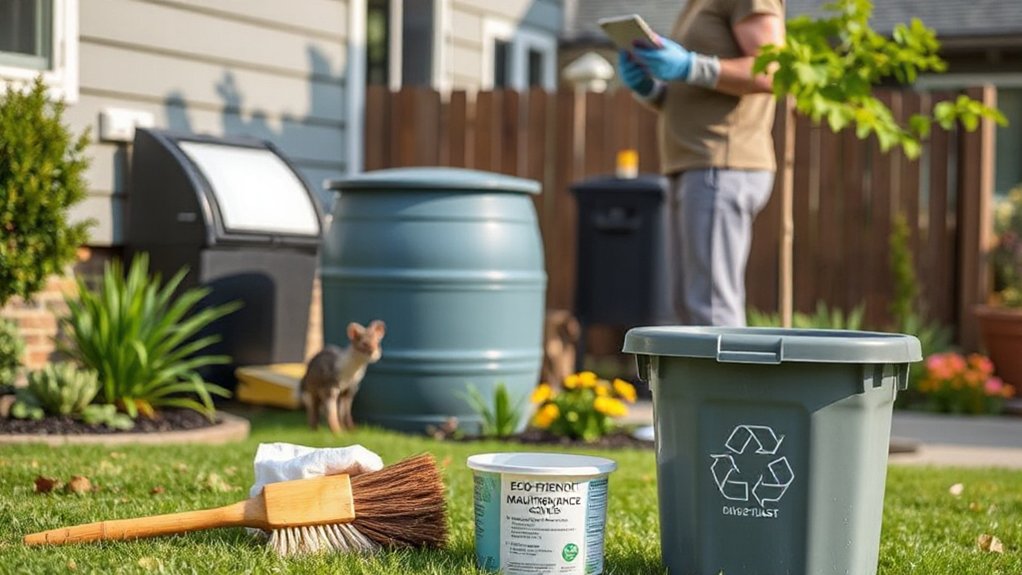
Before you buy supplies or schedule contractors, start with an eco-friendly property maintenance checklist that prioritizes the biggest environmental wins first.
Begin with a baseline property inspection: check air leaks, insulation gaps, HVAC filters, duct losses, and water fixtures.
Track utility bills for 12 months so you can target the top drivers; in many homes, space conditioning and water heating dominate energy use.
Next, rank actions by impact and payback: seal and weatherstrip, tune HVAC, insulate, fix leaks, and add smart controls.
Build maintenance scheduling around seasons—pre-summer cooling checks, pre-winter heating checks, quarterly filter changes, and annual attic/roof reviews.
Log findings, dates, and parts to prevent repeat trips, cut waste, and extend equipment life.
Switch to Non-Toxic, Low-Waste Cleaning Routines
Next, you’ll cut indoor VOCs and packaging waste by switching to plant-based cleaners with transparent ingredient lists.
You can lower costs and plastic use by mixing simple DIY concentrates and keeping refillable spray bottles in your maintenance kit.
Replace paper towels and disposable wipes with washable microfiber cloths, mop pads, and reusable scrubbers to reduce single-use supplies without sacrificing cleaning performance.
Choose Plant-Based Cleaners
Because conventional cleaning products can release volatile organic compounds (VOCs) and leave persistent residues in your indoor air and wastewater, switching to plant-based cleaners is one of the fastest, lowest-effort upgrades you can make in eco-friendly property maintenance.
Choose formulas labeled readily biodegradable, phosphate-free, and free of chlorine bleach, quats, and synthetic fragrance; those ingredients often drive aquatic toxicity and indoor irritation. You’ll still get performance by matching chemistry to the job: surfactant-based sprays for grease, enzyme cleaners for protein soils, and oxygen-based powders for stains.
Pick certified options (EPA Safer Choice, EcoLogo, or EU Ecolabel) to cut greenwashing risk. Buy concentrates to reduce packaging and transport emissions.
When you practice Organic gardening, these gentler inputs help protect soil microbes and beneficial insects outdoors, too.
DIY Refillable Cleaning Solutions
Plant-based cleaners cut VOCs and aquatic toxicity, and you can reduce waste even further by shifting to DIY, refillable cleaning solutions. Start by standardizing two or three formulas and labeling them clearly, so you don’t overbuy niche products.
Mix an all-purpose spray with 2 cups water, 1/2 cup white vinegar, and a teaspoon of castile soap; use it on sealed surfaces and rinse if needed. For glass, dilute vinegar 1:1 with water.
Store blends in durable refillable containers and keep a small concentrate jar to top up bottles, cutting packaging per refill cycle.
For homemade disinfectants, use 70% isopropyl alcohol or EPA-registered hydrogen peroxide at label strength; apply proper wet contact times before wiping.
Track costs and refills.
Reduce Single-Use Supplies
Single-use cleaning supplies—paper towels, disposable wipes, plastic scrub pads, and dryer sheets—generate steady trash and often add fragrance chemicals and microplastics to your indoor air and wastewater.
Cut them by swapping in washable microfiber cloths, cotton rags, and cellulose sponges that last for months. Keep a labeled bin for “clean” and “used” cloths, and launder cold to save energy.
Replace dryer sheets with wool dryer balls; you’ll reduce waste and can skip synthetic scents.
Choose concentrates or powder cleaners and store them in Reusable containers to prevent leaks and overuse.
Use Bulk purchasing for vinegar, baking soda, and castile soap to lower packaging per use and cut trips.
Track weekly trash volume to verify gains.
Cut Energy Use With Sustainable Property Upgrades
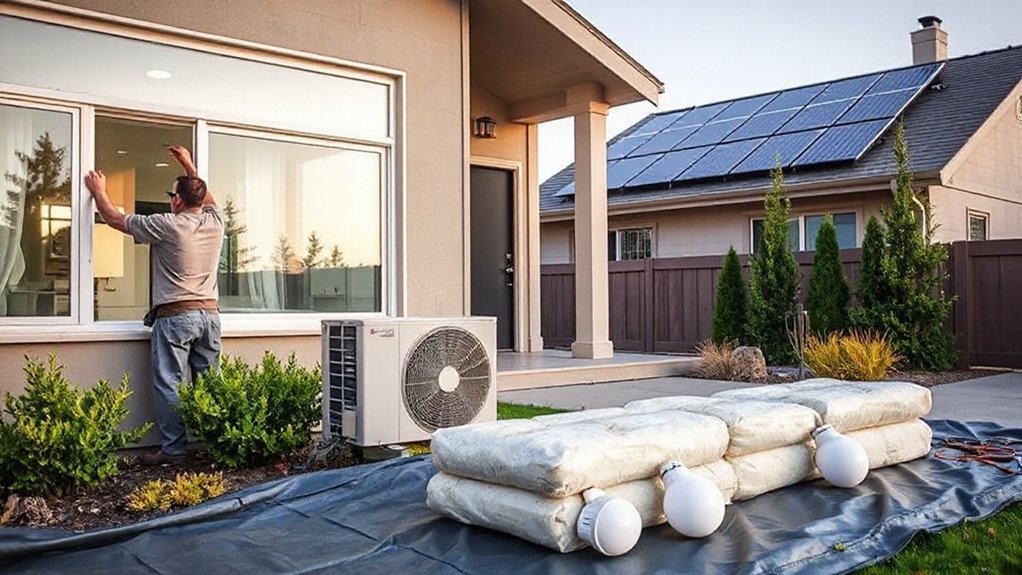
You can cut energy use fast with targeted upgrades that pay back in lower utility bills and fewer emissions. Start by swapping in LED lighting, adding smart thermostats that tighten heating and cooling schedules, and reducing HVAC losses with better insulation and air sealing.
You’ll measure the impact in reduced kWh and therms, improved comfort, and steadier indoor temperatures year-round.
Upgrade To LED Lighting
While small upgrades add up fast, switching to LED lighting delivers one of the quickest, most measurable drops in energy use in a property. LEDs typically use about 75% less electricity than incandescent bulbs and can last 15–25 times longer, cutting both utility bills and replacement waste.
Start with high-use areas—hallways, exterior fixtures, kitchens, and common rooms—so savings show up immediately.
Choose ENERGY STAR–rated bulbs, match lumens (brightness) instead of watts, and pick the right color temperature (2700K warm, 3000–4000K neutral) for tenant comfort.
Install LED-compatible dimmers to prevent flicker and premature failure.
Keep a simple inventory by base type (A19, BR30, T8) to streamline maintenance.
This LED lighting upgrade boosts energy efficiency without changing how you operate the building.
Install Smart Thermostats
LED lighting cuts wasted watts at the fixture, and smart thermostats tackle the next big driver of utility costs—heating and cooling. Install one and you’ll control setpoints with precision, reduce runtime, and trim peak demand without sacrificing comfort.
Smart thermostats learn your schedule and adjust automatically; ENERGY STAR models can deliver measurable energy savings—often around 8% on heating and cooling, depending on your climate and habits.
You can set temperature setbacks while you’re asleep or away, then pre-condition before you return. Use geofencing and occupancy sensing to avoid conditioning empty spaces, and review in-app reports to spot inefficiencies.
Pair it with a clean HVAC filter change schedule and you’ll keep airflow steady, extend equipment life, and cut wasted energy year-round.
Improve Insulation And Sealing
Because even a high-efficiency HVAC system can’t overcome a leaky building envelope, improving insulation and air sealing delivers some of the fastest, most reliable energy reductions you can buy.
Start with an energy audit or blower-door test to pinpoint leaks and weak spots, then prioritize attic, rim joists, and ductwork.
Upgrade insulation quality to meet or exceed local code (often R-38 to R-60 in attics), and choose low-VOC, recycled-content materials when possible.
Next, focus on sealing gaps around penetrations, top plates, windows, and exterior doors using caulk, weatherstripping, or foam rated for the application.
Proper sealing can cut heating and cooling losses by 10–20%, improving comfort, indoor air quality, and HVAC longevity.
Save Water With Smarter Fixtures and Habits
How much water do you lose each week to outdated fixtures and mindless routines? A single dripping faucet can waste 3,000+ gallons a year, and an old toilet may use 3–5 gallons per flush. You can cut demand fast with Water conservation techniques that target the biggest uses indoors.
Start with Efficient fixture installation: swap in WaterSense toilets (1.28 gpf), low-flow showerheads (1.5–2.0 gpm), and faucet aerators (1.0–1.5 gpm).
Next, hunt leaks: check toilet flappers with dye, read your meter before and after two hours of no use, and repair what moves.
Build habits that stick: run full laundry and dish loads, take 5-minute showers, and keep a cold-water pitcher to avoid running taps.
Landscape Sustainably With Native Plants and Compost
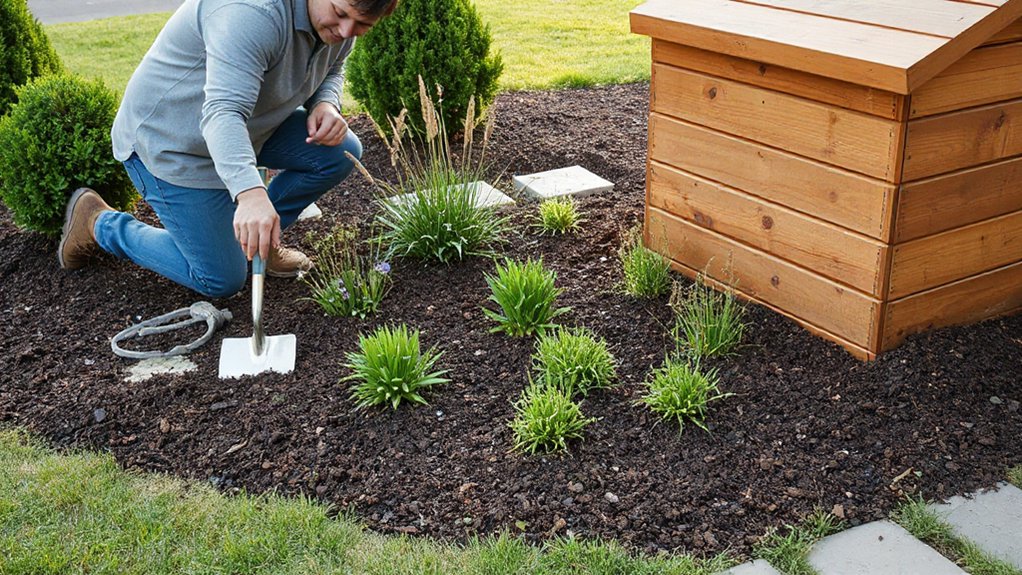
Even if you’ve upgraded indoor fixtures, your yard can still drive most of your home’s water use—often 30–60%—so landscaping choices matter. Swap thirsty turf for Native plants adapted to local rainfall; they typically need far less irrigation once established and can cut outdoor watering dramatically. Group plants by water needs, add drip lines, and mulch 2–3 inches to reduce evaporation and suppress weeds.
Build soil with composting practices: top-dress beds with finished compost in spring and fall to boost organic matter, improve water-holding capacity, and reduce fertilizer demand. Keep compost away from stems, and avoid overapplying—about 1/2 inch per season is often enough.
Leave some leaf litter under shrubs for habitat and moisture retention year-round.
Reduce Waste With Reusable, Repair-First Practices
When you treat every replacement as optional, you can slash the landfill-bound waste that routine home upkeep creates—from single-use wipes and plastic drop cloths to prematurely discarded tools.
Swap disposables for washable microfiber cloths, refillable spray bottles, and reusable canvas tarps; you’ll cut recurring purchases and packaging fast. Choose concentrated, low-tox cleaners and dilute at home to reduce plastic by volume.
Adopt a repair-first mindset: replace vacuum belts, sharpen mower blades, and swap faucet washers instead of tossing whole units. Keep a small parts kit and use manufacturer guides to extend tool life.
Route unavoidable discards into local Recycling programs for paint, e-waste, metal, and batteries. For organics, use Composting methods for food scraps, paper towels without chemicals, and yard waste to divert weight and return nutrients.
Schedule Preventative Maintenance to Avoid Big Repairs
Although it can feel cheaper to “wait and see,” preventative maintenance usually delivers the highest return: you catch small failures before they become material-heavy repairs, emergency service calls, and full-system replacements.
Build a calendar for HVAC tune-ups, filter swaps, roof and gutter checks, caulking, and leak inspections; even a slow drip can waste thousands of gallons annually.
Track work orders and meter data so you spot rising energy or water use early, then fix the root cause.
Bundle visits to cut trips, fuel, and labor.
Use tenant communication to schedule access, share quick checklists, and reduce no-shows.
Document upgrades and maintenance logs to support Property marketing, proving reliability, lower utility costs, and greener operations to prospects and renewal-minded residents.
Frequently Asked Questions
What Eco-Friendly Property Maintenance Changes Qualify for Tax Credits or Rebates?
You’ll qualify for tax credits or rebates by installing solar (check solar incentives), heat pumps, efficient windows/insulation, EV chargers, ENERGY STAR appliances, and sometimes green roofing. Confirm eligibility via IRS, DSIRE, and your utility’s rebate database.
How Can I Verify a Contractor’s Sustainability Claims and Certifications?
You verify claims by requesting certificate IDs, confirming Green certification in official registries, and demanding scope-specific documentation. You’ll run Sustainability verification by checking audited reports, material EPDs, and calling issuers. You should compare bids’ sustainability metrics.
What’s the Best Way to Reduce Indoor Allergens While Staying Eco-Friendly?
You’ll cut indoor allergens best by using HEPA Air purifiers, swapping to fragrance-free Natural cleaning, vacuuming with sealed HEPA filtration weekly, washing bedding at 60°C, controlling humidity to 40–50%, and ventilating daily.
How Do I Dispose of Hazardous Household Waste Without Harming the Environment?
Like sorting meds before surgery, you’ll safely manage hazardous waste by using local HHW drop-offs, take-back programs, and labeled containers—never drains. These disposal methods cut groundwater risk; over 50% contaminants come from improper dumping.
Which Eco-Friendly Maintenance Steps Improve Property Value the Most?
You’ll boost value most with Energy efficient upgrades (heat pumps, insulation, smart thermostats) cutting bills 20–40%, plus Landscaping tips like native plantings and drip irrigation lowering upkeep and enhancing curb appeal, appraisal comparables, and sale speed.
Conclusion
Treat your property like a fuel-efficient car: small tune-ups beat breakdowns. One landlord I worked with cut electricity use 18% in a year by swapping LEDs, sealing drafts, and setting a smart thermostat schedule—no major remodel. If you keep a checklist, clean with non-toxic concentrates, fix leaks fast, compost yard waste, and repair before you replace, you’ll shrink bills and waste. Schedule seasonal inspections, and you’ll catch problems while they’re still cheap.