
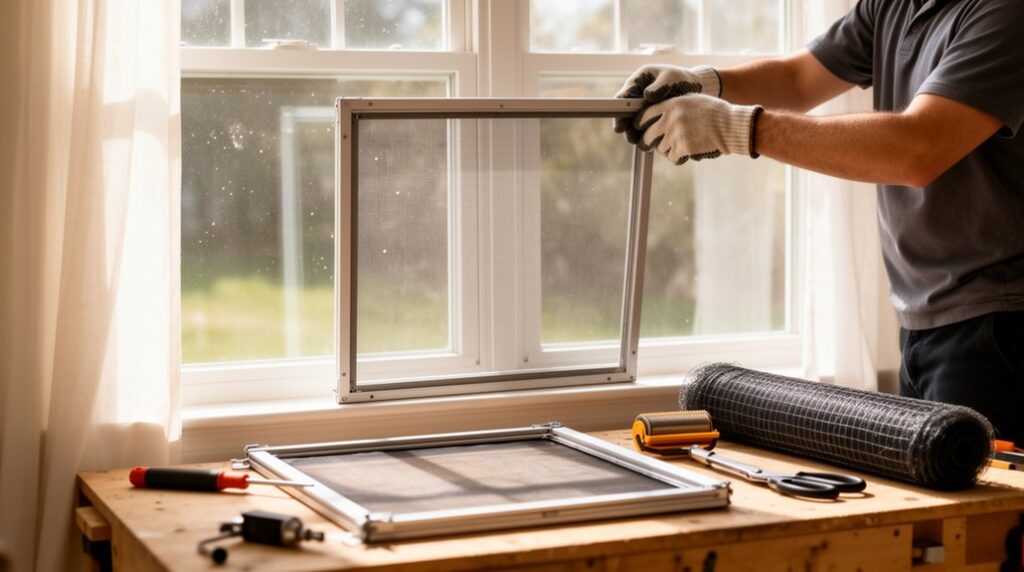

You probably don’t know that most sagging screens fail because the spline diameter is off by fractions of a millimeter, not because the mesh is “stretched out.” You’ll get better airflow and tighter insect control when you measure the channel precisely, choose mesh that matches UV and pet-load demands, and tension it evenly without twisting the frame. Work with cut-resistant gloves, control the utility knife, and check corner squareness before you lock in the spline—because one small shortcut can ruin the fit.
Measure Your Window and Pick Screen Mesh
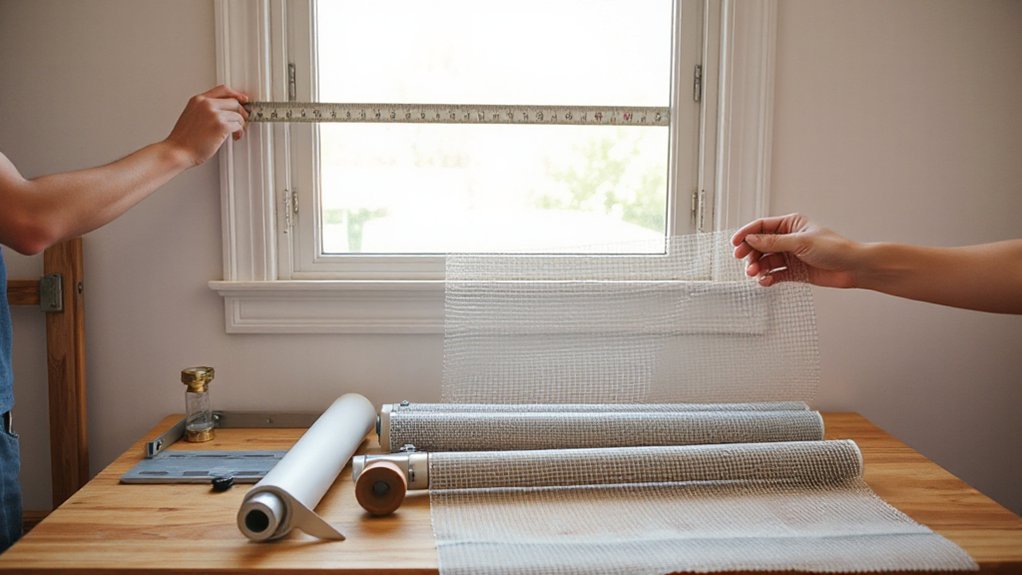
Before you buy any replacement screen, measure the window opening precisely so the frame seats correctly and doesn’t bind or leave gaps. Remove the existing screen and measure the inside width and height of the channel where the frame sits, not the outer trim. Take readings at top, middle, and bottom, then use the smallest value to protect measurement accuracy.
Note corner squareness; if diagonals differ, you’ll need a slightly smaller frame to prevent twisting.
Next, choose Screen material based on performance and exposure. Fiberglass resists corrosion and installs easily; aluminum stays taut but can crease and conduct heat; stainless steel offers superior durability for pets or coastal air.
Match mesh count to ventilation versus insect control, and confirm it meets local fire and egress requirements.
Gather Tools for Replacing a Window Screen
With your measurements confirmed and the mesh selected, set up the right tools so the new screen goes in square, tight, and damage-free.
Put on cut-resistant gloves and safety glasses, especially when handling aluminum Frame types or brittle vinyl corners.
You’ll need a spline roller with concave and convex wheels to seat spline without tearing Screen materials.
Keep a sharp utility knife with snap-off blades for clean trims, plus a metal straightedge to control cuts.
Use a small flat screwdriver or pick to lift old spline ends without gouging the channel.
Grab a tape measure, marker, and a stable work surface or screen frame jig to prevent racking.
Have replacement spline in matched diameter and a small brush or vacuum to clear debris.
Replace a Window Screen Step by Step
Once you’ve staged your tools and PPE, start by removing the screen frame from the window and setting it flat on a stable surface to prevent twisting. Inspect corners for damage, then use a utility knife to cut and peel out the old spline, keeping fingers clear of the blade path.
Lift out the worn mesh and vacuum debris from the spline channel so the new seat bonds evenly.
Roll out new Mesh material over the frame, leaving a 1–2 inch overlap on all sides. Press it into place with the convex wheel, maintaining light, even tension to avoid ripples.
Seat new spline with the concave wheel, working one side at a time. Trim excess mesh flush, reinstall the Screen frame, and confirm smooth operation.
Fix Common Window Screen Problems Fast
Even after you’ve installed fresh mesh and spline, a screen can still bind, sag, or let insects through if the frame is out of square or the hardware is worn. Check diagonals with a tape; if they differ, loosen corner screws, square the frame on a flat surface, then retighten.
If it rubs in the track, clean debris and lightly dry-lube the channel; don’t use oil near dust. For sagging, re-roll the spline with firm, even pressure and trim frayed edges; choose appropriate Mesh types so tension holds.
Replace bent springs, pull tabs, or rollers, and verify clips seat fully. Wear cut-resistant gloves, and deburr sharp aluminum. These quick corrections restore fit and boost Screen durability.
Upgrade Window Screens for Better Comfort
Although a basic screen keeps bugs out, you’ll get noticeably better comfort when you upgrade the mesh and hardware to match your climate, airflow needs, and household use.
Compare Screen material options: fiberglass for balanced visibility, aluminum for stiffness, stainless for coastal corrosion resistance, and pet-resistant polyester for impact.
For solar heat gain and glare, choose tighter-weave sun-screen, but confirm it won’t exceed your window’s ventilation requirements.
Improve durability with smart Frame construction techniques. Specify thicker-wall aluminum frames, reinforced corners, and stainless corner keys to reduce racking.
Use spline sized to the channel so the mesh stays tensioned without tearing. Wear cut-resistant gloves when trimming mesh, and deburr frame cuts to prevent lacerations.
Finally, check lift tabs, plungers, and latches so screens seat securely under wind load.
Frequently Asked Questions
How Often Should Window Screens Be Replaced in Different Climates?
You should replace window screens every 5–10 years; in coastal, high-UV, or humid climates, expect 3–7 years due to Material degradation. Inspect annually for Screen frame durability, corrosion, tears, and warped rails.
Can Landlords Require Tenants to Pay for Damaged Window Screens?
Yes, landlords can require you to pay if you caused the screen damage, like Pandora’s box of wear versus negligence. Check your lease and local codes. Tenant responsibilities govern charges; demand itemized invoices, avoid unsafe repairs, and dispute improper rent deductions.
Are Window Screens Covered Under Typical Homeowner’s Insurance Policies?
You usually won’t get Insurance coverage for routine screen repair under a standard homeowner’s policy. You may get limited coverage only if a covered peril causes sudden damage; document loss, prevent injury, and file promptly.
Do Window Screens Affect Indoor Air Quality or Allergen Levels?
As you crack a window just as pollen drifts in, screens can influence indoor air quality: they offer modest air filtration and allergen reduction by blocking debris, but clogged mesh traps particles; clean, inspect, and replace damaged screens.
What Are the Best Child- and Pet-Safe Options for Window Screens?
Choose stainless-steel or vinyl-coated pet-resistant mesh in sturdy aluminum frames for Pet protection. Add Child safety window guards or limiters, tamper-resistant fasteners, and splinter-free spline. You’ll reduce tear risk and prevent falls.
Conclusion
When you replace your window screens, you’ll boost airflow while keeping insects out and reducing indoor irritants. Measure twice, cut once, and keep the mesh square so you don’t overstretch it; use a spline roller with steady pressure and trim with a sharp utility knife away from your hands. For perspective, the EPA estimates indoor air can be 2–5× more polluted than outdoor air—so tight, clean screens help you ventilate safely and comfortably.