

If your door has started to “announce itself,” you can usually correct it in minutes with basic tools and controlled adjustments. You’ll first pinpoint whether the noise comes from dry hinge pins or if the slab is rubbing the jamb. Then you’ll lubricate properly, snug loose screws, and make small hinge or sanding corrections without damaging the finish. Work methodically and keep fingers clear of pinch points, because the next step depends on where the contact marks show up…
Find Out Why Your Door Squeaks or Sticks
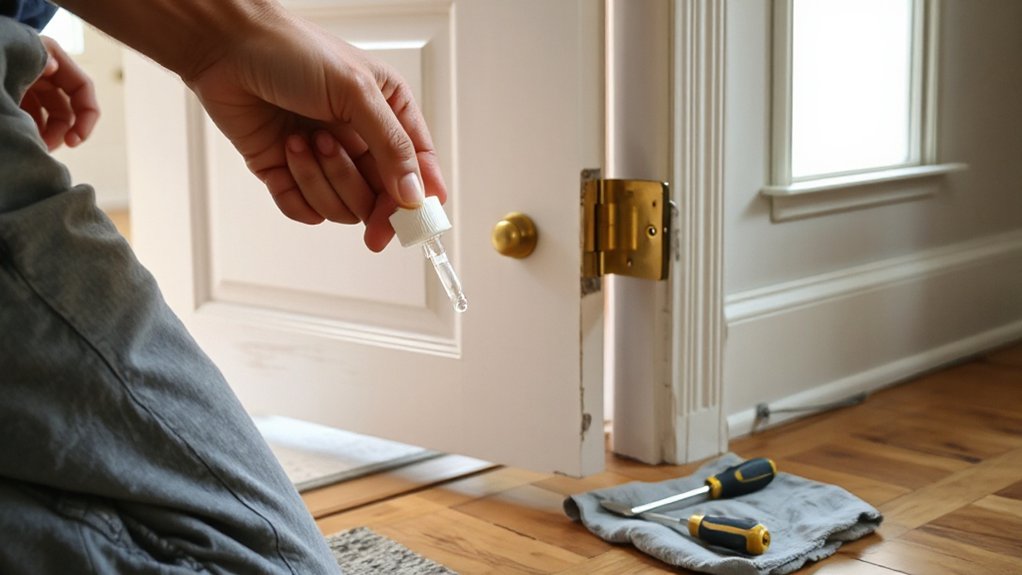
Before you reach for lubricant or a plane, pinpoint what’s actually causing the noise or drag. Open and close the door slowly while you watch the hinge barrels, latch, and strike plate. If the sound occurs only at one point in the swing, mark that location with painter’s tape. Check for rubbing along the jamb and head: fresh scuffs in door paint, shiny edges, or compressed fibers indicate contact.
Next, confirm the door isn’t binding from environment or hardware. Verify hinge screws are tight and the door isn’t sagging toward the latch side.
Inspect weather stripping for folds, tears, or over-compression that creates friction.
Finally, check the latch alignment: a misaligned strike plate forces the door sideways and makes it stick.
Fix Squeaky Door Hinges With the Right Lubricant
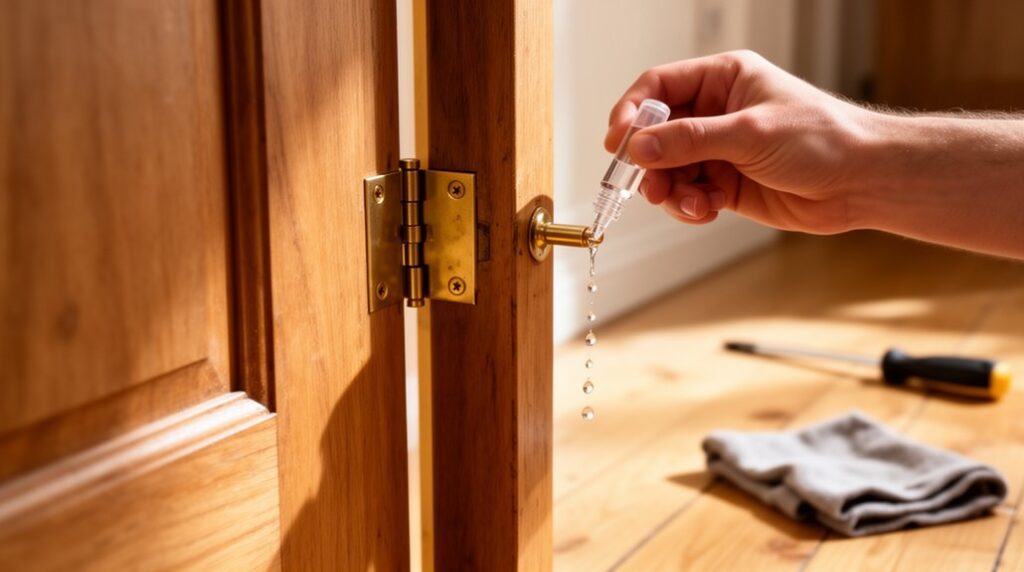
When a hinge squeaks, you can usually stop it fast by using the correct lubricant and applying it precisely to the hinge pin. Open the door to access the knuckles, then protect nearby door material with a rag to prevent staining.
Use a silicone spray or dry PTFE for interior hinges; choose white lithium grease for heavier hinge design or exterior exposure. Avoid penetrating oils that attract dust and can drip onto paint or flooring.
Insert the straw, aim at the pin-to-knuckle interface, and apply a short burst. Swing the door several times to distribute lubricant, then wipe off excess to reduce slip hazards.
If the hinge has a removable pin, lift it slightly and coat it lightly before reseating.
Tighten Hinges and Replace Loose Hinge Screws
Lubricant can quiet a hinge, but it won’t fix a door that shifts because the hinge leaf is loose or the screws have stripped out. Support the door with a wedge, then tighten each hinge screw with the correct driver to avoid cam-out.
If a screw spins, remove it and inspect the hole for wallowed wood. Replace it with a longer screw that bites into the stud or install a wood plug and re-drill a pilot hole.
Use matching screw heads to protect Decorative hardware finishes, and avoid over-torquing that can crack a hinge leaf.
Verify hinge knuckles align and pins seat fully before releasing support.
These steps also complement Weatherproofing techniques by keeping the door sealed evenly and limiting movement that breaks caulk or compresses weatherstripping.
Adjust Door Hinges to Stop Rubbing the Frame
Although a squeak often points to friction, a door that rubs the jamb usually needs hinge adjustment to restore proper reveal and swing clearance. Support the door with a wedge, then inspect hinge barrels for misalignment and pin bind.
If the latch-side edge hits, slightly tighten the top hinge and loosen the bottom hinge to pull the slab toward the hinge stile; reverse if it drags at the hinge side. On Decorative hinges, don’t over-torque soft brass screws—swap in longer, hardened screws into framing where possible.
For heavy door materials like solid-core or metal, adjust in small increments and recheck gaps after each change. Keep fingers clear of pinch points, and close the door slowly to verify it no longer contacts the frame.
Fix a Sticking Door by Sanding High Spots
Close the door slowly and pinpoint the high-friction spots by looking for shiny rub marks or using painter’s tape and a pencil line on the edge.
With eye and dust protection on, remove the door, sand only the high spots in small passes, and keep the edge square to avoid changing the fit.
Rehang the door and test the swing after each adjustment so you don’t over-sand and create a loose gap.
Identify High Friction Areas
Before you grab sandpaper, pinpoint exactly where the door rubs so you don’t remove material you can’t replace. Open and close the door slowly, listening and feeling for drag.
Inspect reveal gaps around the slab; uneven margins can indicate Doorframe alignment problems or a hinge shift. Check the latch side, top edge, and hinge stile for shiny burnish marks or scraped paint.
Use a flashlight to spot compressed weatherstrip and scuffing near stops. For precision, mark contact points with painter’s tape, then rub chalk or lipstick on the suspect edge and cycle the door once to transfer witness marks to the frame.
Consider weather-related issues: humidity can swell wood and tighten clearances.
Wear eye protection and keep fingers clear.
Sand And Refit Door
Once you’ve confirmed the exact rub points, remove the door from its hinges, set it flat on padded sawhorses, and sand only the marked high spots to restore an even reveal. Wear eye protection and a respirator; old finishes can contain lead.
Start with 120-grit on a sanding block, keeping the face square to the edge so you don’t round it over. Test-fit often: rehung door should swing freely without binding.
If you’ll follow with door painting, feather the sanded area and seal bare wood with primer to prevent moisture swelling.
Before refitting, inspect hinge screws and mortises; loose hardware can mimic sticking. Replace stripped screws or proceed with hinge replacement if the knuckles are bent.
Reinstall, then verify consistent gaps all around.
When a Squeaky or Sticking Door Needs a Pro
If you see cracked jambs, a racked frame, loose hinge screws that won’t bite, or gaps that change along the reveal, stop and call a pro—those are structural or alignment faults that DIY fixes can’t safely correct.
If the door still squeaks or sticks after lubrication, tightening hardware, and sanding high spots, you’re likely dealing with hidden hinge wear, frame movement, or foundation-related shift.
A qualified technician can measure plumb and square, reset hinges or the frame, and restore proper clearances without compromising the door’s hardware or fire/safety rating.
Structural Or Frame Damage
Although most squeaks and sticking issues come from hinges or minor alignment problems, structural or frame damage demands a more cautious approach and often a pro. If you see a split door frame, crushed jamb edges, loose casing, or fasteners pulling out, stop forcing the door; you can worsen the failure and compromise structural integrity.
Check for out-of-square gaps, a sagging header, or rubbing that changes with temperature or humidity, which can signal framing movement. Probe for rot or soft wood near the threshold and latch side, and look for drywall cracks radiating from the corners.
If the door won’t latch due to frame shift, or you suspect settlement, water damage, or termite activity, call a qualified carpenter or contractor for evaluation and repair.
Persistent Issues After DIY
Even after you’ve tightened hinge screws, lubricated pins, and verified basic alignment, a door that still squeaks, binds, or won’t latch can signal a hidden problem that DIY fixes won’t safely address.
If you see hinge-side cracking, stripped jamb holes, or fasteners that won’t bite, you may need reinforcement, longer screws into framing, or a hinge mortise repair.
Persistent rubbing can also mean the frame is out of plumb or the slab has warped, especially when door material reacts to weather effects like humidity swings or freeze-thaw cycles.
Don’t plane aggressively or force the latch; you can weaken fire ratings, expose cores, or misalign locks.
Call a pro when movement returns quickly, the door drags at multiple points, or gaps change week to week.
Frequently Asked Questions
Can Humidity Changes Cause My Door to Squeak Seasonally?
Yes, humidity changes can cause seasonal squeaks because wood undergoes humidity expansion, shifting hinge loads and increasing friction. You’ll notice it in damp months. Inspect for hinge wear, tighten screws, and lubricate carefully.
Is WD-40 Safe to Use on Door Hinges Long-Term?
Like a quick bandage, WD-40 isn’t ideal for long-term hinge use. You’ll get short relief but reduced door hinge maintenance. For lubricant comparison, you should choose silicone or lithium grease; they protect better and attract less grit.
How Do I Stop a Door From Squeaking Without Removing Hinge Pins?
Spray a silicone or PTFE lube into hinge knuckles, then work the door to wick it in; wipe excess to prevent slips. For Door hinge maintenance, do Lubricant comparison: avoid WD-40 long-term; prefer non-gumming lubricants.
What Lubricant Won’T Stain Painted Doors or Surrounding Trim?
Use a silicone spray or PTFE dry-film; they won’t stain painted doors or trim. Like a whisper of snow, apply sparingly, wipe overspray. For door hinge maintenance, this lubricant comparison favors non-oily, non-drip formulas.
Should I Fix a Sticking Door Before or After Repainting It?
Fix the sticking door before repainting, so you don’t scrape fresh paint. Do door frame adjustments first, then address paint compatibility considerations. Sand carefully, wear eye protection, and vacuum dust before priming and painting.
Conclusion
You can silence squeaks and ease sticking doors in minutes by finding the rub points, cleaning hinges, and applying a dry PTFE or silicone lubricant directly to the pins. Snug loose screws, swap stripped ones, and realign hinges so the door doesn’t kiss the jamb. If it still hesitates, mark high spots, remove the door, and sand lightly—then seal bare wood. Work slowly, wear eye protection, and keep fingers clear of pinch points. Call a pro if movement persists.