
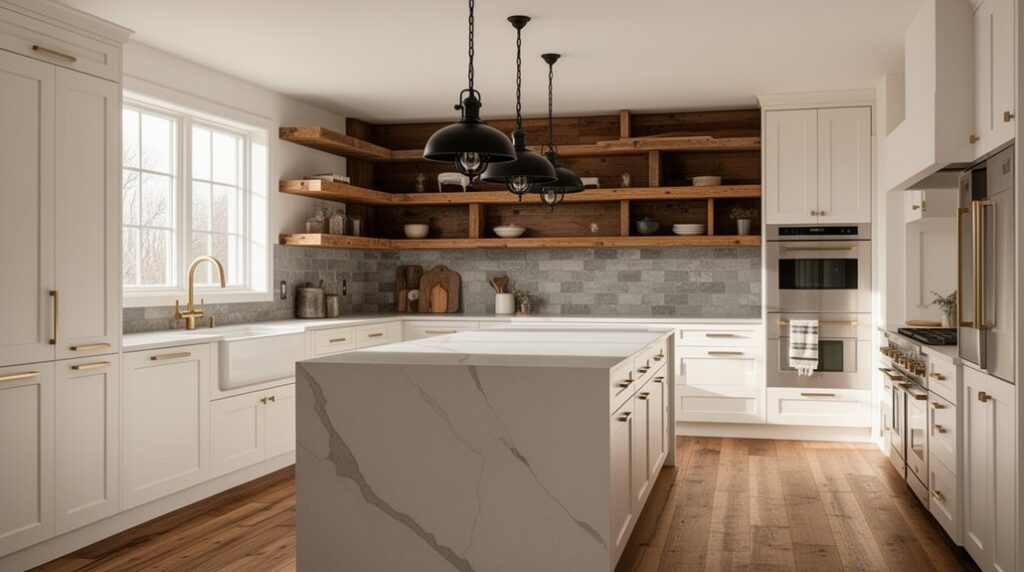

You want warmth without heaviness, texture without clutter, and character without chaos. A modern rustic kitchen feels right when you pair honed stone and rift-sawn oak with tight reveals, flat fronts, and disciplined negative space. Matte blacks, aged brass, and vintage-profile pulls add edge, while layered lighting keeps the room crisp after dark. The key is deciding where the rustic stops and the modern starts—because one choice will set everything else in motion…
What Makes a Modern Rustic Kitchen Feel “Right”?
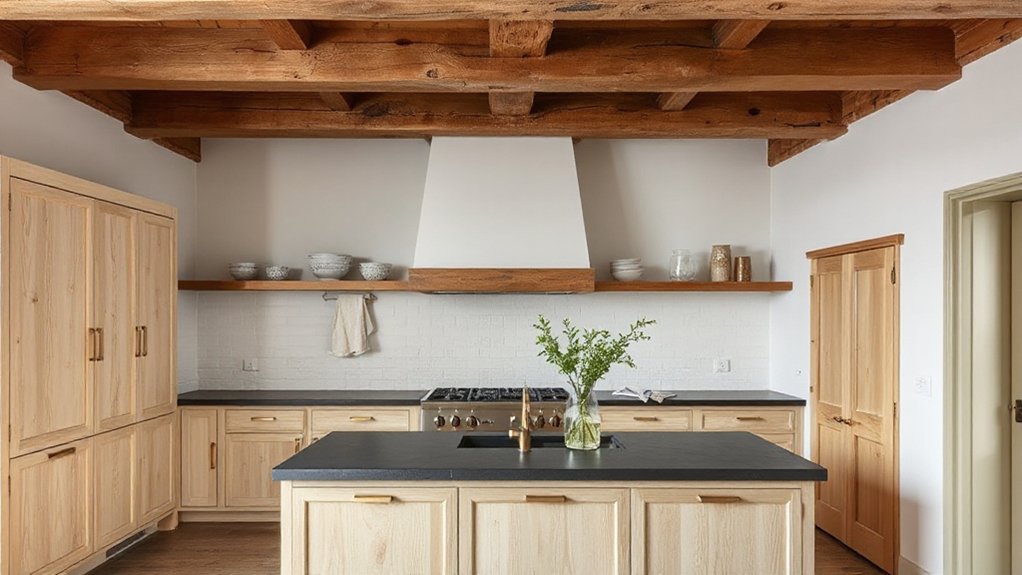
If you get the balance right, a modern rustic kitchen feels intentional—not themed—because every material choice has a clear job to do. You anchor the room with honest surfaces: rift-sawn oak, honed stone, and matte metals that hide fingerprints and patina gracefully.
You keep lines clean with slab or simple Shaker fronts, then introduce texture through sawn beams, plaster, or hand-troweled backsplash finishes.
You control visual noise by limiting profiles and repeating one hardware finish across zones.
You make nostalgia functional with Vintage appliances that deliver current efficiency behind period cues.
You use open shelving selectively—one run for daily ceramics—so it reads curated, not cluttered.
You finish with layered lighting that highlights grain and worktops, not decor.
Pick a Modern Rustic Kitchen Color Palette
You’ll set the modern rustic tone by balancing warm neutrals with wood grains, keeping undertones aligned so oak, walnut, and greige read cohesive under both daylight and 2700–3000K lighting.
You can ground the space with earthy greens paired with stone—think matte sage cabinetry against honed limestone or soapstone for a nature-forward, low-sheen look.
Then you’ll sharpen the silhouette with black accents against clean white, using hardware, lighting, and window frames to add contrast without overpowering the organic materials.
Warm Neutrals And Wood
Why do warm neutrals and wood read so effortlessly modern rustic? You’re balancing low-chroma pigments with high-tactility grain, so the space feels calm yet dimensional.
Start with creamy whites, oat, greige, and soft clay on walls and cabinetry for a diffuse, light-bouncing base. Then layer oak, walnut, or rift-sawn white oak in floors, shelves, or an island to add linear texture and visual warmth.
Keep undertones aligned—yellow-leaning neutrals with honey oak, taupe with walnut—so it looks intentional, not muddy. Add matte black or aged brass hardware for crisp contrast and durability.
You’ll get Farmhouse charm without kitsch by using clean slab fronts and integrating Vintage accents sparingly, like a patinated sconce or antique stool.
Earthy Greens And Stone
Because earthy greens sit in the low-to-mid chroma range, they pair naturally with stone’s mineral variation to create a modern rustic palette that feels grounded but still crisp. You’ll get the best results by choosing a muted olive, sage, or moss for cabinetry or an island, then balancing it with honed limestone, soapstone, or a speckled quartzite slab with visible veining.
Keep the finish strategy intentional: matte paint reduces glare, while brushed stone diffuses light and hides wear. Specify eco-friendly materials such as low-VOC coatings, reclaimed stone offcuts, and FSC wood shelving to keep the look current.
Add vintage decor through aged brass pulls, a patinated pot rack, or thrifted ceramic canisters for tactile contrast without visual noise.
Black Accents And White
Although the contrast reads boldly at first glance, a white base with black accents is one of the cleanest ways to land a modern rustic kitchen palette that feels both architectural and lived-in. You keep walls, uppers, and backsplash bright, then anchor sightlines with matte-black hardware, faucet, and window grids for crisp delineation.
Choose a blackened steel range hood or island base to add visual weight without darkening the room.
You’ll soften the graphic scheme with warm oak shelving, rift-cut cabinets, or lightly distressed beams, letting grain act as the “rustic” layer. Specify honed quartz or soapstone-look counters to control glare and hide patina.
Add industrial lighting in aged brass or iron, and punctuate a blank wall with Vintage signage for curated character.
Choose Modern Rustic Kitchen Materials That Last
To make your modern rustic kitchen hold up to daily wear, you’ll want materials that balance authentic texture with engineered stability.
You can specify durable natural woods like white oak or rift-sawn walnut with hardwax oil finishes to resist dents, moisture, and UV shift.
Then you’ll anchor the space with long-lasting stone and metal—think quartzite or honed granite paired with stainless, blackened steel, or brushed brass—so your surfaces stay on-trend and maintenance-smart.
Durable Natural Wood Choices
When you’re building a modern rustic kitchen that has to handle daily heat, moisture, and impact, your wood selection becomes a performance decision—not just an aesthetic one. Choose dense hardwoods like white oak, hard maple, or hickory for cabinetry and open shelving; their tight grain resists dents, holds fasteners, and stays stable through humidity swings.
For a trend-forward look with vintage charm, specify rift- or quarter-sawn oak to minimize movement and telegraph linear grain under natural lighting.
If you want deeper tone without softness, use walnut or thermo-treated ash, then protect it with a catalyzed waterborne finish for stain resistance and low yellowing.
On work surfaces, prefer edge-grain butcher block over flat-sawn boards, and seal end grain meticulously to reduce checking and swelling.
Long-Lasting Stone And Metal
Because stone and metal take the brunt of knife work, hot pans, splashes, and cleaning chemicals, they set the durability baseline for your modern rustic kitchen. Pick dense, low-porosity slabs first: honed granite and quartzite shrug off etching, while engineered quartz delivers consistent veining with minimal sealing.
If you love marble’s look, use it on a backsplash or island shelf, then specify a penetrating sealer and accept a living patina.
For metal, you’ll get longevity from 304 stainless on sinks and work tables, plus powder-coated steel for open shelving. Mix Industrial elements like blackened steel brackets with Vintage accents such as aged-brass pulls.
Choose brushed finishes to hide scratches, and match hardware alloys to your faucet to prevent galvanic staining.
Balance Rustic Textures With Sleek Cabinets
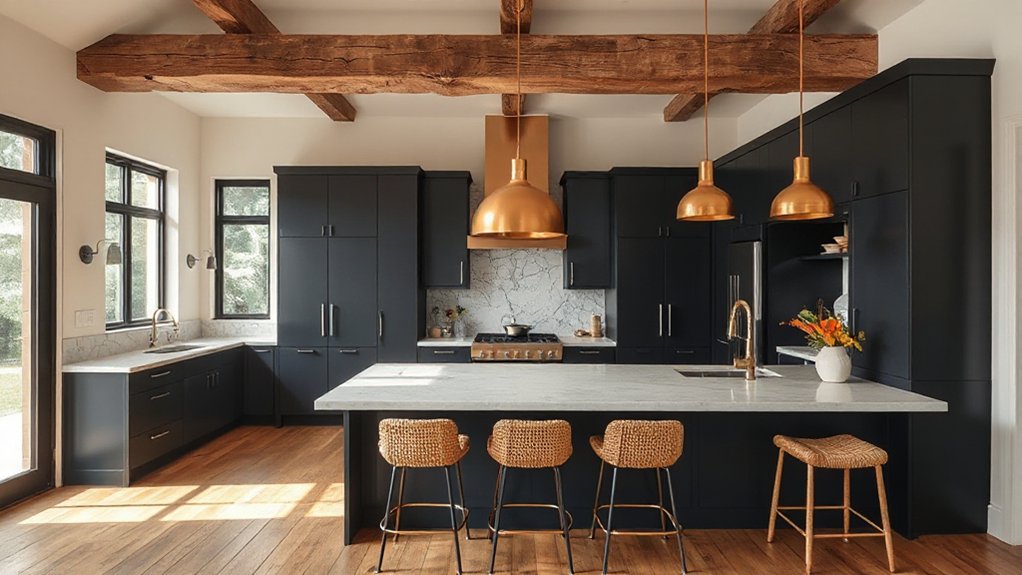
Although rough-hewn elements bring instant character, you’ll get a sharper modern rustic look by pairing them with sleek, flat-panel cabinets that act as a clean visual baseline. Choose rift-cut oak, matte lacquer, or thermofoil fronts to minimize grain noise while keeping durability high.
Then layer tactile contrasts: a reclaimed beam hood, tumbled zellige backsplash, or wire-brushed flooring. Keep cabinet hardware understated—thin bar pulls in blackened steel or satin nickel—to avoid competing with texture.
Ground the work zone with farmhouse sinks in fireclay or stainless, and let their apron fronts read as sculptural, not fussy. Add restraint with edited decor: a single piece of Vintage signage, framed and aligned, delivers patina without visual clutter.
Use consistent reveals and tight shadow lines to maintain modern precision throughout.
Modern Rustic Kitchen Lighting That Sets the Mood
If you want a modern rustic kitchen to feel intentional after dark, build your lighting plan in layers—ambient, task, and accent—so the room reads warm yet crisp.
Start with dimmable, high-CRI (90+) ambient light at 2700–3000K to keep wood tones rich without going yellow.
Add task lighting under uppers or on open shelving with low-profile LED bars, diffused lenses, and tight beam control to cut glare on prep zones.
Then punctuate the space with accent lighting: toe-kick strips, picture lights on salvaged art, or uplights on beams.
Vintage lighting works best when you retrofit with LED filament lamps and compatible dimmers.
For islands, hang statement chandeliers or mixed-metal pendants, scaled to clear sightlines.
Keep circuits separate for mood control.
Countertops and Backsplashes for Rustic-Meets-Modern
When you pair a rustic framework with modern lines, countertops and backsplashes do most of the visual “calibration,” balancing texture, reflectance, and grout geometry so the room reads current instead of themed.
Choose honed quartzite or matte quartz for low-gloss performance and subtle veining; it preserves Rustic charm without visual noise. If you want warmer tactility, try sealed walnut or oak butcher block on an island, then anchor it with a stone perimeter for modern elegance and durability.
For backsplashes, go big-format porcelain slab or elongated zellige-look ceramic to minimize grout while keeping hand-made variation. Use warm gray, mushroom, or off-black grout to soften contrast and hide staining.
A full-height splash behind the range creates a clean plane that still complements reclaimed timber.
Add Modern Rustic Kitchen Storage That Stays Tidy
Clean countertop planes and a low-grout backsplash only stay “modern” if your storage system prevents visual spillover. Build capacity inside the envelope: full-height pantry pull-outs, deep drawer bases with peg grids, and toe-kick Hidden storage for trays or linens. Specify soft-close, high-load slides so heavy cast iron doesn’t destabilize alignment, and use dividers to lock spacing.
Keep rustic warmth without clutter by zoning: daily items within one step, entertaining pieces higher, rarely used gear up top. Add vertical sheet organizers near the oven, and mount rail shelves only where you’ll curate. Finish with decorative organizers—woven bins, labeled canisters, and oak or blackened-steel knife blocks—so what remains visible reads intentional, not messy.
Audit quarterly; reset categories, purge duplicates.
Hardware, Faucets, and Fixtures With Character
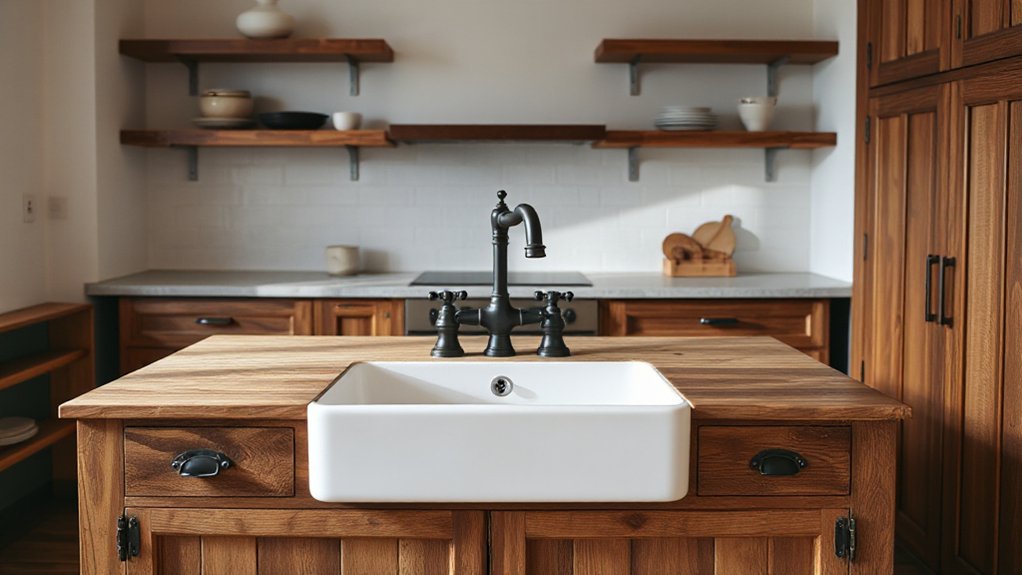
Because hardware and plumbing fixtures sit at eye and hand level, they’re the fastest way to make a modern rustic kitchen feel intentional rather than themed. Choose vintage inspired hardware with crisp geometry: slim bin pulls, stepped knobs, or hammered edge tabs that echo hand-forged work yet read clean. Match backplates to door thickness, and spec solid brass or stainless cores to prevent wobble over time.
For the sink zone, lean into statement faucet designs that balance utility and presence. A high-arc bridge faucet in unlacquered brass patinas naturally; a matte black pull-down adds contrast against warm wood. Confirm spout reach clears deep farmhouse basins, and choose ceramic disc valves for longevity.
Coordinate finishes across pot fillers, air gaps, and drain flanges so the mix feels curated, not chaotic.
Style a Modern Rustic Kitchen Without Clutter
Although modern rustic kitchens lean on texture and patina, you’ll keep the look sharp by editing what lives on the counters and treating every visible item as a working “display.” Start with a strict surface budget—one zone for prep, one for coffee, one for cooking—and push everything else into closed storage, tall pull-outs, or appliance garages so the wood grain and stone veining read as the design, not the clutter.
Limit open shelving to one focused run, then curate it like a grid: matching canisters, stacked ceramics, and two to three Vintage accents with negative space between. Use under-shelf lighting to reduce visual noise and highlight texture.
Specify concealed outlets, integrated rails, and a single tray to corral oils and salt. Rotate seasonal pieces instead of accumulating.
Frequently Asked Questions
How Much Does a Modern Rustic Kitchen Remodel Typically Cost?
You’ll typically spend $25,000–$75,000 on a modern rustic kitchen remodel, depending on Budget planning and Material selection. You can hit trends with reclaimed wood, quartz, and matte hardware, but labor and layout changes raise costs.
Can I Achieve Modern Rustic Style in a Rental Without Renovations?
Yes, you can, by layering temporary decor: peel-and-stick backsplash, removable hardware, and textured rugs. Navigate renting challenges with command hooks and tension rods. Add warm woods, matte black accents, and LED under-cabinet lighting.
Which Modern Rustic Kitchen Updates Add the Most Resale Value?
You’ll add the most resale value with neutral quartz counters, upgraded lighting, and refreshed hardware. Realtors report kitchens drive about 30% of perceived home value. Blend Farmhouse charm with Vintage accents using matte black pulls and warm wood stools.
What Are the Best Cleaning Routines for Rustic Wood and Stone Surfaces?
Use pH-neutral cleaner on sealed stone, wipe daily, and dry immediately; avoid acids. For rustic wood, dust weekly, use damp microfiber, and re-oil quarterly. These Cleaning tips and maintenance routines prevent etching, warping, grime.
Do Modern Rustic Kitchen Designs Require Professional Installation or Diy-Friendly?
You can DIY many modern rustic elements, but complex layouts often need pros. Watch DIY pitfalls: uneven stone, warped wood, bad waterproofing. You’ll gain professional benefits: precise leveling, code compliance, seamless finishes, warranty support.
Conclusion
You’ve got the recipe for a modern rustic kitchen that feels dialed-in: pair a restrained palette with durable workhorses like honed stone, rift-sawn oak, and hand-applied finishes. Keep rustic texture in the envelope, then run sleek cabinetry and integrated storage for visual calm. Layer lighting—ambient, task, accent—to sharpen contrast and warmth. Finish with character hardware and a simple vignette; when everything’s cohesive, it’s the best of both worlds.