
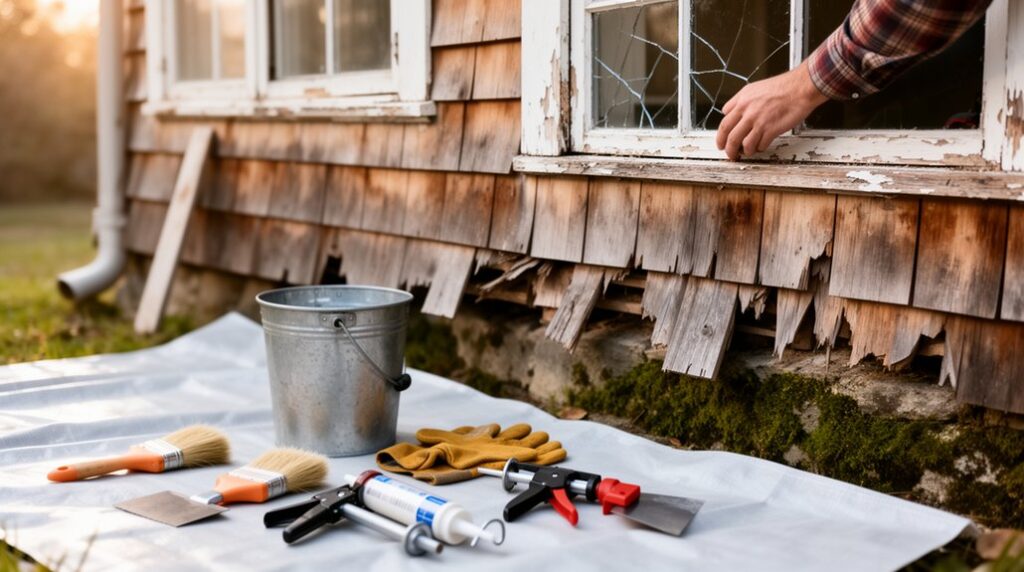

After you buy a 1920s bungalow, you spot a faint brown ceiling ring after the first heavy rain. You don’t guess; you run a whole-home walkthrough like a checklist: probe grading, log siding gaps, photograph foundation cracks, and trace water paths from roof to downspouts. You clear gutters, seal small penetrations, and flag anything structural for a pro. Next, you’ll map the highest-risk systems and schedule fixes before damage compounds.
Start With a Whole-Home Maintenance Walkthrough

Before you touch a single tool, run a whole-home maintenance walkthrough that treats your house like a system and your notes like a checklist.
Start outside: record grading, siding gaps, peeling paint, and foundation cracks with photo IDs and locations.
Move inside room by room: test GFCIs, verify smoke/CO alarms, and log panel labeling accuracy.
Check plumbing under sinks for active leaks, corrosion, and proper trap arms.
Inspect windows and doors for sash rot, failed glazing, and weatherstrip gaps without sacrificing Historic charm.
In basements and crawlspaces, note efflorescence, moisture readings, and insulation voids.
In attics, confirm ventilation paths, baffles, and wiring splices in junction boxes.
Tag fragile vintage decor, then schedule fixes by safety, moisture, and energy impact.
Property Maintenance Tips for Roofs and Gutters
You’ll keep an older house dry by scheduling seasonal gutter cleaning: remove debris, flush downspouts, and verify positive flow away from the foundation.
You’ll also run a roof inspection loop each season—scan shingles/flashings/vents for lift, cracks, rust, and soft spots—then log defects and patch fast with compatible sealant or replacement materials.
If you see active leaks, sagging, or widespread shingle failure, you’ll escalate to a qualified roofer before water intrusion propagates.
Seasonal Gutter Cleaning
Although older houses often handle heavy rain well, clogged gutters can still route water straight into fascia boards, soffits, and the foundation.
Clean them seasonally—late spring and late fall—plus after major storms. Set up a stable ladder, wear gloves and eye protection, and bag out gutter debris and leaf buildup by hand or with a scoop.
Flush each run with a hose; water should exit freely at the downspout without backflow. If it ponds, clear the outlet and verify the downspout discharges at least 5–10 feet from the perimeter.
Tighten loose hangers, replace missing spikes, and keep slope consistent (about 1/4 inch per 10 feet). Finish by rinsing stains and confirming no overflow at seams.
Roof Inspection And Repairs
Where does water go when a 20-year-old shingle lifts or a flashing seam opens by 1/8 inch? It wicks under courses, wets sheathing, and bypasses underlayment laps.
For leak prevention, inspect after wind events and each spring/fall: scan for missing tabs, exposed nails, granule loss, soft decking, and sealant splits at penetrations.
Follow code-minded checks: verify step flashing at walls, kickout flashing at eaves, and correct shingle-to-flashing overlap (minimum 2 in.).
Confirm drip edge at eaves/rakes and that gutters don’t trap water against fascia.
Repair fast: replace damaged shingles, re-nail per manufacturer pattern, and re-flash, not caulk-only. These actions extend roof durability and reduce interior moisture risk.
Property Maintenance Tips to Stop Moisture Fast
Before moisture has time to wick into plaster, rot sills, or trigger mold, lock down the fastest entry points: bulk water and humid air. Start outside: verify positive grade (IRC R401.3) sloping 6 inches in 10 feet, extend downspouts 4–6 feet, and keep gutters clear so runoff doesn’t saturate the foundation.
Seal obvious penetrations with backer rod plus elastomeric sealant, not rigid caulk, so joints can move.
Inside, control Indoor humidity: vent baths and kitchens to the exterior (IRC M1501), run fans 20 minutes after use, and keep RH 30–50% with a dehumidifier.
For Mold prevention, dry wet materials within 24–48 hours, remove soaked insulation, and clean hard surfaces with detergent, then dry fully.
Property Maintenance Tips for Old Plumbing
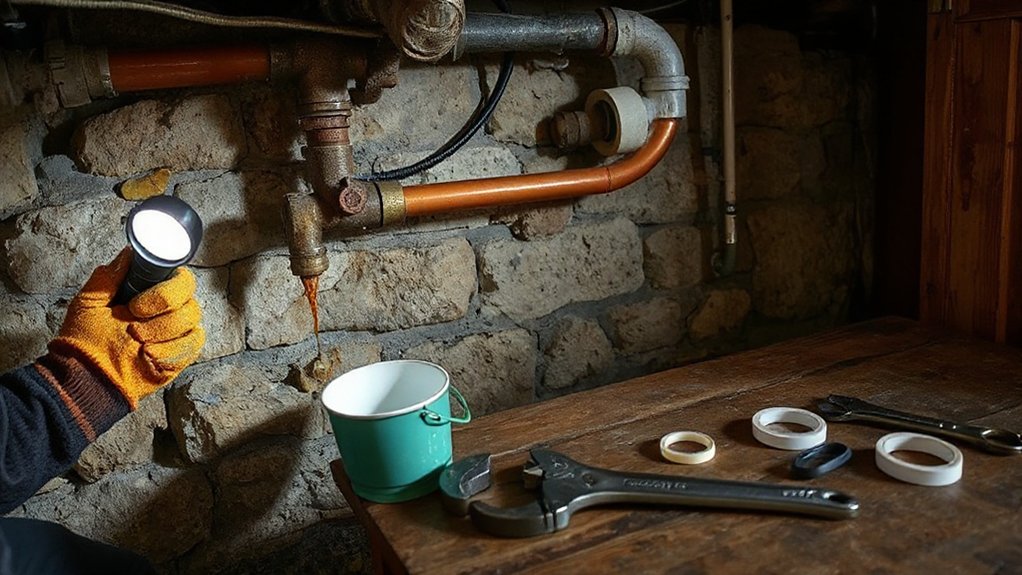
You’ll want to inspect exposed supply and drain lines for corrosion, pitting, and active seepage, then tag any suspect sections for repair or replacement to meet code and prevent failures.
You can reduce clogs and backups by verifying cleanout access, confirming vent integrity, and keeping traps and branch lines clear so flow rates stay within spec.
You should also upgrade outdated fixtures (e.g., failing shutoff valves, worn faucets, and noncompliant toilets) with approved, water-efficient models and proper connectors to reduce leak points.
Inspect Pipes For Corrosion
Although old plumbing can run for decades, corrosion often starts silently at joints and low-flow sections, so inspect exposed pipes on a routine cadence and log what you find.
Use a bright light and mirror to check elbows, tees, shutoff valves, and dielectric unions for green/white scale, pitting, blistered paint, or weeping seams.
Verify pipe material (galvanized, copper, brass) and note mixed-metal transitions that accelerate galvanic action.
Probe suspicious spots with a screwdriver for soft metal and measure wall loss with calipers where accessible.
Check supports and Pipe insulation for trapped moisture; replace saturated wraps and add vapor barriers.
For corrosion prevention, keep pipes dry, correct contact with masonry, and bond/ground per electrical code.
Tag sections for reinspection.
Prevent Clogs And Backups
Where do most old-house plumbing failures start—at the fixture or deep in the drain line? You prevent clogs by treating drains like a system, not a single opening. Install strainers, keep grease and coffee grounds out, and flush with hot water after heavy use.
Schedule drain cleaning with an enzyme treatment monthly; avoid caustic acids that can pit cast iron and loosen lead/oakum joints. For code-minded checks, confirm trap arms maintain proper slope (about 1/4 inch per foot) and vents aren’t blocked, since negative pressure pulls traps dry and invites backups.
In cold zones, add pipe insulation on exposed drains to reduce freeze-thaw fractures that create snag points. Test cleanouts for access and cap integrity, then snake from cleanouts, not through fixtures.
Upgrade Outdated Fixtures
Before a hidden leak or chronic clog forces an emergency repair, upgrade outdated fixtures to reduce demand on aging supply and drain lines while bringing performance closer to modern code expectations. Replace high-flow toilets, showerheads, and faucets with WaterSense-rated models, and verify required shutoff valves and anti-siphon protections are present.
When you keep Vintage fixtures for aesthetics, rebuild them with new cartridges, supply connectors, and escutcheons, and pressure-test joints for seepage. Swap corroded angle stops and galvanized stub-outs for approved materials, and add hammer arrestors where quick-closing valves create shock.
Confirm traps are properly vented, maintain correct trap-arm slope, and replace noncompliant S-traps. While you’re at it, correct outdated lighting near wet locations using GFCI protection, proper clearances, and listed fixtures.
Property Maintenance Tips for Older Wiring
If your house still runs on decades-old wiring, you can’t treat it like a modern circuit—start by identifying what you have and what it can safely support. Check for knob-and-tube, aluminum branch wiring, or cloth insulation, and verify conductor gauge and insulation condition.
For wiring safety, confirm grounded receptacles and a continuous equipment grounding conductor; don’t bootleg grounds. Test GFCI protection at kitchens, baths, laundry, garage, and exterior, and add AFCI where required for dwelling circuits.
Open the panel and label circuits, then verify breaker sizes match wire ampacity. If you see double-taps, heat discoloration, or mixed metals, schedule a licensed electrician.
Plan circuit upgrades to add dedicated 20A small-appliance circuits and properly sized load calculations.
Property Maintenance Tips for Foundations and Cracks
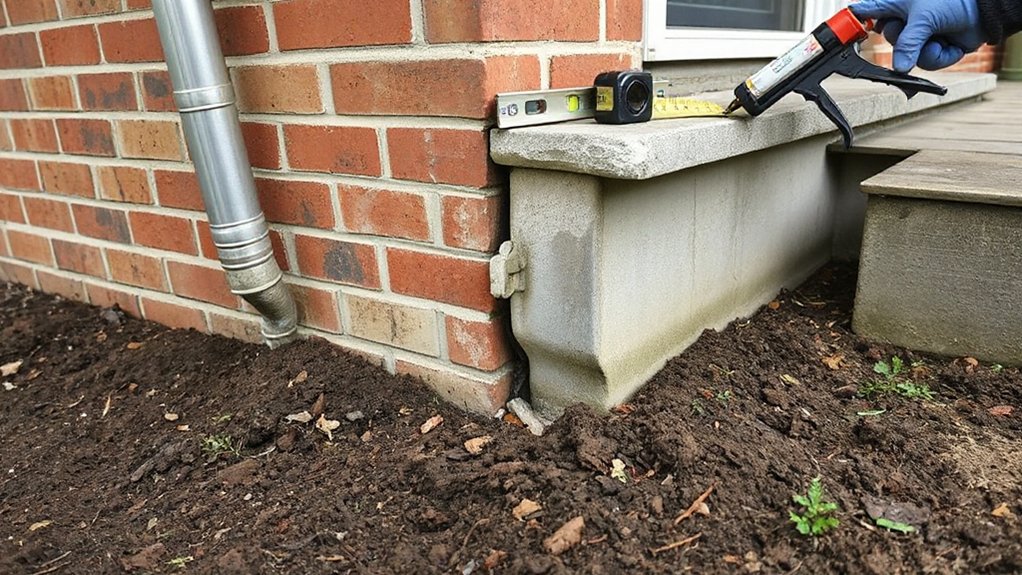
Because foundation movement often shows up as small, easy-to-dismiss cracks, you should document every crack’s location, direction, and width, then monitor it against objective thresholds used in many inspection standards: hairline shrinkage cracks in concrete (typically ≤ 1/16 in.) usually need sealing and moisture control.
While wider cracks, stair-step cracking in masonry, horizontal cracks, differential floor/door binding, or any crack that grows over time should trigger a structural evaluation.
For crack sealing, clean to sound substrate, control water entry, and use appropriate epoxy or polyurethane per manufacturer data; don’t patch active movement.
Maintain positive exterior drainage, downspout extensions, and consistent soil moisture to limit heave.
If evaluation confirms distress, specify Foundation reinforcement such as underpinning, helical piers, or wall anchors, with stamped design and post-repair monitoring.
Property Maintenance Tips for Windows and Drafts
Once you’ve stabilized moisture and movement issues at the foundation, turn to windows—older assemblies often leak air and water at the frame-to-wall joint even when the sash looks intact.
Inspect exterior casing, head flashing, and sill pan; confirm positive slope to daylight and intact drip cap. Re-caulk only where joints are designed for sealant; don’t bridge weep paths.
For Draft sealing, prioritize the interior air barrier: add backer rod and high-quality sealant at the trim-to-frame gap, or use low-expansion foam rated for windows and doors.
Restore operability: replace brittle weatherstripping, adjust locks to pull sashes tight, and reglaze loose panes.
For Window insulation, install interior storm panels or tight-fitting shades; avoid trapping moisture against wood.
Property Maintenance Tips for HVAC and Vents
After you’ve tightened up the building envelope, verify that your HVAC and venting systems still move the right amount of air to the right places.
Replace HVAC filters on a code-compliant interval (often 1–3 months) and use the MERV rating your blower can handle without exceeding design static pressure.
Confirm supply/return grilles aren’t blocked and that return pathways meet code for closed rooms (transfer grille, jumper duct, or undercut as allowed).
Schedule vent cleaning when ducts show debris, moisture, or airflow imbalance; follow NADCA methods and reseal access panels with UL-181 tape/mastic.
Inspect condensate drains for proper trap, slope, and termination, then test the float switch.
Verify combustion appliances vent per listing, with intact clearances and no backdrafting.
Property Maintenance Tips to Prevent Pests
Even if your house looks sealed, pests still exploit small gaps and moisture sources, so you should treat pest prevention like a code-style inspection of the exterior and service penetrations. Verify door sweeps and weatherstripping maintain continuous contact; adjust thresholds and latch alignment. Use rodent-rated mesh or metal flashing at weep screeds, brick vents, and around AC lines, gas pipes, and conduit.
Prioritize Sealing entry points with exterior-grade sealant where movement is minimal, and backer rod where joints are wide.
Control moisture: keep grade sloped away, repair dripping hose bibbs, and ensure downspouts discharge away from the foundation.
For Eliminating hiding spots, maintain 18 inches of clearance between siding and mulch, store firewood off-grade, and trim vegetation off walls. Inspect crawlspace vents, screens, and access doors for damage.
Build a Seasonal Property Maintenance Checklist
Because older houses respond quickly to weather swings, you should build a seasonal maintenance checklist that ties each task to the systems most likely to fail under that season’s loads—water management, envelope integrity, and mechanical safety.
In spring, clear gutters, confirm roof flashing, and verify exterior grading maintains 5% slope per IRC R401.3.
In summer, test GFCIs/AFCIs, service HVAC, and check attic ventilation for balanced intake/exhaust to limit moisture.
In fall, seal penetrations, inspect storm windows, and service chimneys to NFPA 211 before firing.
In winter, set heat to protect plumbing, insulate exposed runs, and test CO/smoke alarms.
Document materials and methods for Historical preservation, and coordinate access with interior decor so inspections don’t damage finishes or trim.
Frequently Asked Questions
How Do I Budget Annually for Maintenance Costs in an Older House?
Budget annually by running cost estimation: set 1–3% of home value, then add line items for roof, HVAC, plumbing, electrical. Do expense tracking monthly in a spreadsheet, update forecasts, and fund a dedicated reserve account.
Which Renovations Require Permits When Updating an Older Home?
You’ll need renovation permits for structural changes, electrical/plumbing/HVAC work, window/door replacements, additions, reroofing, and egress alterations. If Historic preservation applies, you must also permit façade changes and comply with local code reviews.
How Can I Find Contractors Experienced With Historic or Older Properties?
You’ll find seasoned contractors by querying local preservation offices, requesting portfolios showing Restoration techniques, and verifying adherence to Preservation standards. Use RFP-style checklists, validate references, and review code citations in bids—they’ll reveal genuine experience.
Should I Schedule Professional Inspections Beyond the Standard Home Inspection?
Yes, you should schedule specialized inspections beyond the standard report. Add structural, electrical, plumbing, roof, and sewer scopes to verify code compliance. Don’t rely on DIY repairs or cosmetic updates to mask systemic defects.
What Insurance Coverage Gaps Are Common With Older Homes?
Common coverage gaps include crumbling coverage, knob-and-tube wiring, outdated plumbing, and roof wear; these trigger Coverage exclusions or higher deductibles. You’ll see denied Insurance claims without endorsements. Audit policy clauses like config.
Conclusion
Keep your older house solid by treating maintenance like a scheduled build, not a one-off patch. Run a whole-home walkthrough, then version-control tasks: roof/gutters, moisture barriers, plumbing, wiring, windows, HVAC, and pest entry points. Log findings, set intervals, and close tickets fast. When you spot a small leak or crack, don’t let it snowball—seal it, reroute water, or call a pro. Follow your seasonal checklist, and you’ll ship reliability.