
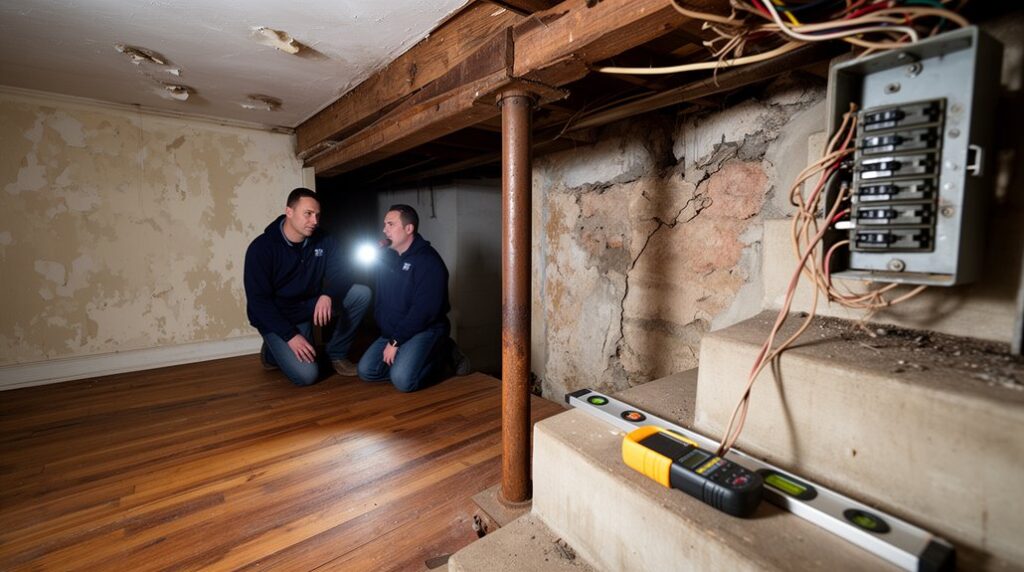

Before you buy an older property, you’ll want to check the roof, flashing, chimneys, and gutters for damage and leaks, then look closely at the foundations for cracks or movement. You should also search for damp, mould, or rot in ceilings, walls, and tucked-away corners. Don’t overlook dated electrics, tired plumbing, or inadequate heating. Finally, confirm insulation, ventilation, and paperwork for past work—because the biggest risks often hide in one place.
Older Property Checks for Roof, Chimneys, and Gutters
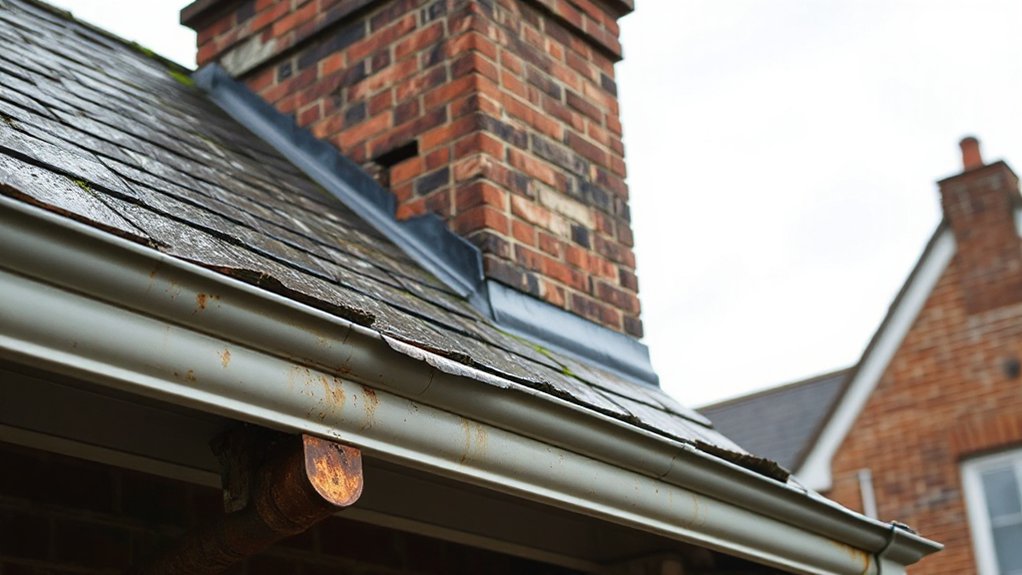
Before you commit to an older property, inspect the roofline carefully, because defects up top can hide for years while causing expensive structural and moisture damage.
You should check for missing, curled, or cracked shingles/tiles, uneven ridges, and soft spots that suggest rot. Verify flashing at valleys, vents, skylights, and roof-wall joints; poor seals often drive leaks.
Review roof maintenance records, including prior repairs and ventilation upgrades.
For chimney inspection, look for spalling brick, deteriorated mortar, a leaning stack, and a damaged crown or cap; confirm the flue liner’s condition and clearances.
Inspect gutters and downspouts for sagging, corrosion, loose fasteners, and overflow stains on fascia.
Guarantee extensions discharge away from the walls, and confirm safe ladder access and fall protection.
Older Property Checks for Foundations and Movement Signs
Because foundation issues can signal ongoing movement and costly structural repairs, you should check the basement, crawlspace, and exterior walls for clear warning signs rather than relying on cosmetic finishes.
Look for stepped cracking in brickwork, diagonal cracks above windows, and gaps where extensions meet the original house. Inside, test doors and windows for sticking, and sight along skirting boards for uneven floors.
Outside, note bulging walls, leaning chimneys, and displaced lintels that may indicate settlement. Measure any cracks and photograph them to track change.
Pay attention to Historical features: older lime mortar and shallow footings can behave differently than modern construction.
If you suspect compromised Structural integrity, request a structural engineer’s assessment before committing.
Older Property Checks for Damp, Rot, and Mould
Even if an older home looks freshly redecorated, you still need to check for damp, rot, and mould, since sellers can hide moisture problems behind paint, plaster, or new flooring. Start by sniffing for musty odours and scanning walls and ceilings for tide marks, blistering, peeling paper, and salt deposits.
Check behind furniture, inside cupboards, and around chimneys and bay windows. Probe skirting boards, joist ends, and window frames for soft timber, crumbling fibres, or black staining that signals wet or dry rot.
In cellars and under-stairs voids, look for fuzzy growth and condensation on cold surfaces. Don’t let Historical features or aesthetic details distract you; damp can threaten indoor air quality and structural timber.
Photograph findings and request targeted survey moisture readings.
Older Property Checks for Electrics, Plumbing, and Heating
Although period details can steal your attention, you should check an older home’s electrics, plumbing, and heating with the same care as the structure, since outdated wiring, tired pipework, and aging boilers can create fire, flood, carbon monoxide, and scalding risks. Ask for recent certificates and have qualified trades inspect.
For Electrical wiring, confirm the consumer unit has modern breakers and RCD protection, check for brittle insulation, amateur spurs, and overloaded sockets, and test all circuits.
For plumbing, inspect visible pipes for corrosion, leaks, and poor joints, and run taps to gauge pressure and drainage. Check Plumbing fixtures for cracks, loose seals, and hidden staining.
For heating, service the boiler, check flues, test controls, and verify safe water temperatures.
Older Property Checks for Insulation and Ventilation
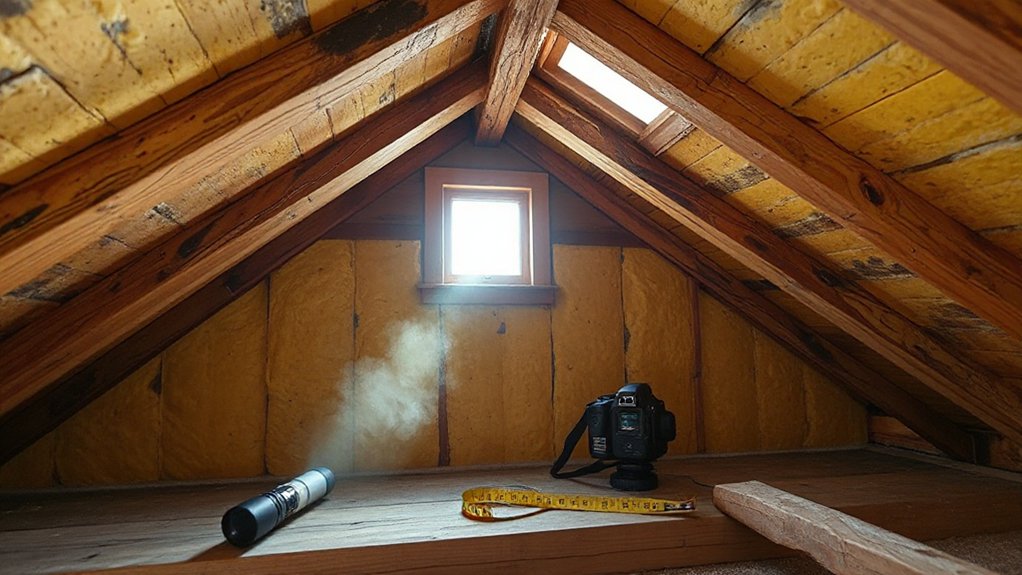
Once you’ve checked the electrics, plumbing, and heating, look at how the house manages heat and moisture, since older properties often lose warmth through uninsulated roofs and solid walls while trapping damp in poorly ventilated rooms.
Start in the loft: confirm insulation depth and coverage, and check for compressed or wet material, which can reduce thermal performance and signal roof leaks.
Inspect walls for cold spots, mould, and peeling finishes, especially behind furniture and in corners.
In kitchens and bathrooms, test extractor fans, check that vents aren’t blocked, and make sure window trickle vents open, so you maintain safe air circulation.
Look for signs of condensation on glazing and around frames.
If you see musty smells or persistent mould, treat it as a health risk.
Older Property Checks for Planning, Guarantees, and Repair Costs
Before you commit to an older property, check the planning history, paperwork, and likely repair spend so you don’t inherit unapproved work or open-ended liabilities. Ask the council for records of extensions, loft conversions, and removed walls, and match them to what you see.
If the building has Historical significance, confirm listed status, conservation rules, and any required consents, because breaches can trigger costly remedial work.
Request guarantees for damp proofing, roofing, timber treatment, glazing, and structural repairs, and verify they’re transferable and still valid.
Build a repair budget from survey findings, prioritising safety items: electrics, gas, fire separation, drainage, and structural movement.
Factor access constraints, specialist materials, and how Neighborhood development may affect party walls, rights of light, and future planning limits.
Frequently Asked Questions
What Hidden Costs Arise When Renovating a Listed or Conservation-Area Property?
You’ll face hidden costs like specialist surveys, planning and heritage-consent fees, mandated materials, and skilled trades to protect Historical significance and Architectural integrity. You’ll also budget for delays, structural upgrades, insurance, legal advice, and compliance testing.
How Can I Estimate Ongoing Maintenance Costs for an Older Home?
Coincidentally, you’ll estimate maintenance by tracking past bills, pricing annual inspections, and budgeting 1–3% of value. Prioritise Structural integrity checks and Historical features upkeep. Don’t skip roof, damp, wiring, and drainage reviews.
Are There Common Insurance Issues or Higher Premiums for Older Properties?
Yes—older properties often face higher Insurance premiums and tighter property coverage due to outdated wiring, plumbing, roofs, and claim history. You’ll see exclusions, higher deductibles, or required upgrades. You should request inspections and multiple quotes.
What Should I Ask Neighbours About Noise, Disputes, or Local Flooding History?
Like a smoke alarm test, you’ll learn fastest by asking directly. Ask neighbours about nightly noise patterns, Neighbour disputes, and any police calls. Ask for Flooding history: dates, depths, road closures, and insurer involvement.
How Do I Check for Asbestos, Lead Paint, or Other Hazardous Materials?
You’ll hire a licensed inspector for an Asbestos inspection, and you’ll order certified Lead paint testing kits or lab sampling. Don’t disturb suspect materials; review disclosures, renovation permits, and request remediation documentation before closing.
Conclusion
When you tour an older property, you’ll likely spot a loose shingle just as you notice a damp patch—two small clues pointing to bigger risks. Check the roof, flashing, chimneys, and gutters, then trace concerns down to foundations, cracks, and movement. Look for mould, rot, and musty odours in hidden spots. Confirm electrics, plumbing, and heating are safe and updated. Finally, match insulation and ventilation to the home’s age, and review records, guarantees, and realistic repair costs.