
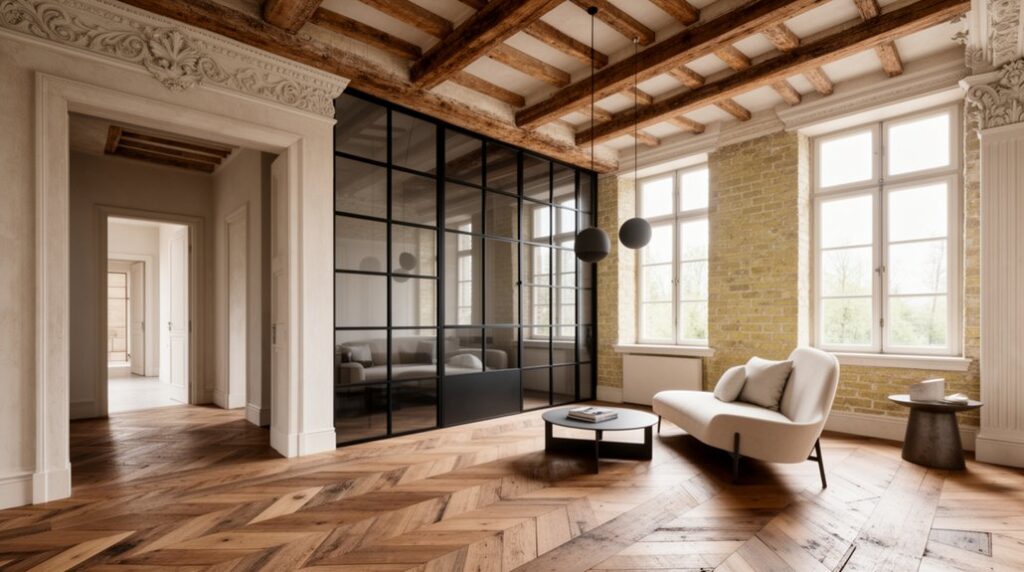

You could rip out every sash, plaster wall, and hearth and still call it an “upgrade,” but you’d end up with a hollow imitation. You modernise well when you start with what matters: original fabric, workmanship, and how the building manages moisture. You check what consents apply, then plan reversible, low-impact changes—quiet heat, careful insulation, discreet lighting, and honest kitchens and baths that don’t bully the plan. Next, you’ll need to decide where to intervene first…
Audit Significance, Condition, and Moisture Risks
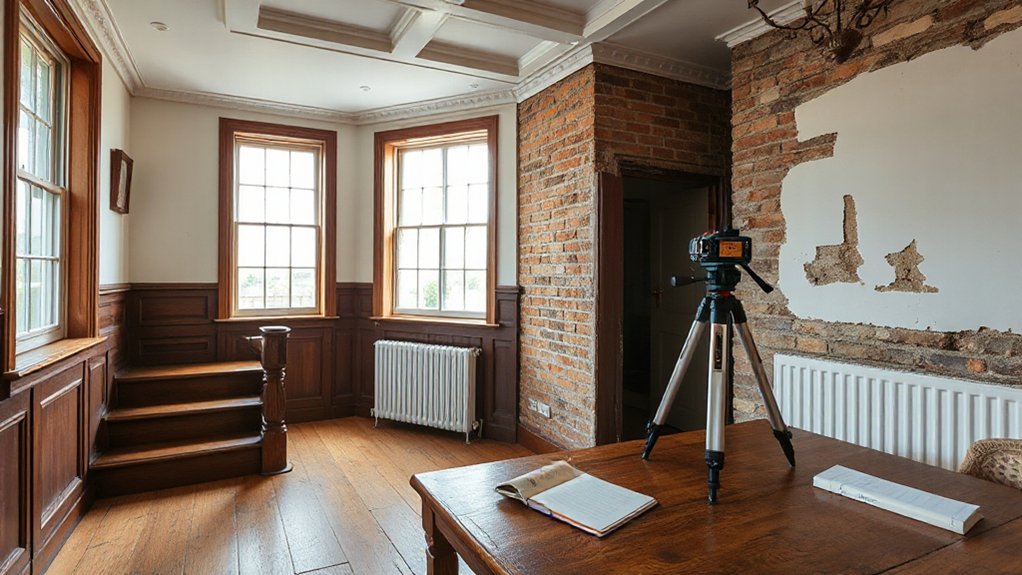
Before you specify new services or finishes, you need a clear audit of what matters, what’s failing, and where water is moving. Start with a Heritage assessment: map original fabric, later alterations, and character-defining elements such as sash profiles, lime plaster, joinery, and chimney breasts. Photograph, label, and rank significance so you don’t “improve” away evidence of age.
Then read the building like a surveyor: note cracks, deflection, beetle holes, salt bloom, and failing pointing, and relate each to construction era and materials.
For moisture management, trace sources and pathways—roof leaks, gutter overflow, bridged damp courses, cement render, blocked vents, cold corners—then test with hygrometer readings and careful moisture meter checks. Record conditions room by room.
Check Consent Rules: Listed, Conservation, Building Regs
Once you’ve understood the building’s fabric and moisture behaviour, you need to pin down what you’re legally allowed to change—and what must stay untouched. Start by confirming whether it’s listed, and at what grade, then read the listing description as a clue to what the authority values: staircases, sash windows, lime plaster, roof structure, even later shopfronts or heritage signage.
If you’re in a conservation area, check the appraisal and management plan for controls on roofs, chimneys, boundary walls, glazing patterns, and external colours. Then map every proposed alteration against consents: listed building consent, planning permission, and building regulations.
Don’t assume “like-for-like” is exempt; repairs can still trigger consent if they alter detail or material. Keep a clear paper trail for inspections and future sale.
Plan Low-Impact Upgrades: Reversible and Fabric-First
Although shiny new systems can tempt you into invasive work, you’ll modernise a heritage property more safely by planning low‑impact upgrades that respect the building’s fabric and can be undone later.
Start with a fabric-first survey: note damp paths, salt bloom, failing lime joints, and draught routes around sashes, skirtings, and floorboards.
Choose repairs that match original behaviour—lime mortar, breathable paints, and sustainable materials like wood fibre, sheep’s wool, or cork—so walls can dry and timbers don’t rot.
Fix before you add: overhaul gutters, flashings, and ventilation, then improve sealing with brush strips and secondary glazing you can remove.
Run new services through existing voids, not chased masonry, and document everything for future Heritage preservation decisions.
Quiet, Efficient Heating for Period Homes
In a period home, you can improve comfort without disturbing cornices, skirtings, or original floorboards by choosing low-profile radiant heating that tucks neatly beneath finishes and keeps visual clutter to a minimum.
You’ll also cut fuel use and noise by upgrading to a high-efficiency boiler sized for the building’s heat loss and paired with discreet, well-zoned controls.
Done carefully, these changes respect the old fabric while delivering steady, quiet warmth.
Low-Profile Radiant Heating
Because period rooms were designed around open hearths and thick masonry, you’ll often find that modern forced-air systems fight the building rather than serve it—adding noise, drafts, and intrusive duct runs.
Low-profile radiant heating restores comfort in the same quiet, enveloping way a hearth once did, without rewriting your plan.
For a careful radiant heating installation, you’ll tuck slim hydronic mats or electric film beneath finished floors, or specify micro-thin screeds that preserve thresholds and skirting lines.
You’ll protect historic boards by using breathable underlayments, perimeter expansion gaps, and reversible fixing where possible.
Zone rooms to match original use patterns—parlour, corridor, bedchamber—so you don’t overheat seldom-used spaces.
Pair it with good floor insulation and draught proofing, and you’ll raise energy efficiency while keeping grilles, radiators, and pipe chases out of sight.
High-Efficiency Boiler Upgrades
When you keep your existing radiator runs or discreet radiant zones but swap the plantroom itself, a high-efficiency boiler upgrade can deliver steadier, quieter heat without disturbing historic finishes. You’ll gain precise modulation, lower return temperatures, and condensing performance that suits cast-iron radiators and long pipework typical of Victorian and Edwardian houses.
Site the flue through existing chimneys or secondary elevations, and specify low-noise pumps, anti-vibration mounts, and lagged pipework to protect plaster cornices and joinery from thermal shock.
Choose innovative boiler technologies with weather compensation and room-by-room balancing, so you don’t overheat formal rooms or chill service wings. For sustainable energy integration, pair the boiler with solar thermal preheat or hybrid controls, preserving comfort while trimming fuel use.
Insulate Safely Without Trapping Damp
How do you add warmth to a solid-walled heritage house without inviting rot? You start by respecting how old masonry manages moisture: it absorbs, stores, and releases vapour. Choose breathable systems—wood fibre boards, lime-based plasters, and vapour-open membranes—so walls can still dry. Avoid hard cement skins and foil-backed linings that trap damp at the cold face.
You’ll also tackle thermal bridging at joist ends, window reveals, and party-wall junctions, where condensation loves to form. Detail continuous insulation, but leave safe margins around timbers and keep inspection access.
Pair insulation with ventilation strategies: restore trickle paths, use discreet airbricks, and balance extraction in kitchens and baths. Finally, monitor with hygrometers through a full heating season before closing everything up.
Lighting Upgrades That Keep Original Character
Although a heritage interior often looks its best by firelight and candle-glow, you can still upgrade lighting without flattening its period character if you treat fittings, glare, and wiring as conservation details.
Start by mapping original switch positions, ceiling roses, and picture rails, then keep them in service where you can.
Choose warm LEDs (around 2200–2700K) with high CRI, and dimmers that won’t buzz or strobe.
Reuse or restore Vintage fixtures, rewiring with fabric-braided flex and discreet earthing where required.
Add task light through freestanding lamps and shaded sconces rather than harsh downlights that punch holes in plaster.
Where you need new points, run cables through existing voids, not chased channels.
Let Decorative fixtures read as furniture: proportionate, reversible, and honest to the room’s date.
Kitchens and Bathrooms: Modern Function, Honest Finishes
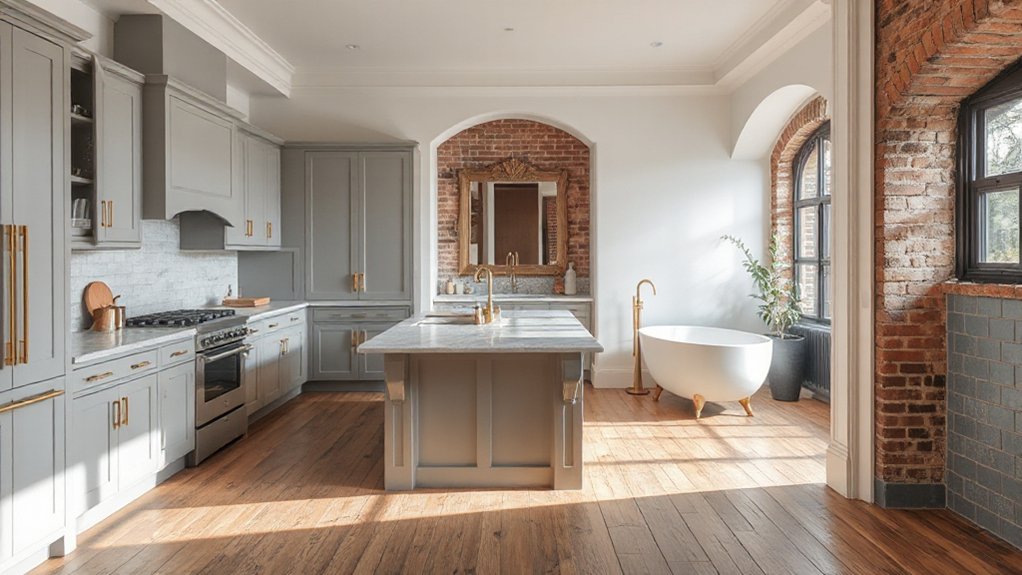
Because kitchens and bathrooms carry the heaviest daily load, they’re the rooms where modern expectations can collide hardest with old fabric—so treat every upgrade as a reversible layer rather than a reset.
Keep original plaster, skirtings, and door casings intact, and run new services through existing chases or secondary voids where possible. Choose freestanding cabinetry, furniture-style vanities, and island units that don’t require chasing masonry.
For Heritage preservation, repair what you can: reglaze sash windows, regrout with lime-compatible mixes, and refinish timber rather than replacing it. Specify honest finishes—oiled wood, enamel, stone, and simple tile—so additions read as contemporary but respectful.
For Design integration, match proportions and sightlines: align splashbacks to dado heights, keep tapware pared back, and conceal ventilation in discreet joinery.
Frequently Asked Questions
How Much Does Modernising a Heritage Property Typically Cost?
You’ll typically spend $200–$600 per sq ft to modernise a heritage property, depending on Historic preservation demands. You’ll fund surprises—lath, masonry, archaic wiring—through renovation financing, permits, and artisan labour, plus contingencies.
Will Upgrades Increase My Property’s Resale Value or Rental Appeal?
Yes—well-planned upgrades usually boost resale value and rental appeal if you respect Historical preservation and guarantee Design integration. You’ll attract heritage-minded buyers and tenants by adding discreet comfort, compliant services, and reversible improvements.
How Long Does a Full Heritage Modernisation Project Usually Take?
Like restoring a faded fresco, you’ll typically spend 6–18 months, sometimes 24+, depending on approvals and hidden decay. Historical preservation and Architectural authenticity demand careful surveys, bespoke trades, and staged compliance, so timelines lengthen.
Which Specialists Should I Hire for Heritage-Sensitive Design and Construction?
You should hire an architect skilled in architectural preservation, plus historical consultants, a conservation engineer, heritage builder, and specialist trades (masonry, joinery). You’ll also need an archaeologist and permitting expert to satisfy authorities.
What Insurance Changes Are Needed During and After Renovation Work?
You’ll update Insurance coverage before works: notify your insurer, add builder’s risk, public liability, and Heritage conservation endorsements, document period fabric. Afterward, revise sums insured, reinstate heritage rebuild clauses, and cover restored contents.
Conclusion
Modernise your heritage home by treating it like a document: read its significance, repair the fabric, and add upgrades you can undo. You’ll check consents, manage moisture, and choose heating, insulation, and lighting that work quietly behind original plaster, joinery, and fireplaces. When you tackle kitchens and baths, keep details crisp and finishes honest. Significantly, UK housing data suggests about one in five homes dates from before 1919—so you’re in good company.