
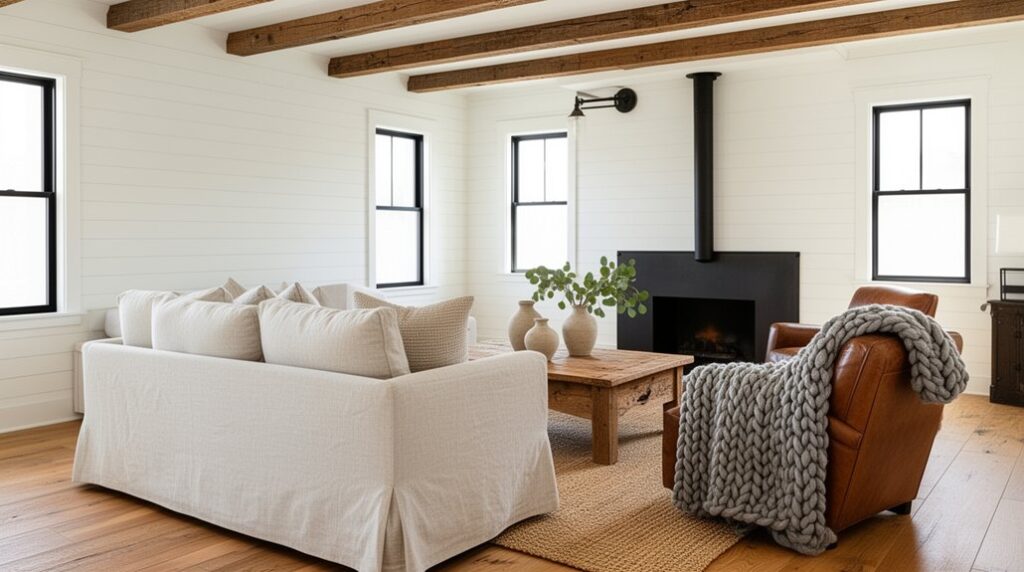

Like the farmhouse you’ve seen in a thousand stories, this look starts with comfort—but it’s sharpened by clean lines and restraint. You keep the palette calm with whites and greiges, then warm it up with honest wood, matte ceramics, and a touch of aged metal. You layer linen, wool, and woven texture so it feels lived-in, not staged. The trick is knowing what to keep rustic and what to streamline—and that’s where it gets interesting…
Define Contemporary Farmhouse (And How It Differs)
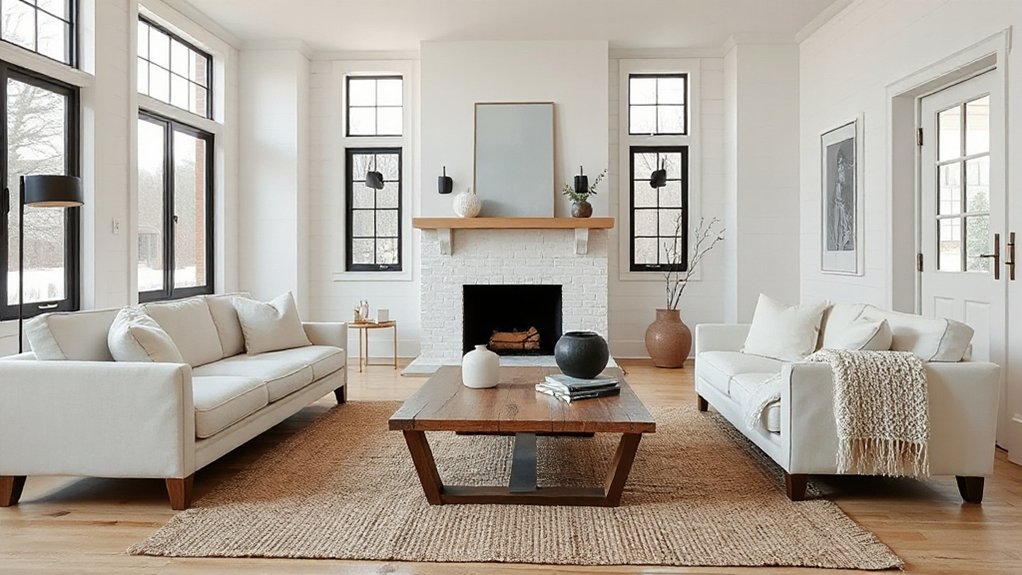
If you love the cozy pull of farmhouse style but want it to feel clean and current, contemporary farmhouse is your sweet spot. You keep the honest, lived-in comfort—think sturdy wood, welcoming textures, and practical layouts—then refine it with simpler lines and fewer frills.
Traditional farmhouse leans nostalgic: more knickknacks, distressed finishes, and overt country motifs.
Contemporary farmhouse shows the farmhouse evolution: you choose quality staples, edit the décor, and let materials do the talking. Rustic modernization means you mix warm, natural elements with crisp details like streamlined cabinetry, minimal hardware, and uncluttered surfaces.
You’ll still welcome patina and character, but you balance them with breathing room and intentional choices. The result feels grounded, calm, and confidently updated.
Build a Modern Farmhouse Color Palette
Because modern farmhouse relies on contrast as much as comfort, your color palette should feel calm, edited, and rooted in natural materials. Start with warm whites or soft greige on walls to keep rooms bright. Then add grounded depth with charcoal, inky navy, or matte black in small doses for definition.
Choose two to three earthy accents—sage, clay, muted terracotta, or dusty blue—and repeat them across the house so it reads cohesive, not themed. Keep saturation low, and let one deeper shade anchor key spaces like the entry or kitchen.
Use Seasonal decor to rotate color without repainting: swap pillows, throws, and art in autumn rusts or spring greens.
Tie choices to Sustainable practices by favoring low-VOC paints and timeless hues you won’t tire of.
Go-To Materials and Textures (Wood, Metal, Linen)
Once you’ve landed on a calm, contrast-friendly color palette, the materials you choose will do most of the heavy lifting in making modern farmhouse feel lived-in instead of flat. Reach for wood first: white oak, pine, or reclaimed boards add warmth and subtle grain. Mix smooth finishes with saw-mark texture for Vintage charm without feeling themed.
Bring in metal to sharpen the look. Blackened steel, aged brass, or galvanized touches read clean and current, especially as Industrial accents against softer surfaces. Keep the shine low; patina beats polish.
Soften everything with linen and other natural textiles. Use slubby linen, canvas, or ticking for breathable layers that drape casually. Balance rugged and refined by pairing crisp seams with frayed edges.
Furniture Shapes That Read “Updated Farmhouse
After you’ve layered in wood, metal, and linen, the next update comes from the shapes you choose. You’ll want streamlined rustic silhouettes—clean lines, softened edges, and sturdy proportions that feel classic without looking heavy.
Mix material profiles, too, like a wood top on a slim steel base or an upholstered seat on a simple frame, to keep the farmhouse look crisp and current.
Streamlined Rustic Silhouettes
While classic farmhouse furniture leans chunky and heavily turned, updated farmhouse style looks best when you choose rustic pieces with cleaner, more streamlined silhouettes. Start with a simple trestle table, a straight-armed sofa, or a bed with a plain panel headboard—forms that nod to tradition without feeling dated.
Look for gentle curves, tapered legs, and slim profiles that keep rooms airy and intentional. You’ll still get Vintage charm, but it reads as rustic elegance when the lines stay calm and unfussy.
Skip ornate carvings and overly thick frames; they can weigh down a space fast. Instead, pick pieces with honest proportions and crisp edges, then let texture and patina add the farmhouse soul.
Mixed Material Profiles
If you want farmhouse to feel current instead of costume-y, mix materials in the same furniture piece so the shape reads lighter and more intentional. Choose a dining table with a slim steel base and a thick oak top, or a console that pairs fluted wood with stone or concrete. You’ll keep the honest, rural soul, but the contrast sharpens the lines and stops bulky “country” vibes.
Look for cane inset doors, leather pulls on painted cabinetry, and woven seats on clean, squared frames. Balance matte black hardware with warm brass, and add glass-front uppers to break up heavy millwork.
When you shop, prioritize sustainable materials like FSC wood, recycled metal, and low-impact textiles. Seal and paint with eco-friendly finishes so everything feels crisp, durable, and lived-in.
How to Mix Vintage Pieces Without Looking Themed
To mix vintage pieces without looking themed, you’ve got to balance eras and styles so one old find doesn’t overpower the room. Keep it grounded with a cohesive palette—repeat a few wood tones, metals, and textiles so everything feels intentional.
Then use vintage as accents, like a weathered mirror or inherited stool, letting your cleaner-lined basics carry the contemporary farmhouse vibe.
Balance Eras And Styles
Because contemporary farmhouse thrives on contrast, you can mix eras without tipping into “themed” by giving every vintage piece a clear job and a calm backdrop. Start with your room’s bones—Farmhouse architecture like simple trim, honest beams, and straightforward lines—then layer in one or two timeworn anchors that earn their keep.
Use an antique workbench as a console, not a shrine; pair it with clean-lined lighting and a modern mirror. Keep proportions steady: match the visual weight of a chunky pine table with slimmer chairs or a streamlined sofa.
Repeat materials, not decades—wood, iron, linen—so Rustic farmhouse design feels collected, not costumed. Edit hard: if it doesn’t add function or texture, let it go.
Curate A Cohesive Palette
While vintage finds bring the soul, a cohesive palette keeps them from reading like a set. Start by pulling two neutrals from your Farmhouse architecture—warm whites, putty, weathered oak, soft black—and commit to them across walls, trim, and large upholstery.
Then choose one muted color, like sage or clay, and repeat it in small doses so your eye connects the dots.
When you mix eras, match undertones: pair creamy enamel with honeyed pine, or cool galvanized metal with crisp linen. Let patina guide you; if a piece reads rusty-brown, echo it with leather, terracotta, or Vintage gardening tools displayed nearby.
Finish with consistent finishes—brushed brass or aged iron—so every find feels intentional, not costume.
Use Vintage As Accents
Even if you love the charm of flea-market treasure hunts, vintage works best in contemporary farmhouse when you treat it like seasoning, not the whole meal. Pick one or two standout pieces per room—a worn wood stool, an enamel pitcher, an old portrait—and let them breathe against clean lines and simple textiles.
To avoid a themed look, repeat a finish, not an era. Echo aged brass in a lamp and cabinet pull, or carry weathered oak from a bench into a frame. Keep silhouettes streamlined, and edit patterns so your vintage finds read as Vintage charm, not clutter.
Balance Modern nostalgia with today’s function: rewire the sconce, upholster the chair in neutral linen, and pair antiques with matte black or warm white.
Farmhouse Lighting Layers: Ambient, Task, Accent
When you layer farmhouse lighting with intention, your home feels warm, functional, and effortlessly pulled together. Start with ambient light to set the interior ambiance: think matte-black or aged-brass flush mounts, simple lantern pendants, or recessed lights on a dimmer for a soft, even glow.
Next, add task lighting where you work—under-cabinet strips in the kitchen, a focused sconce by the sink, or an adjustable reading lamp beside a chair—so you’re never straining.
Finish with accent lighting to highlight character: picture lights over art, a small uplight on a beam, or glass-shade sconces to graze textured walls.
Mix metals, keep bulb temperatures warm (2700–3000K), and your Farmhouse lighting looks cohesive.
Decor Styling: Cozy Layers, Not Clutter
Good lighting sets the mood, and the right styling keeps that warmth from turning into visual noise. Start with a simple base: a clean-lined sofa, a solid wood table, and one grounded rug. Then add cozy layers with purpose—one chunky knit throw, two to three pillows in mixed textures, and a tray to corral remotes and candles.
Bring in rustic-modern character through honest materials: matte ceramic, aged brass, blackened steel, and woven baskets.
In the Farmhouse kitchen, keep counters calm by grouping daily tools in a crock and tucking extras into closed storage. Pull freshness from the Farmhouse garden with a single vase of clipped greens or herbs.
Edit often: if it doesn’t add comfort or function, it doesn’t stay.
Common Modern Farmhouse Mistakes to Avoid
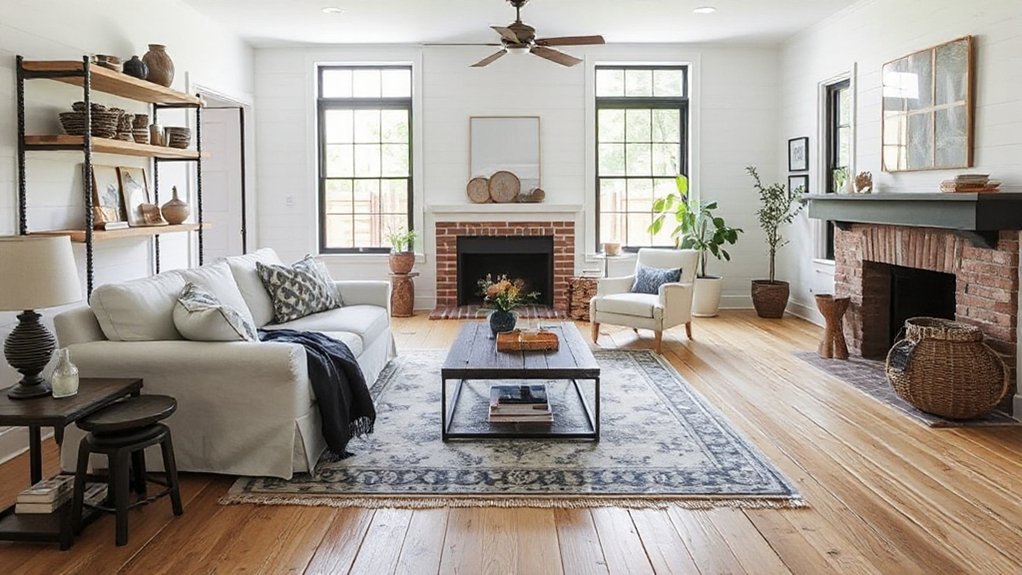
Because modern farmhouse balances clean lines with lived-in texture, the quickest way to miss the mark is to push it too far in either direction—sterile and showroom-like, or themed and cluttered. Skip the all-white washout by adding warm wood, matte metals, and a few earthy textiles.
Don’t overdo shiplap, barn doors, and word art; choose one statement and let it breathe. If you bring in Industrial influence, keep it refined—black steel, aged brass, or concrete accents—then soften it with linen, wool, and curves.
Watch your lighting: too many mason-jar pendants can feel kitschy fast. Finally, practice Eclectic mixing with restraint by repeating finishes and tones, so vintage finds and modern pieces feel related, not random.
Frequently Asked Questions
How Can I Make Contemporary Farmhouse Work in a Small Apartment?
Make contemporary farmhouse work in a small apartment by keeping a light palette, choosing slim furniture, and adding vintage accessories. Use statement lighting to define zones, layer cozy textiles, and prioritize hidden storage so it doesn’t feel crowded.
What Window Treatments Best Suit Contemporary Farmhouse Without Feeling Too Rustic?
Skip the burlap fear—you won’t lose the farmhouse feel. Choose linen-look panels in light neutrals, layer sheers, and pair with Modern blinds. Add Rustic fabrics only as trim or ties for polish.
Which Houseplants Complement Contemporary Farmhouse Style Year-Round?
You’ll love fiddle-leaf figs, snake plants, pothos, and olive trees for sturdy Indoor greenery year-round. Add peace lilies or orchids for Seasonal blooms. You’ll keep them in simple clay pots and rotate light weekly.
How Do I Choose Flooring That Fits Contemporary Farmhouse and Wears Well?
Choose durable flooring like wide-plank oak or luxury vinyl; it’ll age like a well-loved quilt. Stick to matte finishes, warm neutrals, and mixed materials. Let vintage textiles guide undertones, and prioritize scratch resistance.
What Budget-Friendly Upgrades Give the Biggest Contemporary Farmhouse Impact?
Swap in matte black Metal finishes on faucets, pulls, and lights. Add open wood shelving, simple shaker trim, and Vintage accents like thrifted mirrors or pottery. Refresh walls with warm whites and add textured linens.
Conclusion
You’re not decorating a “farmhouse” as much as you’re setting a hearth in the middle of modern life. Keep your palette like morning fog—soft whites, greiges, and earth tones—then anchor it with honest wood, matte ceramics, and worn metal. Choose clean-lined furniture, let one vintage find tell the story, and layer lighting like lanterns at dusk. Add textiles for warmth, edit often, and you’ll get cozy—never cluttered.