
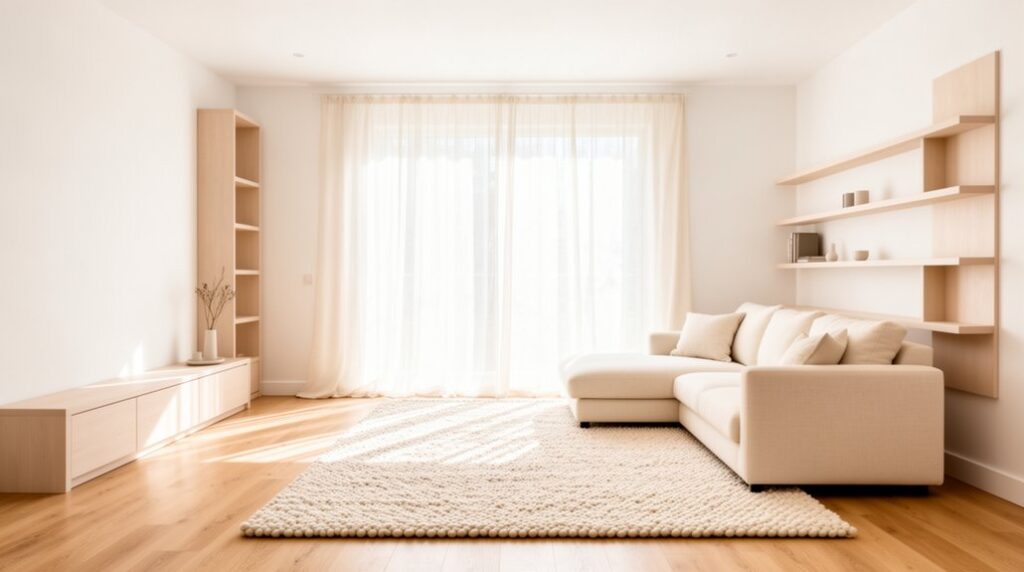

The quickest way to brighten a dark living room isn’t more lamps—it’s changing how light moves through the space. You’ll start by spotting what’s absorbing daylight, then shift to light-reflective paint, cleaner window treatments, and finishes that bounce illumination across walls and ceilings. You can also rework the layout so furniture stops blocking the best angles. Once you see where the light dies, you’ll know exactly what to change next.
Quick Audit: What’s Making Your Living Room Dark?
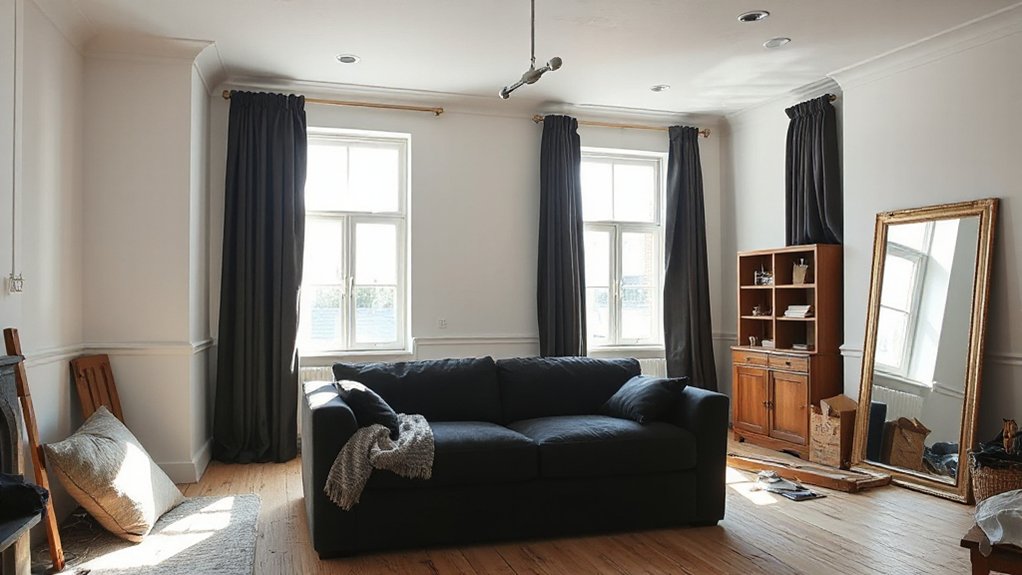
Before you buy a single lamp, do a fast audit of what’s actually absorbing light in your living room: small or shaded windows, heavy drapery, deep wall colors, matte ceilings, bulky furniture placements that block daylight paths, and low-reflectance finishes like dark woods and textured textiles.
Next, map daylight travel from each window to the room’s center. If your sofa back sits in that corridor, adjust furniture placement to open a clear lane and lower visual mass.
Check ceiling height and sheen; flat planes swallow bounce, while slightly reflective surfaces redistribute it.
Evaluate floor and rug tones; dense patterns read darker than their base color. Use Color psychology to note how saturated, cool-leaning materials feel heavier in shadow.
Finally, identify “light blockers” you can swap, slim, lift, or relocate.
Paint Colors That Brighten a Dark Living Room
Once you’ve pinpointed what’s stealing daylight—heavy textiles, dark woods, blocked light paths—use paint to push light back into the room and soften contrast. Start with high-LRV off-whites (warm alabaster, soft ivory) to bounce ambient light without reading stark.
If your room faces north, shift toward creamy, slightly warm neutrals; in south light, choose cooler whites to keep the palette crisp.
Use Color psychology to steer mood: pale greige calms, muted sage relaxes, and airy blue enlarges perceived volume. Keep chroma low so walls recede and circulation feels wider.
Consider painting trim one step brighter than walls to sharpen edges and lift ceiling lines. Select a paint finish intentionally: matte hides wall flaws, while eggshell subtly reflects light and wipes clean.
Layer Lighting for a Brighter Living Room
To brighten the room without flattening it, you’ll layer ambient, task, and accent lighting so each zone—seating, reading, and display—gets its own purpose-built glow.
Choose warm, consistent bulbs across fixtures to keep finishes true and shadows soft. Then let accents skim textured walls and millwork for depth.
Add dimmers and simple controls so you can shift from crisp daytime brightness to evening warmth with a single adjustment.
Mix Ambient Task Accent
Even if your windows are limited, you can brighten a dark living room by layering three lighting types—ambient, task, and accent—so the space reads evenly lit instead of spotlighted.
Start with ambient light that washes the ceiling and upper walls to reduce shadows and expand volume. Then assign task lighting to where you live: a floor lamp at the sofa arm for reading, a swing-arm sconce near a chair, and a slim table lamp on a console for entry drop zones.
Finish with accent lighting that skims texture—art, drapery, a stone surround—to build depth and color contrast without adding clutter.
Plan lighting zones on your furniture layout, and separate controls so you can balance brightness across the room.
Choose Warm Layered Bulbs
Although you can add fixtures all day, the room won’t feel bright if the bulbs fight each other, so choose a warm, layered mix that keeps the light consistent and flattering.
Start with Warm bulb selection: target 2700K–3000K across your ambient, task, and accent sources so walls read creamy, not gray, and skin tones stay natural.
Match lumen output to function—higher for ceiling wash, tighter beams for art, focused output for reading.
Use Layered lighting techniques with cohesive lamp finishes and shades: linen or parchment softens glare, while opal glass spreads light evenly.
In recessed cans, pick high-CRI LEDs (90+) so wood floors, textiles, and paint undertones look true.
Keep bulb shapes consistent in visible fixtures for a calm, intentional ceiling line.
Add Dimmers And Controls
When you can dim and zone each layer, the same fixtures shift from flat to luminous with a thumb slide. Put ambient cans on dimming switches, then separate wall washers, picture lights, and floor lamps onto their own circuits so you can sculpt brightness across the seating plan.
Aim controls near the entry and within reach of the sofa to support real use, not showroom scenes.
Choose matte white plates to disappear against trim, or brushed brass to echo hardware and warm reflectance. Add three-way switching for circulation paths, and set low-level presets for evenings to reduce glare on glossy paint, glass, and screens.
With smart lighting, you’ll group fixtures by task—reading, entertaining, cleaning—and fine-tune color temperature and output without rewiring.
Window Treatments That Let In More Daylight
If your living room feels dim despite decent window size, your window treatments may be blocking more daylight than you realize. Start by clearing the glass line: mount rods 6–10 inches wider than the frame and hang them high, so panels stack off the window when open.
Choose sheer curtains in a tight weave that filters glare without flattening contrast, and layer a room-darkening drape only where you truly need privacy. Skip heavy headers and bulky pleats; opt for ripplefold or simple grommets for a slimmer stack.
If you like a tailored top, use shallow window valances or a slim cornice that sits above the glazing. Finish with light-colored linings and low-profile shades that disappear into a compact headrail.
Bounce Light With Mirrors and Shiny Surfaces
Place a mirror where it can actually catch and redirect daylight—typically on the wall opposite or adjacent to your main window—so the room reads wider and brighter without adding fixtures. Prioritize intentional mirror placement: align the glass with the window’s sightline, and hang it at eye level to pull light deep into the plan.
Choose larger panes or a grouped grid to increase reflective area without visual clutter.
Layer in shiny surfaces to amplify the effect: a lacquered side table, satin-brass hardware, glossy ceramic lamps, or a glass-topped coffee table. Keep finishes coordinated—warm metals with warm woods, chrome with cool palettes—so reflections look polished, not chaotic.
Avoid heavily antiqued mirror tints that absorb light; go clear or subtly smoked instead.
Rearrange Furniture to Open the Room to Light
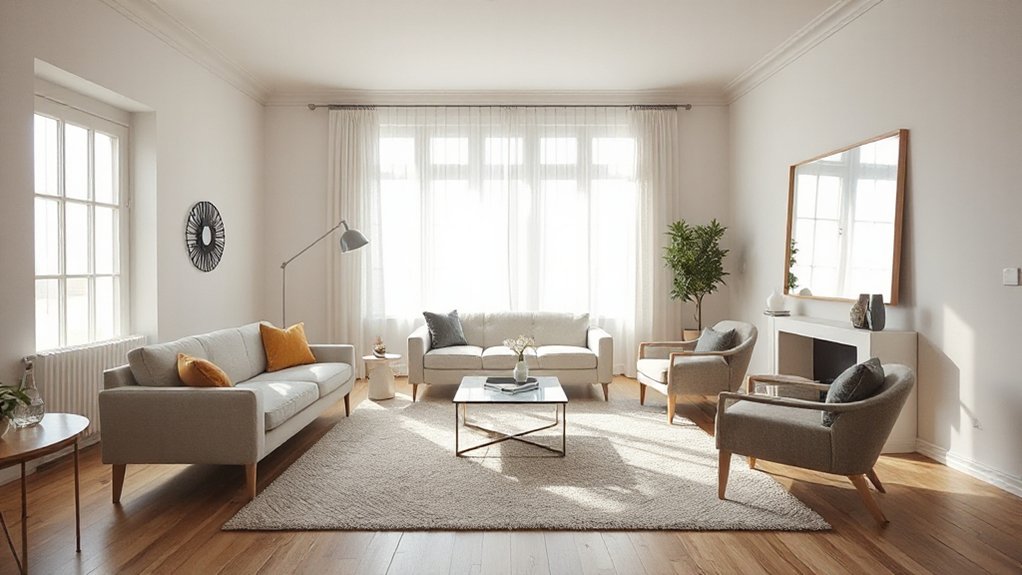
Mirrors and glossy finishes can only throw light where the layout lets it land, so start by clearing a clean path from your windows into the room. Pull the sofa off the glass line and float it on a rug, leaving a slim circulation lane behind.
Shift tall bookcases and wingbacks to interior walls so they don’t cast hard shadows across the sill zone.
Treat your furniture arrangement like a lighting plan: keep low silhouettes in the window half, and cluster higher pieces deeper in the footprint.
Angle chairs 10–15 degrees toward the daylight to widen the perceived beam.
Choose a leggy coffee table and open-base media console so light threads underneath.
Edit side tables and floor lamps that crowd corners; open space design needs breathing room.
Replace Dark Finishes With Lighter Materials
Because dark finishes absorb daylight instead of bouncing it, swapping them for lighter materials gives you the fastest visual lift without changing the room’s footprint. Start with the biggest planes: refinish or replace espresso floors with white oak, ash, or a pale matte seal; paint heavy trim a warm off-white to sharpen edges.
If built-ins read like a shadow mass, reface them in light veneer, lacquer, or painted MDF, and specify slim pulls in brushed nickel. Use Material contrast strategically: pair a light wall color with a slightly deeper ceiling, or keep walls light and introduce a pale stone hearth.
Prioritize finish textures that diffuse glare—satin paint, honed stone, and low-sheen woods—so light spreads evenly across the room.
Light-Boosting Rugs, Pillows, and Decor Choices
Even if your walls and floors skew light, textiles and small decor can either soak up daylight or throw it back into the room. Anchor the seating zone with a pale rug in wool or flatweave cotton; choose a low pile to keep edges crisp and reflective. If you want pattern, use high-contrast geometrics on an ivory ground to read bright from across the room.
Build a cushion mix that bounces light: linen, washed cotton, and subtly lustrous velvet in warm whites, sand, and soft blush. Add colorful throws in airy weaves, draped to break up dark upholstery without adding visual weight.
Finish with vibrant accessories—ceramic bowls, glass vases, and framed prints with generous mats—to create light-catching highlights at eye level.
Fix Dark Corners With Simple Targeted Lighting
When a corner reads as a visual dead zone, treat it like a mini lighting plan instead of hoping the ceiling fixture will reach it. Start by mapping tasks: reading chair, plant, art, or entry drop zone.
Then layer Accent lighting at two heights so shadows soften, not deepen.
Use corner lamps with slim bases to preserve circulation and keep sightlines open. Choose an uplight torchiere to wash the ceiling, then add a low-level plug-in sconce or picture light to graze texture on plaster, brick, or drapery.
Aim beams at vertical surfaces, not the floor, to expand perceived volume. Pick warm-dim LEDs (2700–3000K) and matte shades to prevent glare.
Put everything on a dimmer or smart plug so the corner stays balanced at night.
Frequently Asked Questions
How Much Does It Cost to Brighten a Dark Living Room Remodel?
You’ll typically spend $2,000–$15,000 to brighten a dark living room remodel, depending on layout changes, Lighting fixtures, paint sheen, reflective finishes, and Window treatments; upgrade glazing, add layered LEDs, and specify lighter flooring.
Do I Need Permits to Add New Lighting Circuits or Windows?
Yes—you’ll usually need permits; don’t worry, it won’t derail your timeline. New lighting circuits trigger building codes and inspections; adding or resizing windows affects structure and egress. You’ll navigate the permit process with plans.
How Long Does a Typical Brightening Renovation Take From Start to Finish?
You’ll typically finish in 4–8 weeks, depending on scope. You’ll spend 1–2 weeks on space planning, 2–4 on lighting options, and days on paint colors, trim, glazing, and final punch work.
Will Brightening Changes Increase My Home’s Resale Value?
Yes—brightening updates can boost resale value; buyers picture sun pooling on pale walls and clean sightlines. You’ll win with Interior painting, lighter materials, and tailored Window treatments that frame views, balance proportions.
Can I Brighten a Rented Living Room Without Permanent Modifications?
Yes, you can brighten a rented living room using Temporary solutions and Rental friendly upgrades: layer mirrors, add high-CRI floor lamps, swap in sheer curtains, use peel-and-stick film, and choose light rugs and modular furniture.
Conclusion
When you audit the room, swap in light-reflective finishes, and layer lighting, you’ll turn gloom into glow fast. Start with a warm white paint, sheer window panels, and a large mirror opposite the window to bounce daylight deeper. Then add an ambient ceiling fixture, a floor lamp for seating, and a picture light for depth. In one north-facing townhouse, these moves lifted the space from cave-like to crisp, airy, and usable.