
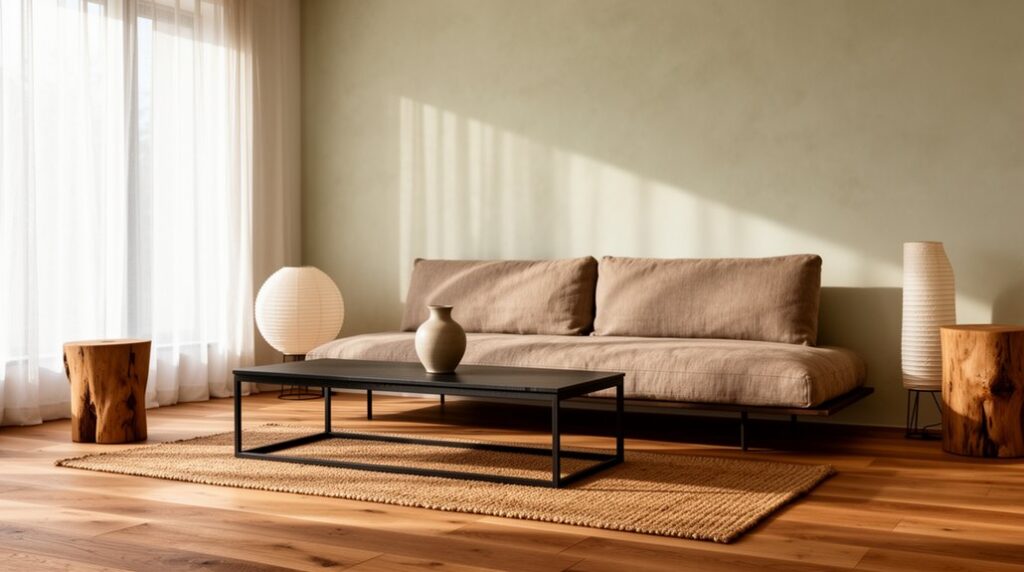

You probably don’t know that Japandi isn’t a strict style—it’s a set of quiet rules that keep a room feeling calm. You’ll start with a muted palette, then choose low, clean-lined furniture that supports easy movement. You’ll favor pale wood, linen, and stone, and you’ll keep surfaces clear so each object earns its place. The small choices matter most, and the next ones decide whether your space feels grounded or merely bare.
Japandi Living Room Basics: 5 Rules for Calm
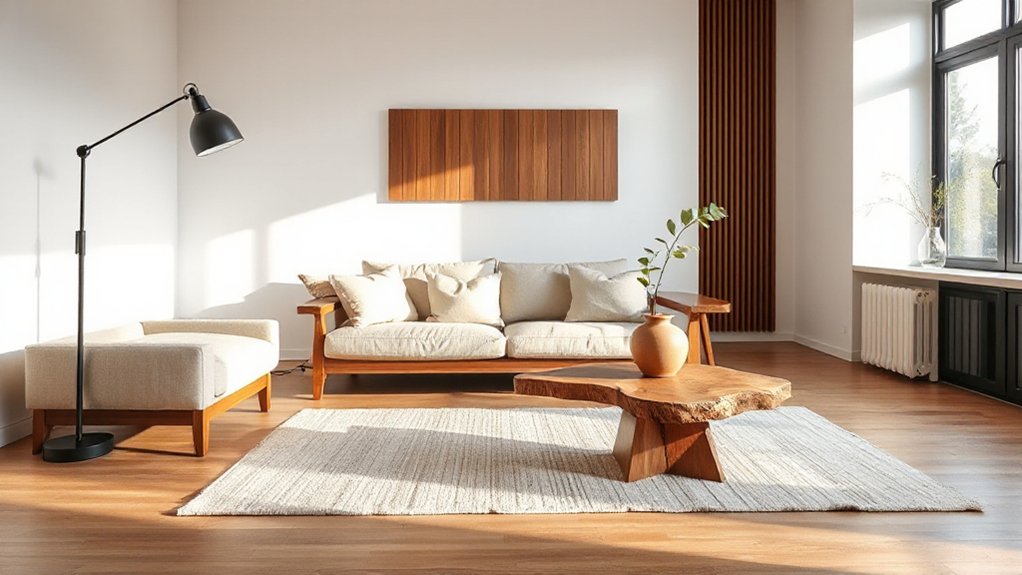
If you want a living room that feels quiet and grounded, start with the Japandi essentials: blend Japanese restraint with Scandinavian warmth, keep only what earns its place, and let natural materials and soft light do the work.
Follow five rules. First, commit to Minimalist aesthetics: reduce visual noise, hide clutter, and edit decor. Second, choose low, simple furniture with clean lines, built for everyday use. Third, use natural textures—wood grain, linen, wool, stone—to add depth without fuss.
Fourth, honor Cultural influences with honest craftsmanship: handmade ceramics, joinery, and a few meaningful objects, not collections. Fifth, plan negative space like furniture; give each piece breathing room and clear pathways.
You’ll get calm through restraint, comfort through tactility, and a room that’s easy to maintain.
Choose a Japandi Living Room Color Palette
Once you’ve edited the room down to what earns its place, color sets the tone for everything that stays. Start with a quiet base: warm white, oatmeal, stone, or soft greige. These shades reflect light gently and let texture do the work.
Use Color psychology to guide your mood—beige and sand read grounded, muted greens feel restorative, and charcoal adds focus without shouting.
Keep the palette narrow and intentional. Aim for three layers: a base neutral, one nature hue, and a dark anchor. Repeat each color in small, useful touches—linen, pottery, paper, wood—so palette coordination feels effortless.
Avoid high-saturation brights and stark contrasts. Choose matte finishes and sun-faded tones; they age well, hide wear, and keep the room calm.
Plan Japandi Living Room Furniture and Layout
After you’ve set a calm palette, let furniture and layout carry the same quiet intention. Choose fewer pieces, each with purpose, and keep sightlines open.
Anchor the room with a low-profile sofa, then add one grounded chair or bench to balance it. Use furniture arrangement to support daily flow: leave clear paths, face seating toward conversation, and avoid blocking windows or doors.
Keep surfaces spare and storage closed so the room can breathe. Place a single table within easy reach, not centered by habit.
For lighting placement, layer a soft overhead glow with one focused lamp near reading or seating zones, and aim light toward walls to reduce glare. Let natural light lead, then supplement only where you need it.
Layer Japandi Textures: Wood, Linen, Stone
With the layout set and sightlines open, texture becomes the quiet layer that gives a Japandi living room its warmth. Start with wood as your base: pale oak or ash for tables, shelving, or frames, kept matte so grain reads softly.
Add linen where your body meets the room—upholstery, cushions, simple drapery—so light diffuses and edges feel calm.
Bring in stone with intention: a slab top, a small side surface, or a hearth surround that grounds the palette and cools the touch.
Aim for Textural contrast without noise: smooth beside nubby, warm beside cool, hard beside yielding.
Keep finishes honest and minimal; that’s how you get Material harmony and daily ease.
Add Japandi Living Room Décor (Plants, Art, Storage)
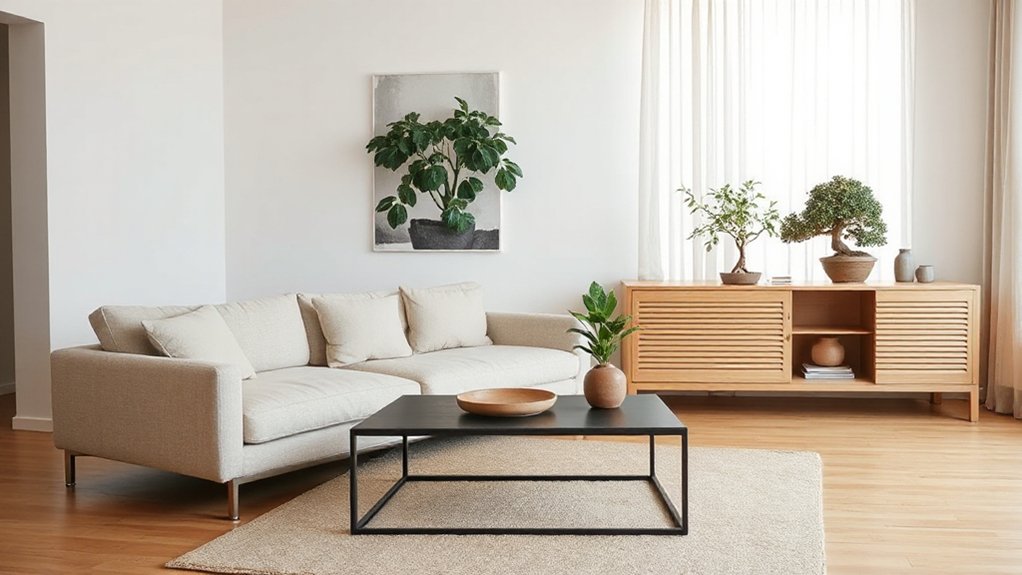
Because Japandi style values calm over clutter, choose décor that earns its place through function and quiet beauty. Start with minimalist plant arrangements: one sculptural branch in a ceramic vase, a mossy bowl, or a single floor plant in a woven pot. Keep greens grouped, not scattered, and let negative space frame them.
For art, use art placement techniques that feel intentional: hang one textured print at eye level, align edges with furniture, and keep frames slim in light wood or black. Limit colors to earthy neutrals.
Add storage that disappears: lidded baskets, low cabinets, and trays that corral remotes. Display only what you use daily, then tuck the rest away, effortlessly.
Frequently Asked Questions
What Is the Difference Between Japandi and Scandinavian Interior Design?
You’ll notice Japandi blends Japanese wabi-sabi calm with Scandinavian coziness, while Scandinavian stays brighter and more playful. Japandi favors muted Color palettes and organic Material choices; Scandinavian leans light woods, crisp whites, and textiles.
How Do I Make a Japandi Living Room Kid- and Pet-Friendly?
Choose durable materials like washable slipcovers, tight-weave rugs, and sealed wood; keep low, rounded furniture. Add closed storage for toys, use playful decor sparingly, anchor plants out of reach, and define clear zones.
What Lighting Temperatures and Fixtures Suit a Japandi Living Room Best?
Choose warm 2700–3000K light: soft yet clear. You’ll layer ambient lighting with paper lanterns, wood pendants, and slim floor lamps. Keep fixture selection simple—matte, natural materials—then add dimmers for calm functionality.
How Can I Incorporate Technology Without Disrupting Japandi Minimalism?
You’ll keep tech quiet by hiding cables, choosing matte finishes, and using Smart integration with discreet hubs. Pick minimalist gadgets, mount screens flush, use voice control, and tuck chargers in wood trays. Let natural textures lead.
What Are Budget-Friendly Ways to Achieve a Japandi Look?
Choose budget decor that’s natural and simple: linen covers, bamboo shades, neutral rugs. You’ll thrift wood pieces, sand and oil them, and add DIY projects like clay vases, branch art, and floating shelves.
Conclusion
You’ve shaped a Japandi living room by pairing calm rules with a muted palette, low lines, and clutter-free flow. Keep choosing pale wood, soft linen, and steady stone, then balance them with plants, pared-back art, and smart storage. Let light lead and function follow. In this space, simplicity stays strong: less, but better. Your room becomes a quiet refuge—clean, cozy, and considered—where every object earns its place, and peace feels present daily.