
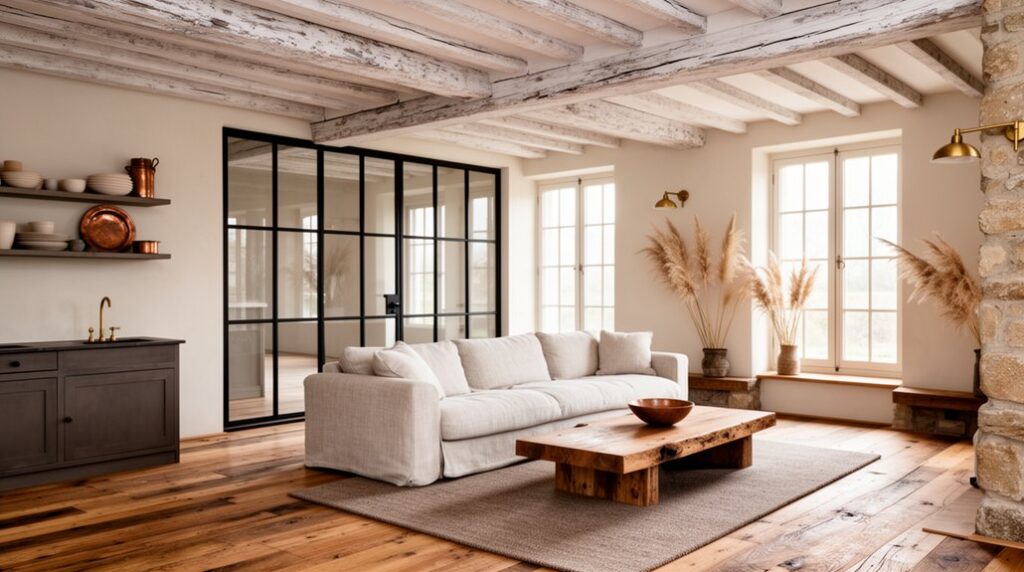

Nearly 60% of farmhouse conversions overspend on new finishes, then wonder why the rooms feel generic. You’ll get a better result when you start by protecting what’s already honest—wide plank floors, hand-hewn beams, worn hardware—and then layer in matte neutrals and earth tones that respect the patina. Add clean-lined furniture and a touch of dark metal to sharpen the texture. Next, you’ll want to see how lighting and shelving can make or break it…
Preserve Original Farmhouse Details First
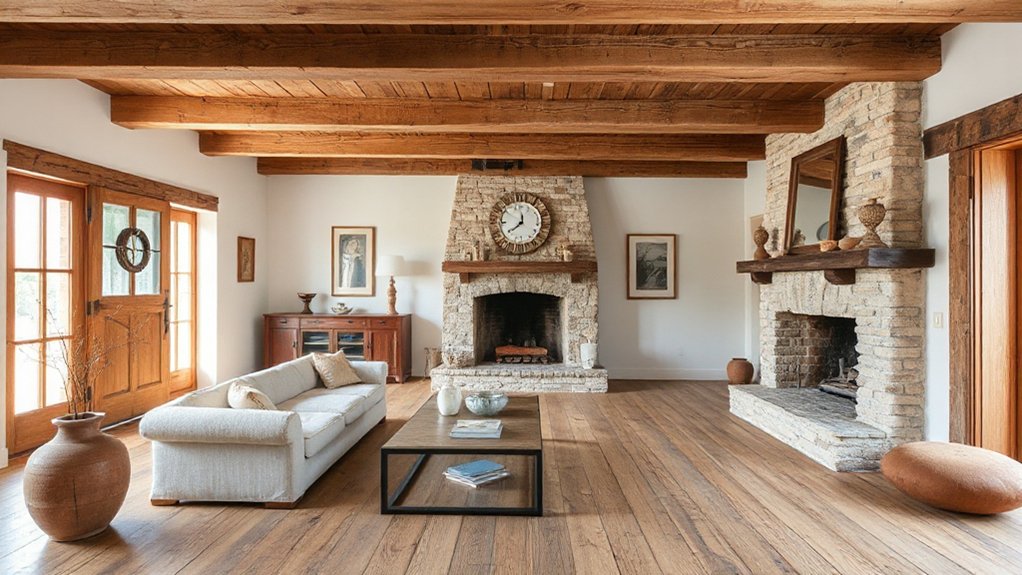
Before you pick up a paintbrush or order new fixtures, walk the house and protect what it already does well: the original farmhouse bones. Photograph joinery, hinges, and trim profiles, then label what stays.
Strip carpet to reveal wide planks, and repair them with matching species, not “new” boards. Keep ceiling beams exposed, but treat them for pests and check spans before you hang anything heavy.
Save original doors, latches, and sash weights; clean, wax, and tune them so they work daily. Patch plaster instead of swapping to drywall where you can, and reuse reclaimed boards for small infills.
You’re not chasing perfection—you’re honoring Farmhouse history and highlighting rustic craftsmanship with every careful fix.
Pick Modern Rustic Colors That Match Patina
Choose patina-friendly neutrals—warm whites, flax, stone, and weathered gray—so your original beams, worn brick, and aged metal stay the heroes.
Layer earth tones with depth like clay, tobacco, moss, and oxblood, and keep them in matte finishes that feel chalky and timeworn.
Use soft contrast rather than sharp black-and-white, so every surface reads as lived-in and historically grounded.
Patina-Friendly Neutral Palettes
Because old beams, brick, and weathered metals already carry their own color story, you’ll get the most authentic modern rustic look by building a neutral palette that supports patina instead of scrubbing it out.
Start with warm off-whites and chalky creams on walls so soot marks and timber grain read intentional, not dirty. Use stone greige, linen, and oatmeal in upholstery to keep Neutral harmony across rooms while letting aged iron and rubbed brass stay prominent.
Choose matte finishes, limewash, and mineral paints; they soften glare and mask inevitable scuffs that come with real living and Patina development.
Anchor floors with natural oak, sisal, or worn wool rugs, then repeat blackened metal in lighting and hardware to echo existing fixtures. Keep trim slightly darker to frame history.
Earth Tones With Depth
Once your neutrals set a calm backdrop, bring in earth tones with depth that feel like they’ve always belonged to the house. Pull cues from aged beams, soot-dark hearth bricks, and weathered floors: tobacco brown, clay, peat, and oxblood read authentic beside patina.
Layer them through wool throws, saddle-leather chairs, and woven jute so color arrives with texture, not gloss.
Anchor these shades with Industrial metals—blackened steel shelving, burnished brass pulls, or iron pendants—to echo old farm hardware without looking themed.
Then add Vibrant accent colors in small, heritage-leaning hits: a persimmon crock, deep teal enamelware, or mustard ticking stripes.
Keep repeats tight across rooms so the palette feels collected, not decorated. Add depth by mixing warm and cool undertones deliberately.
Matte Finishes, Soft Contrast
While glossy paint can make old timber and worn stone look newly staged, matte finishes keep the patina in charge and let your palette read honest. Choose clay, chalk, and mineral paints on walls, built-ins, and trims so light falls gently across tool marks and age-darkened grain.
Build soft contrast by pairing warm off-whites with smoke grey, moss, or inky blue, then repeat one tone in textiles and ceramics. Keep undertones consistent: if your beams read amber, pick creamy whites and earthy greens; if stone leans cool, use putty, slate, and iron.
Use matte black sparingly on hardware to outline joinery without shouting. Finish with linen, wool, and unlacquered brass so the room feels inherited, not themed.
Update Floors and Walls Without Losing Character
If you want fresher surfaces without erasing the farmhouse story, treat floors and walls like patina you can refine—not replace. Start by de-griming timber boards, then spot-sand only splintered edges so saw marks and nail holes stay visible. Patch gaps with tinted filler, not bright putty, and use a breathable seal that won’t plasticize the grain.
On masonry or plaster, repair cracks with lime-based mixes and feather repairs so they read honest. Keep original beadboard where you can; if panels are missing, splice in reclaimed lengths and align profiles.
Let Industrial fixtures wash light across texture, and hang Vintage signage where old paint ghosts show. Add runners, not wall-to-wall, so wear paths remain.
Choose Modern Finishes That Feel Farmhouse-Right
Because a converted farmhouse already carries its own visual history, you’ll get the best results by choosing modern finishes that support that patina instead of competing with it. Stick to honest materials: hand-troweled lime plaster, matte paints, and oiled timber that lets grain show through.
Pick metals that read workmanlike—blackened steel, aged brass, or brushed nickel—and repeat them in taps, latches, and Industrial fixtures so the house feels intentionally updated.
Keep tile choices quiet and mineral: clay, slate, or off-white zellige with imperfect edges. Use glass sparingly, preferring reeded or seeded panes that echo old windows.
Then add Contemporary artwork in restrained palettes, framed in thin oak or iron, so it feels collected, not staged.
Add Clean-Lined Furniture to Balance Rough Textures
To keep reclaimed beams, stone, and weathered boards from feeling heavy, you’ll want clean-lined furniture that brings calm structure to the room. Choose streamlined sofas or sectionals, pair them with minimalist tables and casegoods, and let the simple profiles honor the farmhouse shell instead of competing with it.
Finish the balance with sleek lighting and a few crisp accents that highlight texture while keeping the heritage details front and center.
Streamlined Sofas And Sectionals
Dial in furniture arrangement with purpose. Float the sofa slightly off the wall to show original wainscoting, or square a sectional to frame a hearth without blocking circulation.
Add a nubby throw, saddle-leather pillows, or a vintage grain-sack stripe for texture that nods to working heritage, not clutter. Keep the scale generous, but the lines calm.
Minimalist Tables And Casegoods
Once your seating layout feels settled, let your tables and casegoods bring a quieter counterpoint to all that age-worn wood and stone. Choose pieces with slim profiles and crisp edges, so the room’s beams and patched floors stay the headline.
A trestle-inspired console with Industrial metal legs nods to farm tools without feeling heavy.
For coffee and dining tables, keep surfaces simple: a solid plank with eased corners, or a Glass top that shows off the rug weave and worn boards beneath.
Pick closed-front sideboards to hide modern clutter, but favor flat panels, touch-latches, and minimal pulls.
Repeat one wood tone that echoes existing trim, then let matte black or iron hardware stitch old and new together.
Scale matters—leave generous walkways.
Sleek Lighting And Accents
Because rough-hewn beams, limewashed stone, and scuffed plank floors already carry the farmhouse story, let your lighting and accents show up with clean lines and disciplined silhouettes. Choose slender pendants in aged brass or blackened steel, and keep shades simple so the texture stays the hero.
Layer Smart lighting with warm-dim LEDs, then set scenes for cooking, reading, and evening glow without adding visual clutter.
Balance rugged walls with a crisp-lined bench, a low-profile sofa, or a narrow console in oak or painted ash.
Use accent sculptures sparingly: a carved basalt form, a matte ceramic vessel, or a forged-iron piece that nods to old tools.
Anchor each vignette with negative space and one honest material.
Keep cords hidden, trims tight, and proportions calm throughout.
Use Modern Lighting to Sharpen Rustic Rooms
While reclaimed beams and timeworn stone set the mood, modern lighting gives the room its edge and keeps it from reading like a period set.
Start by layering: a clean, dimmable ceiling source for daily tasks, then targeted pools of light to carve texture from plaster, brick, and oak.
Choose Industrial fixtures in blackened steel or aged brass to echo old hardware without copying it.
Hang statement pendants low over the farm table or island to anchor the room and tighten proportions.
Use warm LEDs (2700K) to flatter patina, and aim wall washers up stone chimneys to reveal tooling marks.
Put everything on separate circuits, so you can shift from worklight to evening glow.
Style Open Shelves So They Look Curated
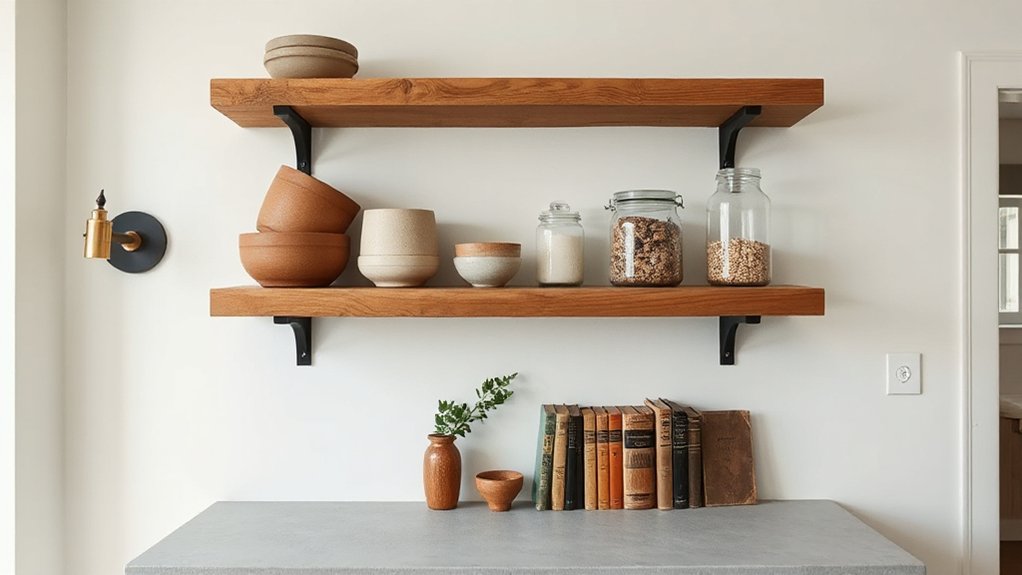
After you’ve set the mood with layered lighting, open shelving becomes the next place to control what the room shows off. Treat each shelf like a working display: start with your everyday pieces, then edit hard. Group decorative dishware by material—stoneware with stoneware, clear glass with clear glass—so the textures read as intentional, not busy.
Build styled vignettes in threes: a stack of plates, a low bowl, and a tall pitcher. Leave breathing room around each cluster, and keep the back of the shelf quiet so profiles stand out.
Repeat one historic cue—turned wood, hand-thrown rims, iron brackets—across shelves for continuity. Mix heights, but limit colors to the room’s palette. If it doesn’t earn its spot, store it.
Add Vintage Accents and Cozy Textiles Carefully
Once your shelves read curated, you can warm the room with vintage accents and textiles that feel earned, not staged. Choose one or two timeworn pieces with a clear story: a brass candlestick, a stoneware crock, a framed seed packet, or a hand-mended basket. Let patina show; don’t polish it away.
Group finds by material so they look intentional, and keep breathing room around them to avoid clutter.
Layer cozy textiles the way a farmhouse would’ve accumulated them. Add a wool throw over a leather chair, linen curtains that puddle slightly, and a faded runner with muted reds or indigo. Stick to natural fibers for grip and warmth.
Repeat one color twice, then stop—Vintage charm reads best in restraint.
Frequently Asked Questions
How Do I Handle Building Codes When Converting a Farmhouse Interior?
Start by calling your local building department; you’ll confirm permits, zoning regulations, and required inspections. If Historical preservation applies, you’ll document original fabric and coordinate with reviewers. Hire a code-savvy architect; you’ll meet egress, fire, energy.
What Budget Range Should I Expect for a Modern Rustic Renovation?
You’ll likely spend $150–$400 per square foot—because why not pay extra for “authentic” charm? For rustic decor, do ruthless budget planning: reserve 15–25% contingency, prioritize structural, then heritage textures like reclaimed wood, stone, iron.
How Can I Improve Insulation and Energy Efficiency Without Major Alterations?
You can boost comfort without big changes: add breathable insulation materials like sheep’s wool, hemp, or cellulose; seal drafts with lime-based caulk; fit secondary glazing and thick curtains; prioritize energy upgrades: LED lighting, smart thermostats.
Which HVAC and Ventilation Upgrades Work Best in Older Farmhouse Structures?
Like a warm quilt, you’ll upgrade best with heat pumps, sealed ducts, and HVAC zoning to tame drafty rooms. You’ll add balanced Ventilation systems—ERV/HRV—preserving timber character while quietly sweeping moisture and odors out.
Do I Need Special Insurance or Permits for a Converted Farmhouse?
Yes—you’ll likely need permits for structural, electrical, plumbing, HVAC, and change-of-use work, plus updated homeowners or commercial coverage. Tell your insurer about rentals, outbuildings, Farmhouse decor, and rustic charm features like reclaimed timber.
Conclusion
When you style a converted farmhouse, you’re not chasing perfection—you’re protecting its past. Preserve planks, posts, and patinated pulls first, then pair them with calm, clay, and creamy colors in matte finishes. Keep floors and walls honest, not glossy. Choose simple, streamlined seating so rough beams and brick can breathe. Layer lanterns, linear lights, and low lamps to spotlight structure. Curate shelves with fewer, better pieces. Finish with vintage finds and cozy cloth.