
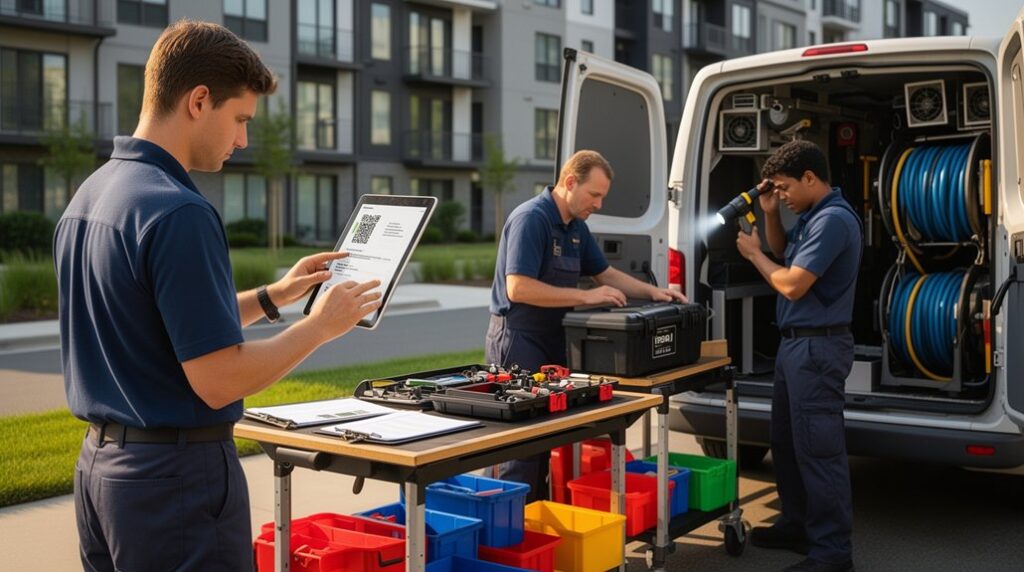

You don’t need a bigger team to tighten maintenance performance. You can start by auditing your current workflow, then standardize checklists and SOPs so every tech works the same way. Set inspection schedules, prioritize work orders by safety and tenant impact, and route requests through a centralized CMMS. Keep critical parts in stock and track a few KPIs like response time and repeat repairs. Next, you’ll see where small process gaps are driving most delays…
Audit Your Property Maintenance Workflow First
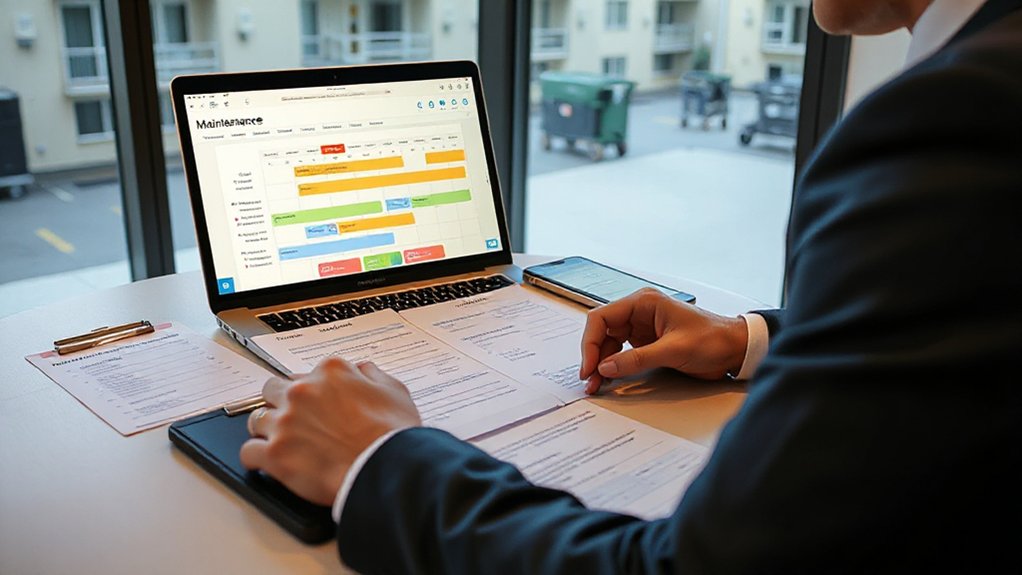
Before you try to speed up maintenance or cut costs, map your current workflow end to end so you can see exactly where time and money leak out. Track each step from request intake to triage, vendor dispatch, onsite access, completion, invoicing, and closeout. Note who touches the ticket, what tools you use, and where handoffs stall.
Pull 60–90 days of work orders and tag delays: slow approvals, missing photos, unclear scopes, parts waits, no-shows, or access issues. Compare planned vs actual labor and materials to tighten budget planning.
Review Tenant communication logs to see whether updates reduce repeat calls and missed appointments. Then quantify waste in hours and dollars, rank fixes by impact, and set baseline metrics for cycle time and cost per job.
Standardize Property Maintenance Checklists and SOPs
Turn your best recurring work into core checklist templates so every inspection, turnover, and repair follows the same steps.
Lock down your SOPs with version control so techs always use the latest procedure and you can track what changed and why.
Then assign tasks by role—who inspects, who approves, who repairs—so handoffs stay clean and accountability’s clear.
Core Checklist Templates
When you standardize your property maintenance checklists and SOPs, you eliminate guesswork and get consistent results across every unit, vendor, and technician. Build core checklist templates for recurring work: turns, preventive maintenance, seasonal inspections, and emergency response.
Start each template with scope, required tools, safety steps, and pass/fail standards. Break tasks into sequenced, time-boxed actions: inspect, test, clean, repair, verify. Include photo requirements to protect property aesthetics and document before/after conditions.
Add fields for parts used, meter readings, and warranty info to speed approvals and reduce repeat visits.
Bake in tenant communication steps: entry notice timing, access instructions, status updates, and completion confirmation. Finish with a supervisor sign-off and a “next action” box so nothing stalls.
Keep templates printable and mobile-friendly.
SOP Version Control
Core checklist templates only work if everyone uses the same, current version, so you need tight SOP version control to prevent outdated steps, missed safety checks, and inconsistent quality. Store every checklist and SOP in one system of record, not scattered email attachments.
Use clear naming (Property-Task-Version-Date), lock editing to one owner, and require change notes for every update. Publish revisions with a short summary: what changed, why, and what to watch for on site.
Retire old files by archiving them and disabling links, so nobody can “reuse” last month’s PDF. Add an effective-date field and a review cadence (quarterly or after incidents).
Keep workflow documentation aligned by updating screenshots, forms, and tool settings whenever the SOP changes. Audit randomly to confirm crews are opening the latest version each time.
Role-Based Task Assignments
How do you keep maintenance checklists consistent across multiple properties and shifts? Start with role-based task assignments tied to one master SOP. Break each checklist into clear owners: techs handle preventive tasks, porters cover daily common-area checks, vendors complete specialty repairs, and managers verify closeout.
Use Property delegation rules so every task has a primary and backup assignee, plus deadlines and required photos. Standardize pass/fail criteria and parts notes to eliminate “done” without proof.
Build Training programs around each role’s checklist: short demos, shadowing, and quick quizzes on safety, lockout/tagout, and documentation. Then audit weekly: compare completion rates, spot recurring misses, and update assignments when workloads shift.
You’ll reduce rework and handoff errors fast.
Streamline Property Maintenance Inspections and Schedules
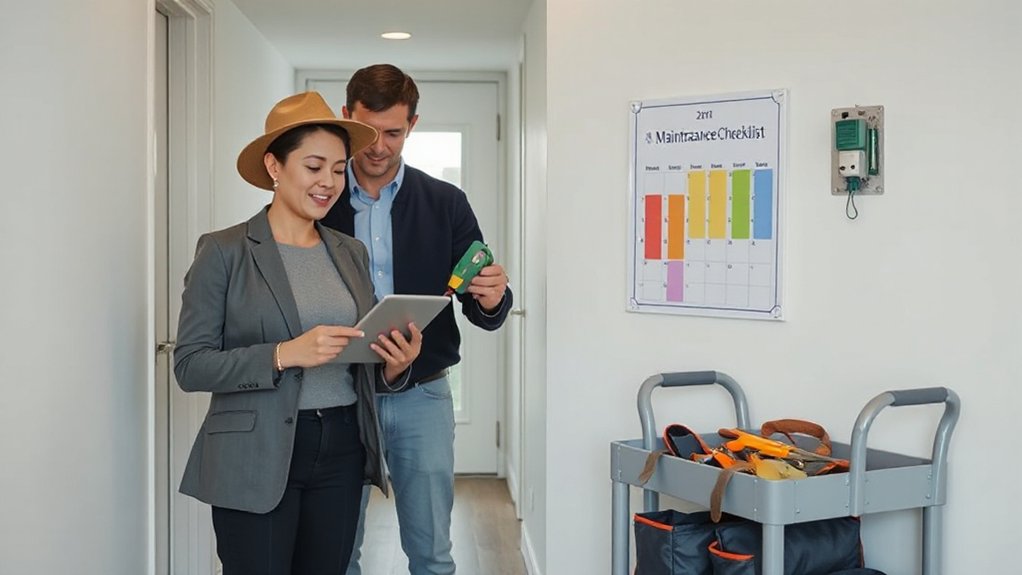
Streamline your property maintenance inspections by standardizing inspection checklists so every unit, system, and safety item gets reviewed the same way each time.
Optimize your preventive maintenance calendar by setting clear frequencies, seasonal triggers, and priority tiers to prevent missed tasks and reduce emergency calls.
Automate work order scheduling so the right technician, parts, and time slot get assigned immediately, keeping your team on track and your properties consistent.
Standardize Inspection Checklists
Even if your team knows the property inside and out, inconsistent inspections still lead to missed issues, duplicated work, and uneven maintenance schedules. Standardize checklists so every technician looks for the same conditions, in the same order, every time—driving inspection consistency across units, floors, and shifts.
Build one master template per asset type (unit, roof, boiler room, common areas). Break it into clear sections: safety, mechanical, exterior, interior, and documentation. Use pass/fail fields, required photos, and space for notes tied to exact locations.
Apply checklist customization by adding property-specific items (older plumbing, unique HVAC models, local code requirements) without changing the core structure. Store the checklist in your mobile app, require completion before closing a work order, and review results weekly to refine items and eliminate gaps.
Optimize Preventive Maintenance Calendars
Where do most maintenance backlogs start—right in the calendar? Audit your next 90 days and replace vague “quarterly checks” with asset-based intervals: HVAC filters monthly, roof drains after storms, water heaters semiannually, fire systems per code.
Cluster tasks by building and floor to cut travel time, then set realistic durations using past labor hours. Add buffer weeks for vendor lead times and seasonal spikes. Tie each calendar block to Budget allocation so parts, overtime, and contracted services are funded before work begins.
Strengthen Tenant communication by publishing notice windows, access requirements, and quiet-hour rules, and by confirming entry permissions early. Review missed tasks weekly, re-slot them immediately, and adjust frequencies when failure patterns change.
Keep one owner accountable for calendar integrity.
Automate Work Order Scheduling
How much time do you lose each week retyping inspection notes, chasing availability, and reshuffling priorities? Automate work order scheduling so tasks route instantly from inspection to assignment.
You’ll capture findings on mobile, attach photos, and trigger templated work orders with required parts, SLAs, and safety steps.
Set rules that match skill, location, and urgency, then let the system book open time slots and notify tenants. Use Automated alerts to confirm appointments, flag access issues, and escalate overdue jobs.
Layer in predictive analytics to auto-prioritize recurring failures, schedule follow-ups before breakdowns, and bundle nearby work to cut drive time.
Finally, sync calendars with vendors, generate daily routes, and lock schedules after approval so you prevent last-minute chaos and keep response times consistent.
Prioritize Property Maintenance Work Orders by Impact
Because not every maintenance request carries the same risk, you’ll boost efficiency fastest by ranking work orders by impact instead of by arrival time. Start with safety and habitability: gas smells, electrical faults, leaks, and no-heat calls jump to the top.
Next, protect assets and revenue by tackling issues that can spread damage or trigger vacancies, like roof intrusions or recurring drain backups.
Then schedule comfort and cosmetic items, such as sticky doors or paint touch-ups, into grouped routes.
Set clear response targets for each tier and confirm them through Tenant communication so residents know what to expect and you cut repeat follow-ups.
Finally, align urgency with budget allocation: reserve funds for high-risk failures, and plan lower-impact fixes during slower periods without risking larger repairs later.
Use a CMMS to Speed Up Property Maintenance

When you funnel every work order through a CMMS (computerized maintenance management system), you replace scattered texts, emails, and paper notes with one trackable workflow. You log requests fast, assign techs in seconds, and set due dates tied to urgency and lease impact.
You’ll cut callbacks by using checklists, asset histories, and photos inside each ticket. Automate alerts so tenants, vendors, and staff know what’s next without chasing updates. Use dashboards to spot repeat failures, SLA misses, and overtime spikes across your real estate portfolio.
Standardize categories and locations so reporting stays clean, and require closeout notes to capture fixes and time spent. With accurate metrics, you schedule preventive tasks sooner and prove performance to owners. Faster response times lift tenant satisfaction and protect revenue.
Stock Smarter to Avoid Property Maintenance Delays
A CMMS keeps work orders moving, but you’ll still lose hours if techs can’t get the right parts on the first trip. Tighten your Property inventory so common failures don’t stall urgent calls.
Start by categorizing parts by asset type and criticality, then set min/max levels based on usage, lead time, and seasonality. Standardize SKUs for filters, belts, valves, breakers, and faucets so techs don’t guess.
Use barcode scans at issue and return to keep counts accurate, and audit high-shrink bins weekly. Stage “ready kits” for turnovers and after-hours emergencies in a locked, labeled cabinet.
Strengthen Vendor relationships by negotiating same-day pickup, pre-approved substitutions, and blanket POs. Track stockouts and expedite fees to refine reorder points and cut downtime.
Cut Repeat Property Maintenance Repairs With Root Causes
Even with a solid CMMS and well-stocked shelves, repeat repairs will keep draining labor if you only fix the symptom and move on. Shift your team to root cause analysis after any repeat work order, safety issue, or high-cost failure.
Start by asking: what failed, why, and what condition allowed it?
Standardize a quick process: review the last three tickets, inspect the asset in place, and confirm operating conditions (load, moisture, user behavior, and install quality). Document the true cause, not the workaround.
Then apply a permanent countermeasure: redesign the part, adjust settings, improve PM steps, retrain staff, or correct vendor scope. Close the loop by updating SOPs and parts specs so technicians don’t reintroduce the same error. You’ll reduce repair recurrence fast.
Track Property Maintenance Efficiency With Simple KPIs
After you’ve reduced repeat repairs, you need proof that your maintenance process is getting faster, cheaper, and more reliable. Track a tight set of KPIs and review them weekly. Start with average time to acknowledge a request, time to complete, and first-time-fix rate.
Add cost per work order and overtime hours to spot waste. Measure preventive maintenance completion to prevent backlog.
Tie KPIs to Tenant engagement: log portal usage, response rates to access requests, and post-job satisfaction scores. Strong engagement reduces no-shows and rework.
Use your numbers to guide Budget allocation: shift funds toward high-performing vendors, critical assets, and parts that cut downtime. Set targets, flag outliers, and coach your team on the specific step that’s slipping.
Frequently Asked Questions
How Do I Estimate an Annual Property Maintenance Budget Accurately?
Estimate your annual maintenance budget by tracking past repairs, listing upcoming tasks, and pricing materials and labor for cost estimation. Add a contingency, schedule inspections, and revise quarterly. You’ll tighten budget planning with quotes and unit costs.
What Insurance Policies Best Cover Unexpected Maintenance-Related Liabilities?
When a pipe bursts at midnight, you’ll want general liability and property insurance, plus umbrella, contractors’ E&O, and workers’ comp. These policies strengthen insurance coverage and liability protection. Review limits, endorsements, exclusions annually.
Should I Outsource Maintenance or Hire an In-House Team?
Outsource if you need flexibility and broad skills; hire in-house if you need fast response and tighter control. You’ll improve results by tightening vendor selection, enforcing maintenance scheduling, tracking KPIs, and auditing costs monthly.
How Can I Improve Tenant Communication During Ongoing Maintenance Projects?
Like a conductor, you improve tenant communication by setting clear timelines, sending weekly updates through consistent communication channels, and sharing next steps. Gather tenant feedback after each milestone, then adjust access hours, signage, and notices promptly.
What Legal Requirements Apply to Maintenance Records and Tenant Notifications?
You must follow local landlord-tenant laws: document repairs, inspections, and complaints for Legal compliance and record keeping, then notify tenants in required timeframes about entry, hazards, or outages. Keep receipts, dates, responses, and delivery proof.
Conclusion
You’ve now got a cleaner, calmer way to run maintenance without the usual “surprises.” Start by auditing your workflow, then lock in checklists and SOPs so nothing slips through. Tighten inspections, schedule smarter, and triage work orders by safety and impact. Let a CMMS quietly handle routing, reminders, and histories. Keep inventory “comfortably stocked” to avoid pauses. Finally, chase root causes and watch simple KPIs to keep performance steadily improving.