
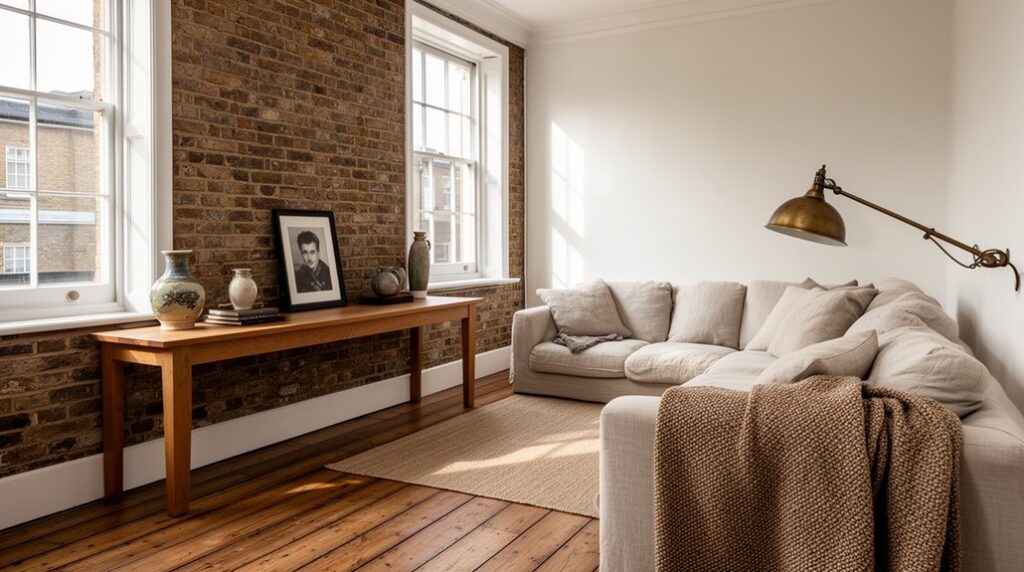

You’ll get the best result when you treat your renovated terrace like it’s always been there. Start by auditing what’s original—cornices, sash windows, fireplaces, skirting—and decide what you can restore rather than replace. Then choose a quiet, historic palette, let limewash or subtle panelling add depth, and keep flooring and lighting honest to the era. Once those bones feel right, the choices that follow become obvious…
Audit Original Terrace Features to Keep
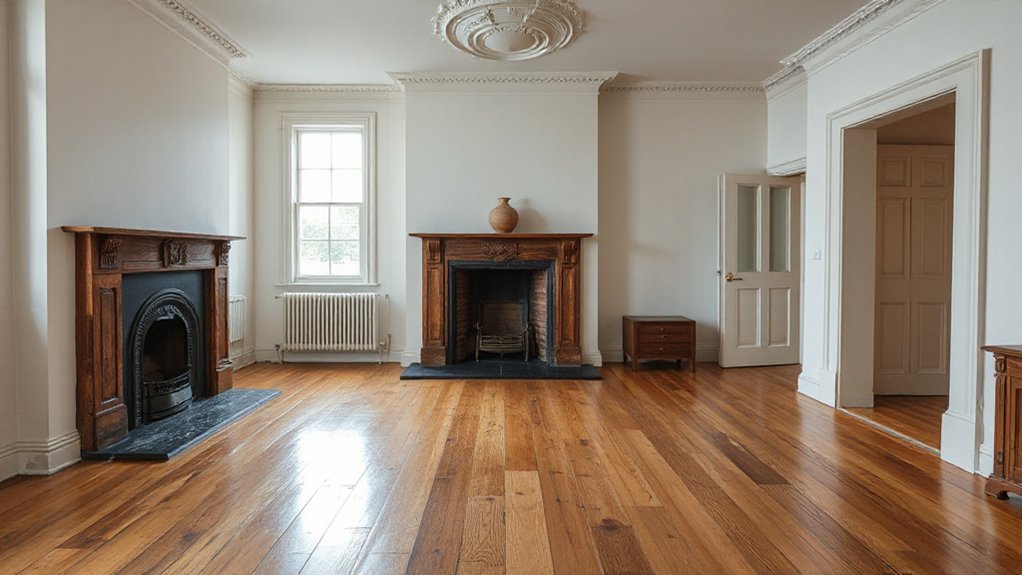
Before you pick up a brush or order bespoke joinery, walk each room and catalogue the terrace details worth saving—cornices, ceiling roses, original skirting and architraves, sash windows, cast-iron fireplaces, encaustic tiles, and stair spindles.
Photograph profiles, measure moulding depths, and note repairs versus replacements. Strip paint from timber where sound, re-pin loose spindles, and splice rotten sash rails rather than swap whole windows.
Check fireplaces for missing tiles, cracked surrounds, or blocked vents, then reinstate simple grates and hearths that sit correctly to the opening. Keep floorboard widths consistent when patching, and match encaustic patterns at thresholds.
Once the bones read true, you can introduce modern furniture and hang contemporary art without the rooms feeling false or overworked.
Choose a Period-Right Terrace Colour Palette
Although your terrace can happily wear modern pieces, a period-right palette keeps the architecture doing the talking. Start with the era’s cues: warm whites for plaster, smoked greens, inky blues, ochres, and muddy pinks drawn from historic pigments.
Use Color theory to control narrow rooms: keep walls one shade lighter than joinery to widen sightlines, then deepen colour in the rear to pull the house through.
Treat trim as its own layer. Pick paint finishes that match use and detail: matt or soft-matt on ceilings and walls to hush glare; eggshell on skirting, architraves, and panel doors for clean edges; satin only where you need wipeability.
Don’t forget picture rails and cornices—tint them slightly off-white so shadows read crisp, not stark.
Pick Terrace Flooring: Boards, Tiles, Runners
Because terrace rooms run long and light falls unevenly, your flooring has to do double duty: honour the house’s age and make the plan feel calmer underfoot. Keep original pine or oak boards where you can; patch with reclaimed planks, match widths, and finish in a low-sheen oil or wax, not a glossy varnish.
In the front passage and kitchen, pick encaustic-style or small-format ceramic tiles laid on the diagonal to widen the view and cope with boots and spills. Use terrace flooring connectors sparingly; let one surface run deep to reduce visual chops.
Add a flatwoven runner to soften footsteps, guide the eye, and protect traffic lanes. Your material choices should balance patina, grip, and quiet warmth.
Restore Terrace Joinery: Skirting, Arches, Cornices
You’ll want to repair the original skirting boards first, splicing in matching timber and keeping the profiles crisp so the rooms read longer and cleaner at floor level.
Reinstate decorative arches where they once framed the passage, using slim, true-to-period mouldings that don’t steal width.
Then restore cornice details—patch cracks, re-run missing sections, and sharpen the shadow lines that make a terrace ceiling feel properly finished.
Repair Original Skirting Boards
Once the plaster’s sound and the floors sit true, turn your attention to the original skirting boards—they’re the quiet line that makes a renovated terrace feel properly put back together.
Strip paint only where it’s failing, then consolidate soft timber with hardener and splice in matching wood, keeping the grain direction and profile crisp.
Check skirting board styles room by room; later alterations often drop the height or flatten the ogee. Salvage usable lengths, and mill new pieces to echo original skirting details, including the quirk, bead, and cap.
Re-fix through studs, not just plaster, and pack behind hollows so the board sits tight without bowing. Run a fine, paintable caulk at the wall edge, but leave the floor line clean for expansion.
Prime knots, then finish in a soft eggshell.
Reinstate Decorative Arches
Even if the opening’s been squared off over the years, reinstating a decorative arch puts the terrace’s proportions back in balance and softens the sightline between rooms. Start by studying surviving clues: ghost lines in plaster, nail holes in jambs, or a neighbour’s intact opening from the same builder.
For Arch restoration, keep the profile slender so you don’t steal floor area. Build a timber or MDF former, then add stop-chamfered reveals or a small bolection mould to match your skirtings and architraves. Set the springing points level on both sides, and keep the radius generous so furniture still passes through.
Finish with crisp mitres, tight caulk lines, and a satin enamel that catches evening light without shouting. These Decorative arches should feel original, not ornamental.
Restore Cornice Details
With the archway’s line back in place, turn your eye upward to the cornice—the quiet moulding that squares the rooms and gives a terrace its finished edge. If yours has been cut for downlights or lost to a skim coat, you’ll feel the ceiling float and the walls look meaner.
Start by matching the profile: take a rubbing, measure the projection, and check corners for the original return. For an ornate ceiling, keep the cornice crisp but not over-scaled; choose a decorative molding that shadows neatly and doesn’t steal height.
Repair in short runs with plaster or timber to suit the era, then pin and glue, skim, and sand lightly. Paint in a soft flat to settle joins and keep the room calm.
Add Textured Walls: Plaster, Panelling, Limewash
You’ll give your terrace rooms quiet character when you add textured walls that catch light and hide the odd wobble. Choose a plaster finish with depth, or fit slim wall panelling to bring warmth without stealing floor space.
Finish with limewash for a soft, chalky patina that suits period lines and makes new work feel settled.
Plaster Finishes With Depth
Where can a renovated terrace house gain character without losing precious floor space? Look to your walls. Well-chosen plaster finishes add depth the way original lath-and-plaster once did, yet they stay slim and practical.
Specify a fine, hand-trowelled skim with gentle undulation for a lived-in Victorian feel, or a slightly coarser float finish to catch sidelight along the hallway. Keep corners softly rounded rather than razor-sharp; it reads truer to period work and disguises knocks.
If you’re repairing, patch with compatible lime plaster so moisture can breathe, then finish with breathable paint or limewash for a chalky, historic sheen.
Use textured walls sparingly—one chimney breast or stairwell—so rooms still feel calm and airy.
Wall Panelling For Warmth
Although a terrace house rarely has inches to spare, wall panelling gives you warmth and texture without stealing the room. Keep it period-correct with narrow tongue-and-groove or simple shaker frames, aligned to skirting and architraves so it looks original, not stuck on.
Run panelling to dado height in halls and dining rooms to protect walls, or take it full height behind a bed to calm proportions. Use consistent shadow gaps and paint it in a muted heritage tone to sharpen cornice lines.
For extra comfort, slip thin wood-fibre boards or quilt behind battens for discreet interior insulation, then finish with bead detail. Choose moisture-tolerant boards in kitchens, and cap rails for shelves.
Limewash For Soft Patina
Once the joinery and plasterwork sit true, limewash gives a renovated terrace the kind of soft, lived-in patina modern emulsion can’t fake. You’ll see gentle clouding that flatters uneven brickwork, old laths, and the fine hairline quirks you’d rather honour than erase, keeping faith with historic preservation.
For best results, you prep like a conservator: dust off, fix friable areas, and dampen the wall so it doesn’t drink too fast. Your limewash application wants thin coats, brushed in crosses, letting edges overlap to avoid hard laps in tight hallways.
You can tint with earth pigments for soot-soft whites, stone greys, or cellar pinks. Finish by burnishing lightly; it catches window light and makes narrow rooms feel deeper.
Terrace Lighting That Blends Old and New
As you update a terrace house, lighting has to do double duty: it must respect the original lines while earning its keep in tighter, modern living. Keep ceiling roses and cornices legible by choosing slim pendants or opal globes that sit close, not fussy chandeliers that crowd the view. Use warm, low-glare LEDs to mimic gaslight softness, and add dimmers everywhere.
Layer Smart lighting so rooms shift from weekday tasking to evening calm without new wiring; hide drivers in cupboards and run discreet surface conduit where needed. Mix Ambient fixtures—picture lights over prints, wall sconces in the hall, and a shaded table lamp on the landing—to pull depth into long, narrow plans.
Finish in aged brass or blackened iron to bridge eras.
Plan a Timeless Terrace Kitchen (Not Showroom-New)
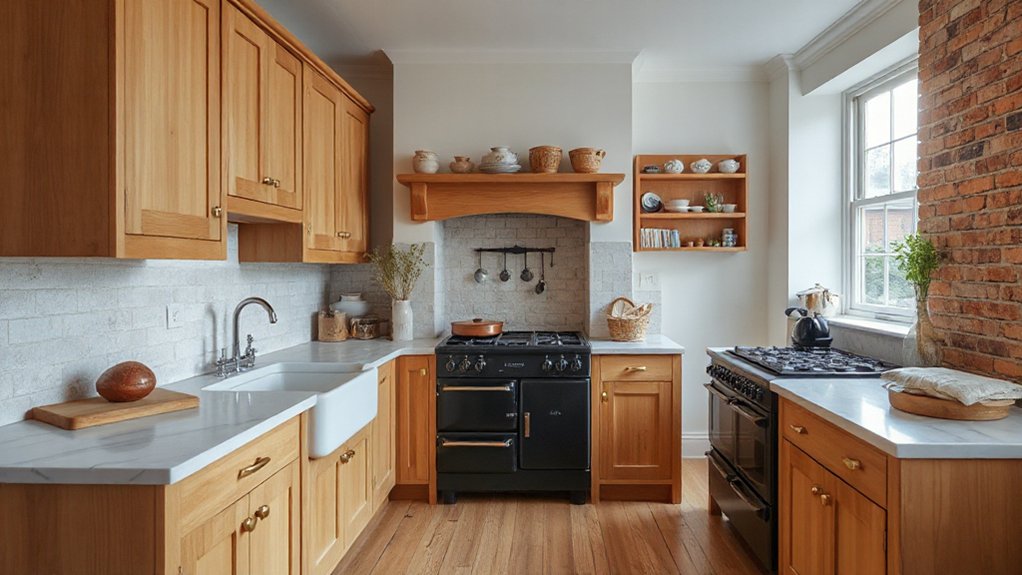
If you want a terrace kitchen that feels settled rather than showroom-new, start with the bones and let the patina do some of the talking. Keep the original chimney breast and run cabinetry to either side, so the room reads as architecture first.
Choose painted timber fronts in muted heritage tones, then finish with unlacquered brass or iron that’ll wear honestly.
Work the plan for narrow widths: a slim island only if you keep a clear passage, otherwise use a butcher’s block table. Fit Modern appliances behind simple panels, but let a proper rangehood and ceramic knobs nod to the period.
Use open shelving sparingly for everyday crockery, and back it with tongue-and-groove or small metro tile for depth and easy wiping.
Vintage Furniture That Fits Terrace Proportions
Because terrace rooms tend to run narrow with tight door swings and chimney offsets, you’ll get the best mileage from vintage pieces that were made for compact living—slim-legged sideboards, drop-leaf tables, and small-scale armchairs with upright backs.
Choose proportional furniture with tapered feet so light passes beneath and the floor reads wider. A shallower Edwardian bookcase sits neatly on a party wall without crowding the hearth.
Set a gateleg table parallel to the run of boards, then fold it down for the passageway. Hunt for nesting tables that slip under one another, and a chest of drawers that stops below dado height to keep sightlines clear.
You’ll keep Vintage charm, and your circulation stays polite and practical.
Warm Up a Renovated Terrace With Textiles and Art
Once you’ve sorted the scale of the furniture, textiles and art do the real work of making a renovated terrace feel lived-in rather than newly skimmed.
Start with textile layering: a wool runner down the narrow hall, linen curtains that kiss the skirting, and a mohair throw to soften a crisp new sofa. Choose patterns that nod to the era—small florals, stripes, or muted checks—so the room feels rooted, not themed.
Keep bulk light; use flatweave rugs under dining chairs and add cushion inserts rather than heavy upholstery.
For art placement, hang pieces to suit tall ceilings: stack smaller works in a vertical salon line, or center a single frame to the fireplace. Use aged brass rails and warm mats for depth.
Frequently Asked Questions
Do I Need Listed Building Consent for Interior Changes in a Terrace House?
You’ll need listed building consent only if your terrace is listed and your interior changes affect historic fabric. Check with your council; balance Historic preservation with Modern aesthetics, keeping trims, cornices, and joinery intact.
How Can I Improve Soundproofing Between Terraced Walls Without Losing Character?
Use soundproofing techniques like dense acoustic plasterboard on resilient bars, mineral wool in studwork, and sealed sockets. You’ll keep character preservation by reinstating skirting, picture rails, and cornices, and choosing slim finishes.
What’s the Best Way to Handle Rising Damp in Older Terrace Properties?
You’ll tackle rising damp best by improving drainage and ventilation, then adding a proper Rising damp treatment like injected DPC. Strip impermeable plaster, remove Salt damp, and re-plaster with lime; keep skirtings lifted and breathable.
How Do I Upgrade Insulation Without Affecting Original Features and Ceiling Heights?
A mere 25mm of aerogel can cut heat loss by about 60%—so you’ll upgrade insulation discreetly. Use internal lining on external walls, keep cornices clear, apply modern paint techniques, and refine furniture placement to avoid cold spots.
Which Underfloor Heating Systems Work Best in a Typical Victorian Terrace Layout?
You’ll get best results with low-profile wet UFH on ground floors and electric mats upstairs; pair zones with smart thermostats. In tight rooms, use radiant panels in baths or halls to spare floor buildup.
Conclusion
When you finish your terrace renovation, you’ll let the old bones lead. Keep the cornices, sash lines, and hearth; dress them in smoked greens, chalky whites, and a soft limewash. Choose boards, encaustic-style tiles, and runners that guide the eye without crowding it. Restore skirting and arches, then add brass-lit warmth. Fit a calm, workmanlike kitchen and scaled vintage pieces. Layer textiles and art like a well-cut coat, tailored to every room.