
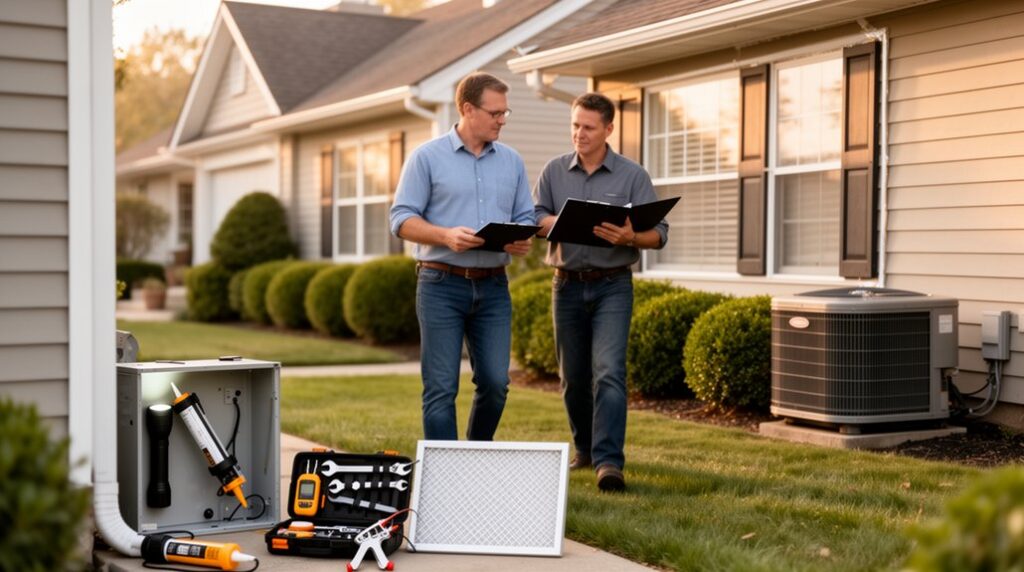

Preventive maintenance is your property’s seatbelt—you don’t notice it until you need it. You map every asset, set clear standards, and assign accountable owners so nothing slips through the cracks. You build inspection schedules by system, use checklists, and automate reminders to stay compliant. You tackle high-risk items first to protect occupants and meet code. But if you’re not tracking work orders and lining up vendors with a real budget, you’re still exposed…
Build a Preventive Property Maintenance Plan
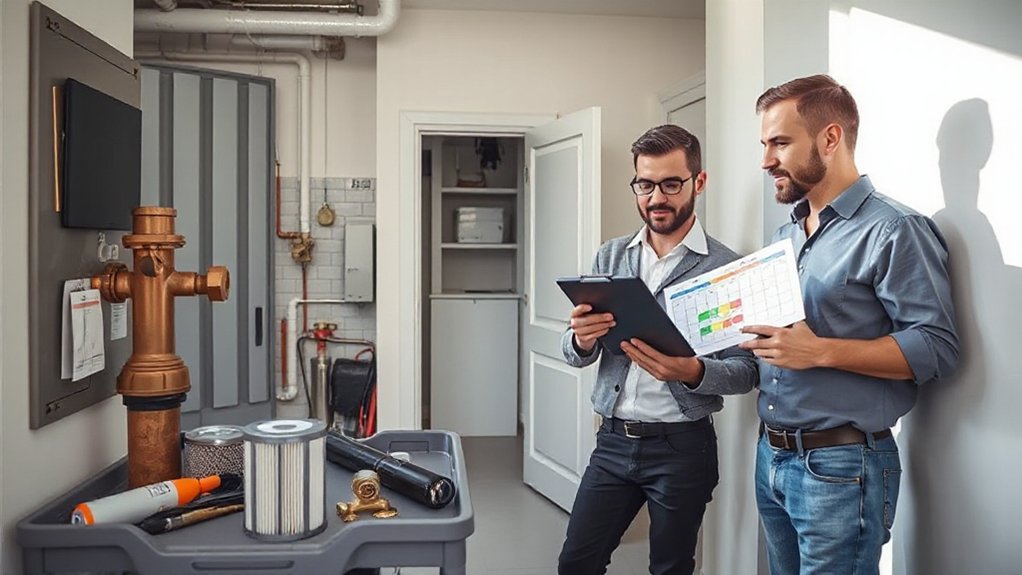
How do you keep small defects from turning into costly violations and downtime? You build a preventive property maintenance plan that ties every task to risk, code, and documentation.
Start by mapping each asset across the Property lifecycle—install date, warranty terms, service history, and criticality. Define measurable standards (temperature ranges, pressure readings, leak thresholds) so you can act before performance slips.
Assign owners, approval limits, and vendor requirements, then standardize work orders, checklists, and closeout photos to prove compliance. Track parts, lead times, and shutdown constraints to avoid emergency purchases.
Set escalation rules for repeat issues and safety hazards. Review KPIs monthly—response time, repeat repairs, and inspections passed—to protect tenant satisfaction and budget predictability.
Set Inspection Schedules for Every Property System
A preventive maintenance plan only works when you turn it into a calendar your team can execute and audit. Start by listing every property system—roof, HVAC, plumbing, electrical, life safety, exterior, elevators, and common areas—then assign inspection frequencies based on manufacturer guidance, warranty terms, codes, and lease obligations.
Build schedule planning around fixed intervals (daily/weekly/monthly/quarterly/annual) and seasonality, and align tasks with access needs, permits, and tenant notice requirements.
Use standardized property inspection checklists, required photos, meter readings, and pass/fail criteria so results are consistent.
Route work orders automatically, set due dates with reminders, and require closeout notes.
Track completion rates, missed inspections, and corrective actions to prove compliance during audits and renewals.
Prioritize High-Risk Preventive Maintenance Tasks First
Before you fill your calendar with routine checks, rank preventive maintenance tasks by risk so you’re addressing the items most likely to cause injury, major property damage, code violations, or prolonged downtime. Start with a Risk assessment of life-safety and critical systems: fire alarms, sprinklers, exit lighting, elevators, boilers, electrical panels, and gas lines. Verify required testing intervals, permits, and licensed-contractor scopes, then schedule those items first to meet AHJ and insurer expectations.
Next, target failure-prone components with high impact: roof drains before storms, backflow preventers, sump pumps, and emergency generators. Build emergency preparedness into the plan by confirming shutoff locations, access to electrical rooms, spill kits, and after-hours response contacts. You’ll reduce hazards, protect occupants, and keep operations compliant.
Track Work Orders and Preventive Maintenance History
Even if your preventive plan looks solid on paper, it won’t hold up to audits, warranty claims, or repeat failures unless you track every work order and its maintenance history in one place. Use a single system to log asset IDs, locations, photos, readings, parts used, technician notes, and closeout dates.
Require time-stamped approvals, safety checklists, and code-related fields so you can prove compliance fast. Link each preventive task to prior failures, inspections, and corrective actions to spot patterns and reduce downtime.
Standardize Tenant communication: confirm access, notify disruptions, and document acknowledgments in the ticket. Attach Emergency procedures to relevant assets and auto-escalate when thresholds trigger alarms.
Run monthly reviews for overdue tasks, repeat calls, and incomplete documentation gaps.
Budget and Line Up Vendors for Long-Term Upkeep
Once you’ve centralized work orders and maintenance history, use that data to build a defensible budget and secure vendors who can meet your service levels year after year. Apply budgeting strategies that separate recurring PM labor, seasonal spikes, and reserve funding for end-of-life replacements.
Tie line items to asset criticality, code requirements, and warranty terms, then set approval thresholds to control scope creep.
Next, formalize Vendor negotiation with clear KPIs: response times, completion quality, documentation, and safety compliance. Require COIs, licensing, background checks, and OSHA-aligned procedures, and verify they can support your CMMS reporting.
Lock in pricing schedules, escalation clauses, and parts markups, and define after-hours rates in writing. Create a primary and backup roster, schedule quarterly reviews, and track performance against SLAs.
Frequently Asked Questions
How Does Preventive Maintenance Affect Property Insurance Premiums and Coverage Requirements?
You can lower premiums by reducing claims risk, earning Insurance discounts, and meeting inspection standards. You’ll also support coverage adjustments by proving compliance, documenting repairs, and avoiding exclusions or higher deductibles tied to neglected systems.
What Legal Liabilities Arise if Preventive Maintenance Schedules Aren’T Properly Documented?
Skip Maintenance records and you’ll “prove” you cared—ironically, you can’t. You risk negligence claims, code violations, warranty and contract breaches, denied coverage defenses, fines, and tougher lawsuits. Document schedules to satisfy Legal compliance and show due diligence.
Which Property Maintenance Certifications Help Teams Improve Preventive Maintenance Outcomes?
You’ll boost preventive maintenance by pursuing IFMA FMP/CFM, BOMI SMT/SMA, and OSHA safety credentials. Align maintenance training to certification standards, document competencies, and audit renewals so your team meets compliance, reduces failures, and tightens accountability.
How Can Preventive Maintenance Reduce Tenant Turnover and Improve Resident Satisfaction?
Even if you think tenants won’t notice, you prevent breakdowns, code violations, and noisy emergency repairs. You schedule inspections, document compliance, and fix issues early—boosting Resident satisfaction and Tenant retention through reliable comfort, faster responses, fewer disruptions.
What Software Integrations Best Connect Preventive Maintenance With Accounting and Leasing Systems?
You’ll get best results by integrating CMMS with Yardi, RealPage, or AppFolio via open APIs and webhooks, ensuring software integration and system connectivity. You’ll automate invoicing, lease updates, audit trails, permissions, and compliance reporting.
Conclusion
You’ve now got the framework to keep your property in top shape without any “unplanned surprises.” Map assets, assign owners, and lock in standards so nothing slips through the cracks. Set system-specific inspection schedules with checklists and automated reminders to stay audit-ready. Tackle high-risk items first to protect people and meet code. Track work orders and history to spot repeat issues early. Finally, budget clearly and secure vetted vendors for steady, compliant upkeep.