
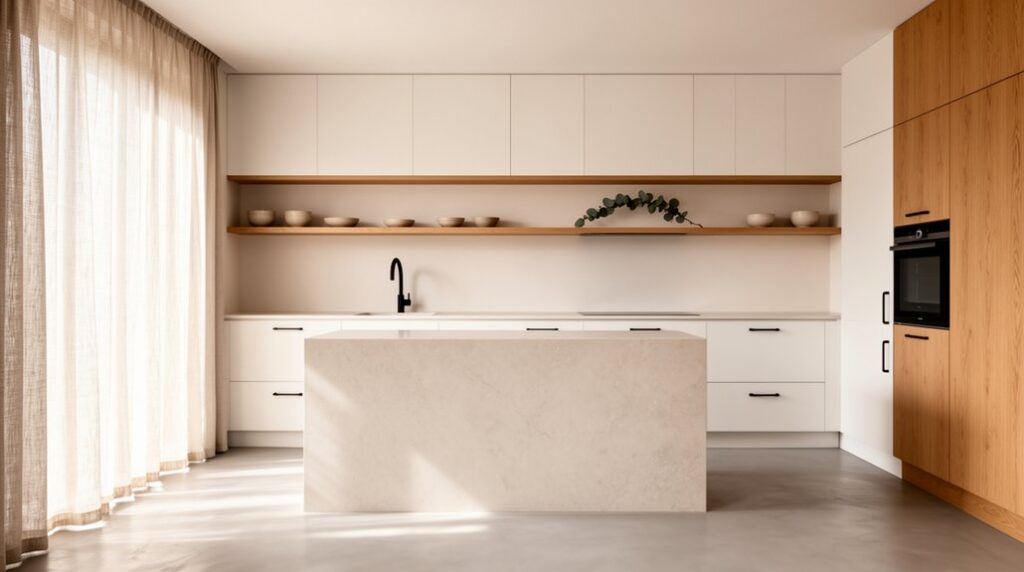

You’re aiming for a kitchen that feels calm but works hard, and Japandi design gives you that balance. You keep the palette soft and matte, then bring in warm wood, stone, and quiet ceramics for texture. You plan clear work zones and storage that hides the mess without feeling heavy. Lighting stays layered and gentle, and every object earns its place. The next step is knowing what to choose first so it all holds together…
What Makes a Japandi Kitchen Design?
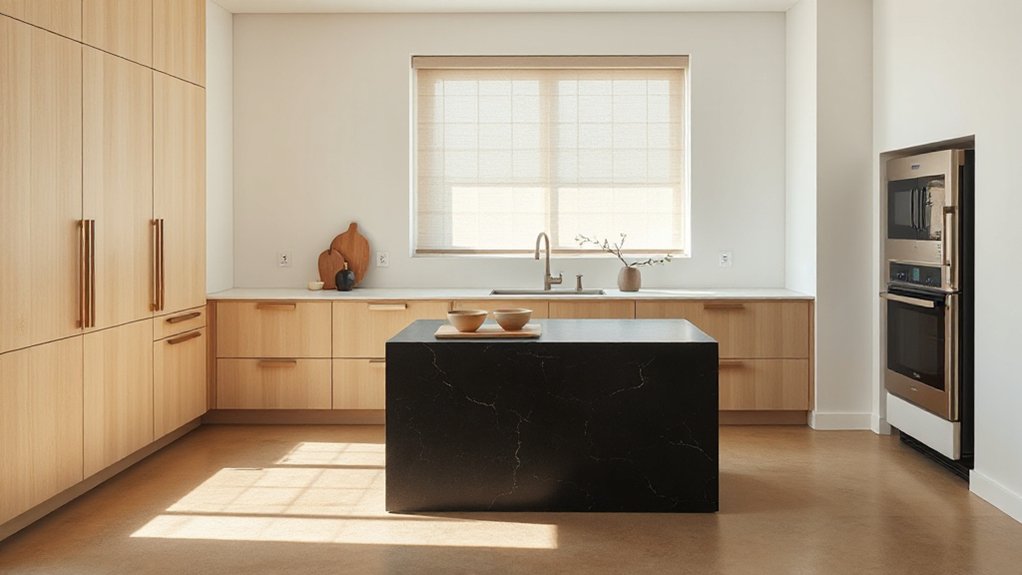
At its core, what makes a Japandi kitchen design feel so right is the balance it strikes between Japanese calm and Scandinavian practicality. You keep the layout clear, so every step from prep to plating feels effortless. You choose honest materials—wood, stone, linen—and let their textures do the talking.
You favor low visual noise: integrated storage, open space, and a few purposeful objects that earn their place. You add warmth through Vintage accessories like a well-worn ceramic jar or a simple brass rail, but you don’t crowd the counters.
You can introduce Bold patterns sparingly—on a runner, tile detail, or dishware—to create rhythm without disrupting serenity. You light the space softly, and everything feels grounded and useful.
Start With a Japandi Kitchen Color Palette
That calm, practical balance starts with color, because the right palette quiets the room before you add a single object. Begin with soft neutrals—warm white, oat, sand, or stone—to create an even backdrop that feels clean but not cold.
Then choose one deeper anchor like charcoal, ink, or muted olive to ground the space and guide your eye.
For Japandi, you’ll get the best Mood setting when you keep contrast low and transitions gentle. Use Color combinations that echo nature: cream with foggy gray, beige with blackened blue, or pale taupe with sage.
Limit bright hues, and repeat your chosen tones across key surfaces so the room reads as one calm field. Aim for two to four colors total.
Choose Japandi Kitchen Materials and Textures
You’ll ground your Japandi kitchen with natural wood foundations that feel warm, steady, and clean-lined. You’ll balance that softness with stone and ceramic surfaces that stay calm, durable, and easy to live with.
You’ll finish the look with matte metal accents that add quiet contrast without breaking the mood.
Natural Wood Foundations
Because Japandi kitchens lean on calm, honest materials, natural wood works as the foundation that quietly ties everything together. Choose oak, ash, or maple for cabinets, open shelving, and stools, and let the grain stay visible under a matte oil or low-sheen seal. You’ll get warmth without visual noise, and the room will feel grounded even when you keep surfaces clear.
Balance tones: pair light woods with soft white walls, or add walnut accents for depth. Keep edges simple and hardware understated so the joinery becomes the detail. Layer in organic textiles like linen runners or cotton seat pads to soften sound and touch.
Finish with minimalist decor—one hand-thrown vase, one branch—so the wood’s quiet character leads.
Stone And Ceramic Surfaces
While wood brings warmth, stone and ceramic surfaces add the quiet structure that makes a Japandi kitchen feel calm and capable. You can ground the room with Marble countertops, choosing subtle veining that reads like mist rather than drama. Seal and maintain them well, and they’ll age with dignity while staying easy to wipe down after daily prep.
For the vertical plane, you’ll appreciate a Glass backsplash that reflects light without visual noise. Pair it with handmade ceramic tile in soft whites, sand, or charcoal for tactile balance, and keep grout lines thin for a cleaner rhythm.
Use stone for a single, continuous surface—counter to backsplash ledge—so the eye rests. When you limit patterns and let texture lead, the kitchen feels orderly, quiet, and ready for use.
Matte Metal Accents
Stone and ceramic set a calm, tactile base; matte metal accents add crisp definition without breaking the quiet. You’ll get contrast that feels soft, not shiny, so the room stays grounded and warm.
Choose brushed black, muted brass, or satin stainless for pulls, hinges, rails, and lighting. Keep profiles slim and simple, and repeat the finish in two or three places so it reads intentional.
Matte metal accents also hide fingerprints and water spots, which makes daily cleanup faster.
Anchor the sink zone with modern kitchen faucets in a matching tone; pair them with an understated sprayer and a clean, squared handle.
If you mix metals, keep undertones consistent and let one finish lead. You’ll preserve balance while adding structure.
Plan a Japandi Kitchen Layout for Flow
You’ll get a calmer Japandi kitchen when you define clear work zones for prep, cooking, and cleanup.
You can optimize circulation paths so you move smoothly between them without crossing traffic.
Then you’ll balance open and closed storage to keep daily essentials within reach while the space stays visually quiet.
Define Work Zones
Before you choose cabinets or finishes, map out clear work zones so your Japandi kitchen feels calm and effortless to move through. Start with a prep zone near the sink and compost or waste pullout, keeping knives, boards, and mixing bowls within reach.
Set a cooking zone around the cooktop with oils, spices, and pans stored low and close, so you don’t break focus.
Create a clean-up zone with dishwasher, towels, and drying rack aligned to simplify resets.
Reserve a quiet beverage or plating zone on an uncluttered stretch of counter for tea, snacks, and serving pieces.
When each task has a home, surfaces stay open, light feels softer, and a subtle garden ambiance supports steady culinary inspiration.
Optimize Circulation Paths
As you refine the layout, prioritize clear circulation paths that let you move between zones without weaving around stools, open doors, or tight corners. Aim for a main walkway of about 42 inches, and keep secondary routes near 36, so two people can pass calmly.
Place the sink, cooktop, and fridge in an efficient triangle, then keep prep counters along the shortest line between them. Shift dishwashers, pull-outs, and appliance doors so they open away from traffic.
Use creative storage at the edges—tall pantry columns, toe-kick drawers, or an end-cap cabinet—to keep the center open. Support flow with subtle color coordination: match flooring tones to adjacent spaces and repeat wood grains so the eye travels smoothly, reinforcing the quiet Japandi rhythm.
Balance Open And Closed Storage
While a Japandi kitchen feels airy and calm, it still needs storage that keeps daily tools close and visual noise tucked away. Aim for a quiet rhythm: open shelves for a few ceramic bowls, a teak tray, or one plant, and closed cabinets for plastics, small appliances, and backups.
Place open storage near your prep zone so you don’t cross the room for basics, and keep it shallow to prevent clutter. Use deep drawers and tall pantry doors to hide bulk items and create clear counters.
Let one vignette become artistic expression, but limit it to what you use weekly. Support technology integration by reserving a charging drawer and an appliance garage, so cords and screens stay out of sight.
Build Japandi Kitchen Cabinetry and Storage
If you want a Japandi kitchen to feel calm and effortless, start with cabinetry and storage that look quiet but work hard. Choose flat fronts, slim rails, and handleless pulls so your sightlines stay clean and your Modern minimalist design reads intentional.
Keep proportions simple, with tall pantry units and low base runs that anchor the room without clutter.
Build with Eco friendly materials like FSC-certified oak, bamboo, or recycled-content boards, and finish them in matte oils or low-VOC lacquers for a soft, natural touch.
Add deep drawers for cookware, divided trays for utensils, and pull-out bins that hide essentials.
Use interior organizers, not extra counters, to maintain space.
Reserve one open niche for everyday ceramics, and conceal the rest behind seamless panels.
Pick Japandi Kitchen Lighting That Feels Soft
Because harsh glare breaks the calm, choose Japandi kitchen lighting that layers gentle illumination instead of relying on one bright fixture. Start with an Ambient glow that washes walls and ceilings, using warm, dimmable sources to soften edges and quiet visual noise. Keep color temperature consistent so wood grains and matte surfaces feel natural, not stark.
Then add task illumination where you chop, cook, and clean. Aim light onto countertops and the sink without casting hard shadows; place it forward of your working line so your body doesn’t block it. Use simple shades in paper, linen, or frosted glass to diffuse beams and reduce sparkle.
Let daylight lead in the morning, and shift to lower evening levels to keep the room restful while you move through routines.
Select Japandi Kitchen Hardware and Fixtures
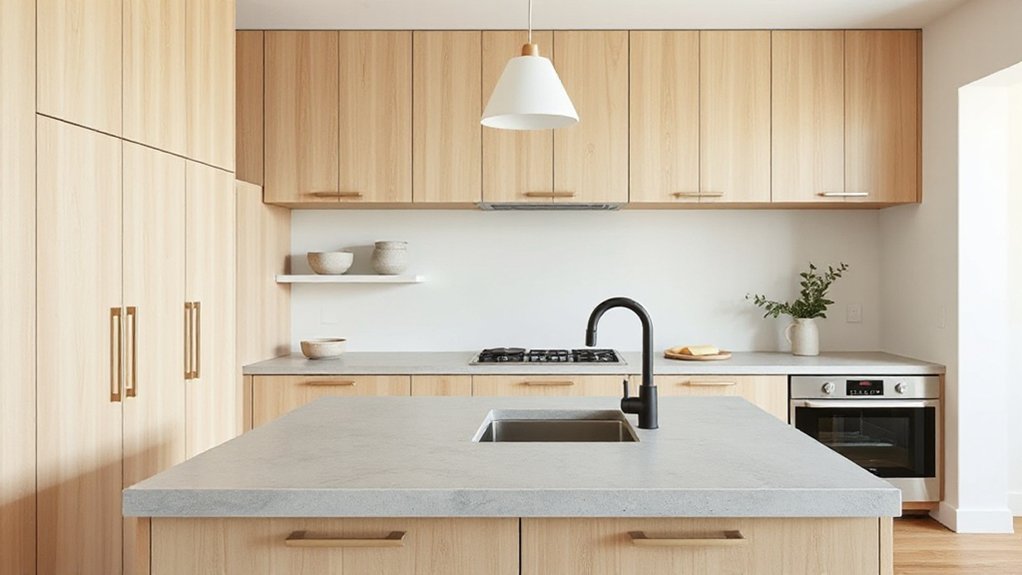
Once you’ve settled the calm foundation of your Japandi kitchen, choose hardware and fixtures that feel quiet in the hand and clean to the eye. Reach for pulls and knobs with simple geometry and softened edges, in brushed nickel, matte black, or warm brass that won’t glare.
If you love character, use Vintage hardware sparingly—aged bin pulls or patinated latches—so the room stays composed, not themed.
Let your faucet and sink do practical work with restrained lines. A single-handle, high-arc faucet in stainless or black pairs well with an undermount sink for easy wipe-downs.
When you want contrast, add Industrial fixtures like a slim pot filler or exposed-curve wall tap, but keep finishes consistent so everything reads as one calm system.
Style a Japandi Kitchen Without Clutter
Although Japandi style looks effortless, you’ll get that calm by editing with intention and giving every item a clear home. Keep counters nearly bare: a wood tray for oil, salt, and a single ceramic crock for tools. Store the rest behind flat-front doors, and group pantry items in matching jars so labels stay quiet and readable.
Choose one zone for Vintage decor, like a weathered cutting board or an antique tea tin, and let it breathe with negative space. Add colorful accents in small, repeatable notes—two linen towels, a bowl of citrus, or a muted vase—so the palette feels steady, not busy.
Use hooks, drawers, and dividers to keep daily pieces close, hidden, and easy to reset each night.
Avoid Common Japandi Kitchen Design Mistakes
To keep a Japandi kitchen calm and functional, you’ll want to sidestep a few easy mistakes that quietly add visual noise.
Don’t mix too many woods or undertones; pick one warm timber and one cool accent, then repeat them. Skip shiny, fussy finishes that fight the matte, grounded look.
When you choose Modern appliances, integrate them with paneling or clean lines so they don’t dominate the room.
Avoid open shelving overload; display only a few pieces and store the rest behind flat fronts.
Resist Bold accessories that shout; if you want contrast, use one sculptural vase or a single dark faucet.
Finally, don’t neglect lighting—layer soft task and ambient sources, and keep fixtures simple. Your kitchen will breathe.
Frequently Asked Questions
How Much Does a Japandi Kitchen Remodel Typically Cost?
You’ll typically spend $20,000–$60,000, though high-end projects can exceed $80,000. You’ll keep costs calm and controlled with budget planning and thoughtful material selection, choosing durable wood, stone, and efficient fixtures.
Can I Achieve Japandi Style in a Rental Kitchen?
Yes, you can, even with renting restrictions. Use temporary decor: peel-and-stick backsplash, removable hooks, linen towels, pale wood boards, and minimal ceramics. Keep counters clear, add soft lighting, and a simple plant for calm.
Which Countertop Materials Resist Stains Best in Japandi Kitchens?
Like a calm river stone, you’ll get the best stain resistance from quartz and sintered stone. Choose these Durable countertop materials for truly Stain resistant surfaces. You’ll also like porcelain or sealed granite; avoid unsealed marble.
Are Open Shelves Practical for Families With Young Children?
Yes, open shelves can work, but you’ll need smart Storage solutions and clear Childproofing tips. Keep daily items low, store breakables high, add lip rails, use non-slip liners, and rotate clutter away.
How Do I Mix Japandi Design With Existing Appliances?
You mix existing appliances by keeping finishes consistent and panels simple; coincidentally, a single matte handle can unify everything. Focus on Balancing minimalism, and keep Incorporating natural textures through wood accents, linen, stone.
Conclusion
When you bring Japandi kitchen design home, you’re choosing calm over commotion and order over “extra.” Keep your palette softly neutral, let wood and stone do the talking, and guide your layout so everything moves with ease. Tuck away the not-so-lovely bits with smart storage, and glow your space with warm, gentle lighting. Choose simple hardware, add a few quiet ceramics, and let restraint feel like luxury every day.