
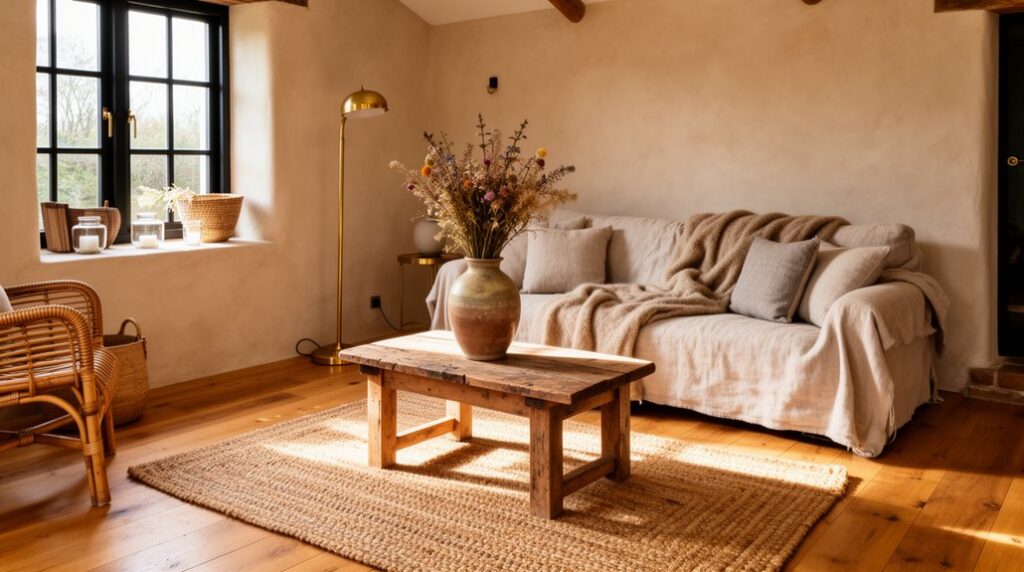

When you strip a cottage back, you often find the old floorboards still warm under the dust, like a handshake from the past. You can build on that feeling with creamy whites, honeyed woods, and quiet terracotta, then soften the edges with linen, jute, and wool. Mix a few vintage pieces into your clean renovations, and let stone, clay, and plaster add grit. But the real shift happens when you change the light and start layering what you touch most…
Build a Warm Cottage Color Palette
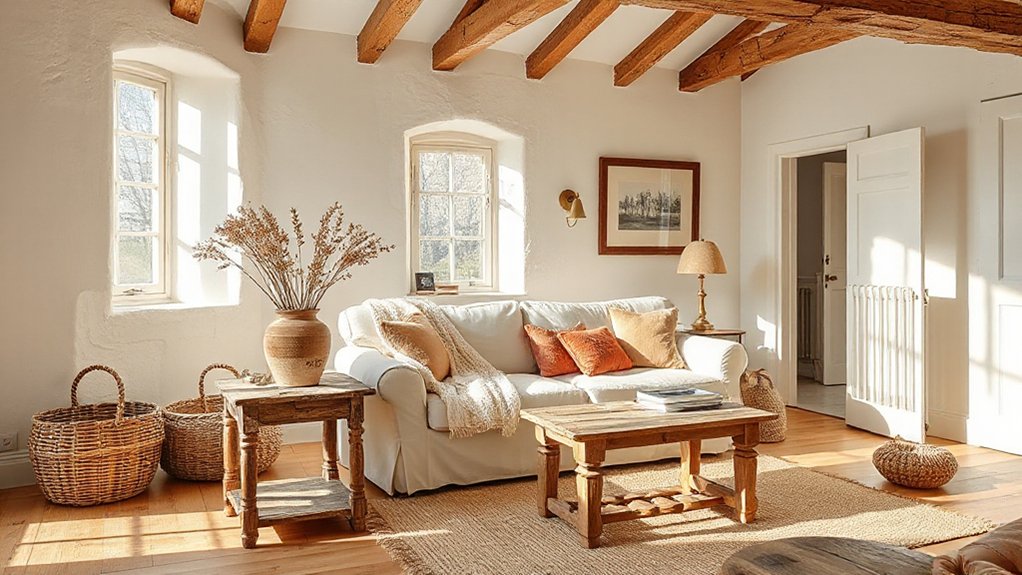
If your renovated cottage feels a bit too crisp, a warm color palette will soften the edges and bring back that lived-in ease. Start with creamy whites and oat-toned neutrals on walls to reflect light without glare, then layer honeyed wood, camel, and warm greige through trim, rugs, and linen.
Pull in sunbaked terracotta, muted clay pink, or saffron as small jolts in cushions and art, so the room glows instead of shouts.
Keep undertones consistent: choose yellow-based neutrals over icy grays, and echo them in finishes like aged brass or rubbed bronze. Deepen the scheme with pine green or smoky navy for grounding contrast.
This steady spectrum builds Rustic charm, while leaving space for Vintage accents to feel intentional throughout.
Balance New Finishes With Vintage Pieces
Although fresh plaster, new oak floors, and crisp cabinetry can make a renovated cottage feel pristine, you can restore its soul by pairing those clean finishes with a few timeworn anchors. Start with Vintage furniture that shows honest wear: a scrubbed farmhouse table, a linen-draped settee, or a painted chest with softened edges. Let each piece land like punctuation against the newness, so the room feels lived-in, not staged.
Then thread in Modern accents with restraint—slim reading lamps, simple hardware, or a tailored rug—to keep the mix intentional. Repeat finishes in small doses so eras converse: echo a metal tone, mirror a shape, match proportions. You’ll create gentle contrast: smooth beside rough, crisp beside patina, and the cottage will finally breathe again.
Add Real Wood (And Let the Grain Show)
Anchor the room with solid wood pieces—like a dining table, bench, or chunky sideboard—so the cottage feels grounded and lived-in.
Skip heavy stains and glossy lacquers; you’ll get more warmth by letting the grain, knots, and saw marks stay visible.
When you choose simple finishes that seal rather than mask, the wood’s natural texture becomes the quiet focal point.
Choose Solid Wood Pieces
When a renovated cottage starts to feel a little too polished, solid wood brings back the warmth you can see and touch. Choose a hefty dining table, a thick-cut bench, or a nightstand with real weight, and you’ll instantly ground bright plaster walls and crisp trim.
Solid pieces age with you, taking on soft dents and a mellow sheen that reads like lived-in comfort, not showroom shine.
Balance Rustic charm with Modern minimalism by keeping silhouettes simple: clean legs, plain fronts, honest joinery. Let one or two substantial items do the heavy lifting, then pair them with linen, wool, and matte ceramics so the room stays calm.
Skip flimsy veneers and hollow builds; you want edges that feel rounded, steady, and reassuring under your hands.
Highlight Natural Wood Grain
If your renovated cottage feels a bit too sleek, let real wood—and its grain—do the softening. Choose pieces that celebrate wood grain: an oak console with cathedral arches, a walnut stool with ribboned streaks, or a pine bench showing tight knots. Skip heavy stains and glossy lacquers; use matte oil or wax so light catches the ridges, not a plastic sheen.
Bring that honesty to the details, too. Swap flat cabinet fronts for veneered panels, add an unfinished beam shelf, or frame a mirror in reclaimed boards with saw marks intact. Mix in natural textures—linen, jute, stoneware—so the room reads layered, not themed.
When you let timber stay imperfect, your cottage feels lived-in, warmer, and quietly grounded.
Use Stone, Clay, and Plaster for Texture
Bring in layered stone accent surfaces where you want the cottage to feel grounded—around the hearth, along an entry wall, or as a rugged backsplash.
Then you can soften the edges with hand-troweled clay plaster that catches light in gentle ridges and shadowed swirls.
Together, stone’s cool grit and plaster’s earthy hush add depth you can feel under your fingertips.
Layered Stone Accent Surfaces
Although a renovated cottage can sometimes feel a touch too crisp, layered stone accent surfaces restore the kind of grounded warmth you can almost feel under your fingertips. You can wrap a hearth wall in softly cleft limestone, edge a niche with river rock, or stack thin ledgestone behind open shelves to reintroduce rustic charm without weighing the room down.
Choose varied cuts and tones—chalky creams, smoky grays, sandy beiges—so light grazes the face and wakes up natural textures from morning to firelit evening. Keep joints tight, let edges stay irregular, and pair the stone with matte wood, aged brass, and linen so the surface reads quiet, tactile, and lived-in.
Add a stone-topped console or sill where you’ll pause.
Hand-Troweled Clay Plaster
Once you’ve grounded the room with stone, hand-troweled clay plaster lets the walls carry warmth in a softer, more breathable way. You’ll see light settle into gentle ripples and shallow tool marks, turning flat drywall into something earthen and alive.
Choose a sandy buff, smoke gray, or muted terracotta to echo your cottage’s soils and hearth tones.
Because clay naturally regulates humidity, you can keep rooms feeling calmer without relying on heavy coatings. Ask for eco-friendly finishes with mineral pigments and low-VOC sealers, so the surface stays matte and touchable.
You’ll appreciate traditional craftsmanship in the slight variations: edges that feather into trim, corners that soften, and patches that read as handmade rather than perfect. Pair it with linen drapes and oak, and the whole house exhales.
Pick Natural Cottage Flooring That Wears Well
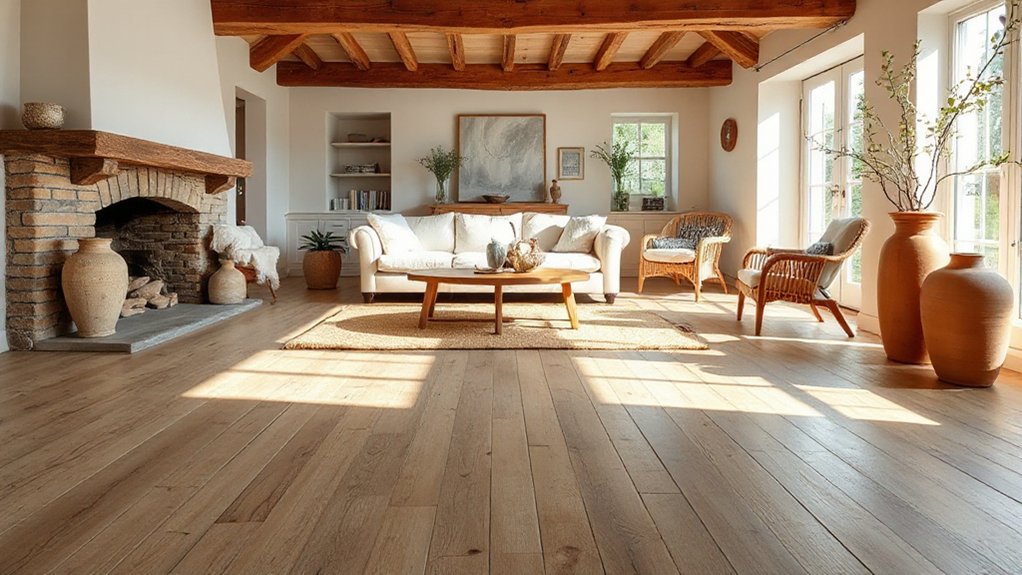
Because cottage life tracks in grit, wet boots, and the occasional dropped mug, your flooring needs to feel natural underfoot and still take a beating. Choose wide-plank oak or fir with a matte oil finish; it hides scuffs, deepens grain, and you can spot-repair without sanding the whole room.
Look for Eco friendly materials and Sustainable sourcing—FSC-certified wood, reclaimed boards, or rapidly renewable cork that cushions steps and shrugs off chill. In entryways and kitchens, consider honed slate or tumbled limestone; their soft edges and subtle veining read calm, not flashy, and they handle water with grace.
Keep colors grounded—warm honey, smoke, river-stone gray—so the floor anchors your cottage’s natural palette year-round.
Add Linen, Wool, and Woven Textiles
When the renovation’s clean lines start to feel a little too crisp, you can soften the whole cottage with textiles that look lived-in and feel honest. Drape washed linen textures over a sofa, let them puddle slightly at the hem, and you’ll instantly add relaxed movement. Choose oatmeal, flax, and cloud-white tones that echo stone and timber without trying too hard.
Bring in wool accents where you want quiet warmth: a nubby throw on an armchair, felted cushions on a bench, or a small rug that cushions footsteps. Balance them with woven baskets, cane, and jute to add grainy pattern and gentle structure.
Layer light and heavy pieces so rooms feel settled, not styled—like they’ve always belonged there.
Choose Warm Bulbs and Cottage-Style Lighting
Even if your cottage renovation leans bright and minimal, warm bulbs can pull the whole space back toward comfort. Choose LEDs in the 2200K–2700K range to soften sharp corners and give painted walls a honeyed glow. Add dimmers so you can shift from task-ready clarity to evening calm without changing a thing.
Layer cottage-style lighting the way you’d layer fabrics: a small pendant over the table, a shaded sconce in the hall, and a stout lamp on a sideboard. Hunt for Vintage fixtures in aged brass, milk glass, or weathered iron; their patina adds depth even in a fresh room.
Aim for ambient lighting that pools gently, not glare that flattens texture and grain.
Finish With Greenery and Simple Natural Accents
Warm lighting sets the mood, but greenery gives your renovated cottage its living, breathing finish. Tuck indoor plants where the eye naturally rests: a fern on a window ledge, a trailing pothos softening open shelving, a small olive tree beside a linen slipcovered chair. You’ll add color without noise, and the leaves will echo wood grain and woven textures.
Keep botanical accents simple and honest. Fill a stoneware jug with clipped branches, press dried herbs into minimal frames, or set a shallow bowl of pinecones on the coffee table. Choose terracotta, glass, and muted metal so the greenery stays central.
Watering becomes part of the rhythm, and the rooms feel calmer, fresher, and quietly finished.
Frequently Asked Questions
How Do I Prevent Musty Odors When Using Lots of Natural Materials?
You prevent musty odors by balancing humidity and airflow: apply Mold prevention sealers, dry wood thoroughly, and use Ventilation techniques like cross-breezes and exhaust fans. Keep fabrics lifted, sun-cured, and clean.
What’s the Best Way to Maintain Natural Finishes With Pets and Kids?
Like a well-worn saddle, you’ll keep natural finishes thriving by choosing Pet proof finishes and Child safe stains, then sealing with matte water-based topcoats. You’ll wipe spills fast, use washable rugs, and trim claws.
How Can I Add Warmth on a Tight Budget Without Major Changes?
You can add warmth fast by layering budget friendly accents: thrifted brass, woven baskets, and candlelight. Swap in cozy textiles—chunky throws, linen cushions, wool rugs. Warm bulbs and framed nature prints soften rooms without renovations.
Which Eco-Friendly Sealants Are Safest for Indoor Air Quality?
Choose water-based, low/zero-VOC, third-party certified sealants; they’re a clean-breeze veil over your rooms. Look for GreenGuard Gold or EC1 labels in Eco friendly coatings, and prioritize Indoor air safety with rapid curing, minimal odor.
How Do I Mix Natural Decor Styles Without the Cottage Feeling Cluttered?
Mix natural decor by limiting your palette, repeating textures, and choosing one hero piece per zone. Balance Rustic charm with clean lines, layer Botanical accents sparingly, and edit weekly so surfaces breathe.
Conclusion
When you tie creamy whites to honeyed woods and earthy clay tones, your renovated cottage stops feeling new and starts feeling lived-in. You balance crisp upgrades with a worn chair, let real grain glow, and soften every edge with linen, wool, and woven jute underfoot. Here’s the picture: studies show people spend about 90% of their time indoors—so warmth matters. Layer warm bulbs, stone texture, and quiet greenery, and you’ll feel it every day.