
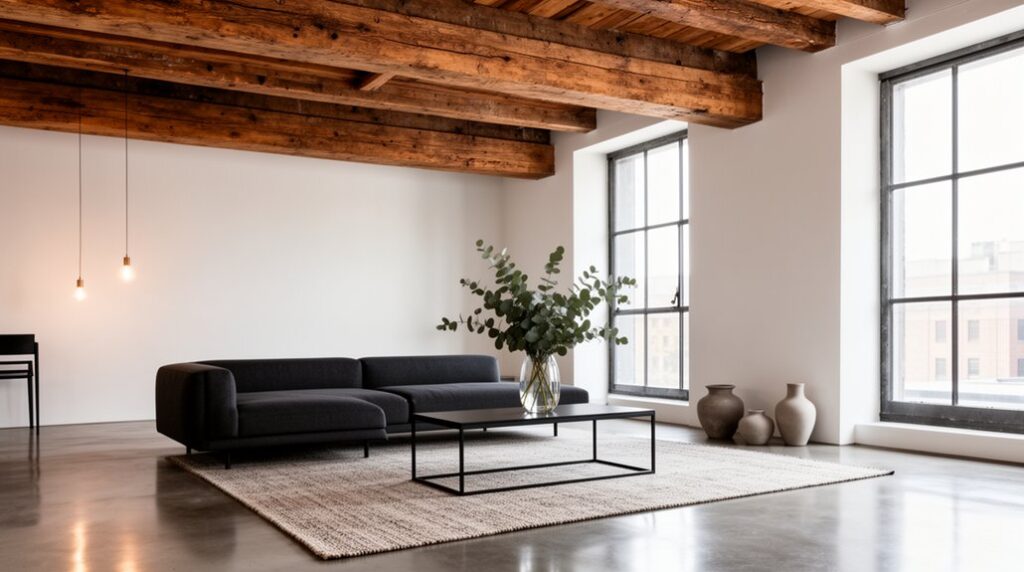

You can make original beams feel intentional in a contemporary room by treating them like a historic anchor, not a theme. Keep their patina visible, then use warm whites or muted greiges so the grain stands out without darkening the space. Add slim, clean-lined furniture and restrained accessories to prevent visual weight. Layer brushed metal, textured textiles, and smooth woods to bridge old and new—then the real decision becomes how far you push contrast.
Decide: Keep Original Beams Raw, Stained, or Painted
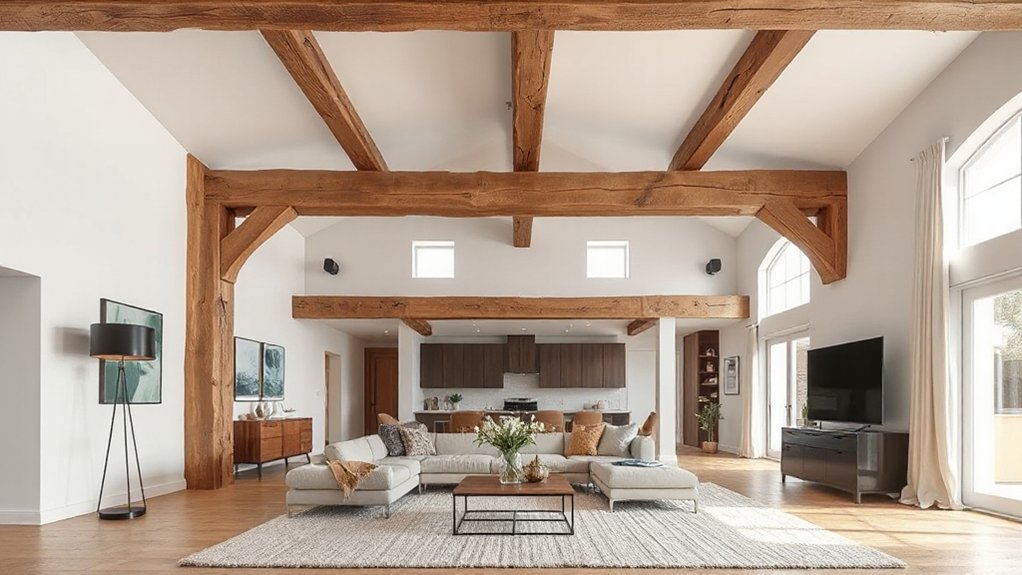
Before you choose furniture or lighting, decide whether your original beams should stay raw, take a stain, or get paint, because that finish sets the room’s tone as clearly as any wall color.
Start by dating the timber: in many 17th–19th century homes, adze marks and oxidized patina signal value you shouldn’t sand away.
For beam restoration, clean gently, treat active insect damage, and consolidate soft spots before you chase a “new” look.
Keep beams raw when they’re structurally sound and the surface tells the building’s story.
Choose stain when you need to unify mismatched repairs while preserving grain; test samples under evening LEDs.
In paint vs stain, pick paint only if past layers already exist or you must conceal modern splices.
Choose Modern Wall Colors That Flatter Original Beams
Once you’ve settled on a raw, stained, or painted beam finish, let the wall color do the supporting work—either boosting the timber’s warmth or cooling it down so the ceiling structure reads as intentional, not heavy.
In prewar cottages and Victorian terraces, beams often carry orange-brown undertones; modern warm whites, muted clay, and putty-based greiges keep that heritage glow without the 1990s “country” look.
If your beams skew sooty or tar-dark, lean into cooler off-whites, pale stone, or blue-gray to lift contrast and sharpen the architecture.
Test color palettes at different times of day; north light exaggerates coolness, south light amplifies warmth.
Use accent walls sparingly—charcoal, deep olive, or inky navy—on gable ends to frame beams, not compete.
Pick Modern Lighting That Clears and Highlights Beams
Although original beams deserve to be the focal point, modern lighting should stay visually quiet and physically clear of the timber, especially in prewar cottages and Victorian terraces where low ceilings and dark wood can feel top-heavy.
Choose slim ceiling fixtures that sit between joists, not below them, so you preserve headroom and stop glare from bouncing off aged grain. Use warm LEDs (around 2700K) to echo candlelit interiors common to these periods, and pick high-CRI bulbs so the beam’s patina reads true, not grey.
Add accent lighting with discreet wall washers or track heads aimed across the timber to reveal tool marks and chamfered edges. If you need pendants, hang them in open bays and keep shades shallow, matte, and neutral.
Balance Heavy Beams With Clean-Lined Modern Furniture
When chunky, time-darkened beams run low across a prewar cottage kitchen or a Victorian terrace sitting room, you can stop the ceiling from feeling oppressive by choosing furniture that reads light and exact. Opt for slim-leg tables, low-back sofas, and armless chairs so sightlines stay open beneath the timber.
Keep profiles rectilinear and proportions modest; design historians note that heavy overhead members feel lower when paired with bulky, skirted upholstery typical of later revivals. Instead, use crisp joinery, tapered legs, and floating shelving to introduce texture contrast without competing with the grain.
Let the beams remain the primary “ornament” for historic authenticity, then echo their order with calm geometry. Choose pale or mid-tone finishes and closed storage to reduce visual noise in compact period rooms.
Layer Metals, Textiles, and Wood to Echo the Beams
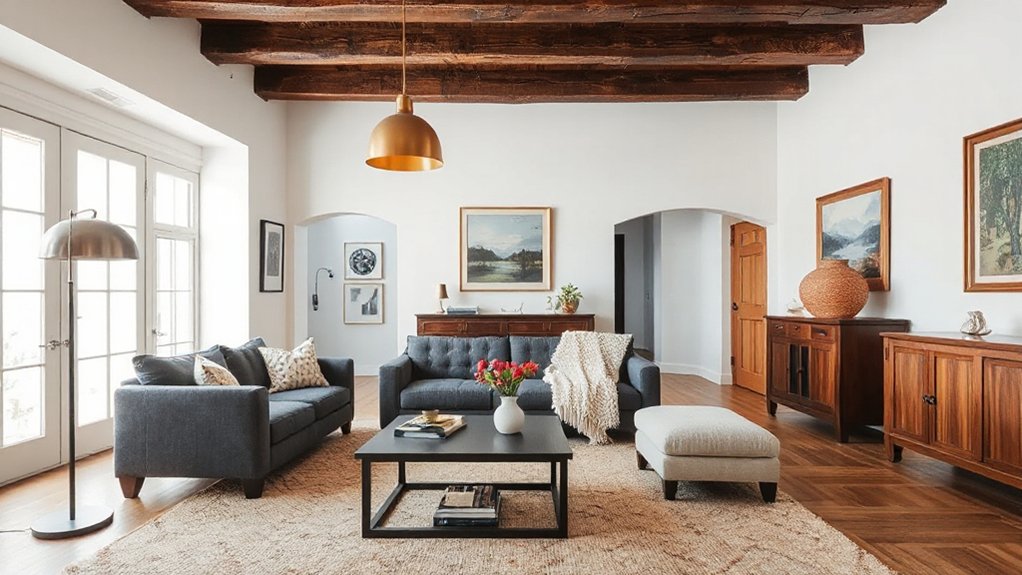
To keep original ceiling beams feeling intentional in a contemporary scheme, you can repeat their warm, matte character through a controlled mix of metals, textiles, and wood. Choose metal accents with low sheen—brushed brass, blackened steel, or patinated bronze—since they mirror the subdued finish typical of early-20th-century joinery and avoid competing glare from modern glazing.
Layer textured fabrics to soften the beam’s visual weight: nubby wool, linen slub, or bouclé reads current yet references the tactile interiors that historically balanced exposed structure.
Ground the room with pale oak or walnut in flat-sawn grain, then echo the beam tone in small moves—tray tables, picture frames, or a bench. Keep finishes consistent, and you’ll create rhythm without turning rustic.
Frequently Asked Questions
How Do I Check if My Ceiling Beams Are Structurally Sound?
Inspect beams for sagging, deep cracks, rot, insect frass, or loose joints; probe with an awl. Document moisture readings. For period homes, schedule a Structural assessment and Beam restoration plan with a preservation-minded engineer.
Do Original Beams Need Special Cleaning or Pest Treatment Before Decorating?
Yes—you should clean them and, if signs appear, treat them first; like Odysseus, you don’t ignore hidden threats. Use gentle brushing/vacuuming, avoid harsh chemicals. For beam preservation, get a period-appropriate borate; for pest prevention, confirm active infestation.
Can I Add Faux Beams to Match Existing Ones in Nearby Rooms?
Yes, you can add faux beams to match nearby originals. For convincing faux beam matching in 1920s–1950s homes, measure profiles, mimic saw marks, stain-test samples, and use concealed brackets during decorative beam installation for aligned spacing.
Will Exposed Beams Reduce Insulation or Increase Heating and Cooling Costs?
Exposed beams can raise heating/cooling costs if they interrupt attic insulation or create air leaks. For Energy efficiency, you’ll need continuous insulation and air-sealing. Their Thermal impact is manageable, as 1920s homes often relied on drafty assemblies.
Do I Need Permits to Alter, Remove, or Expose Original Beams?
You’ll likely need construction permits to alter, remove, or expose original beams, especially in pre-1940 homes. If historic preservation rules apply, you must get approvals. Ask your local building department; structural work triggers inspections.
Conclusion
You’ll make original beams feel at home in today’s spaces by keeping their timeworn texture visible—raw, lightly stained, or softly painted to suit the era of your home. Set them against warm whites or muted greiges, a designer-favored backdrop that boosts contrast without glare. Choose slim, sculptural lighting that skims the grain, then balance the heft with clean-lined furniture. Finish with layered metals, textiles, and woods for a calm, cohesive cadence.