
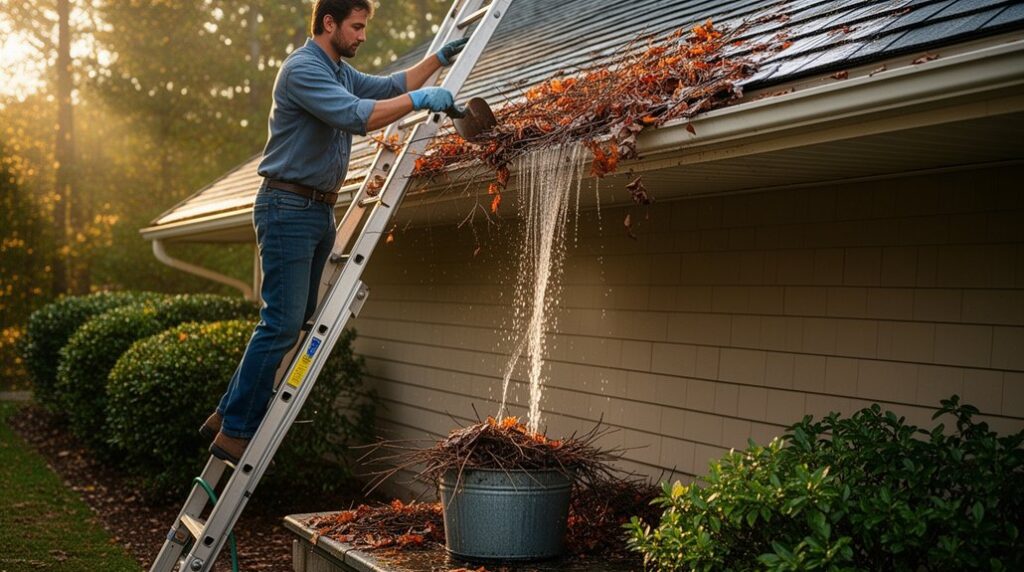

Clogged or poorly pitched gutters contribute to roughly 1 in 4 residential water-intrusion complaints, and you can prevent most of them with routine checks. You’ll start with ladder stability, PPE, and controlled body positioning to limit fall risk. Then you’ll remove debris from the downspout end, flush to verify flow, and inspect hangers, seams, and slope before small defects turn into leaks. The next step is where most DIY jobs fail—because one shortcut can force water behind the fascia…
Gutter Cleaning Safety and Ladder Setup

Before you climb, set up your ladder and safety gear so a routine gutter clean doesn’t turn into a fall. Place the ladder on firm, level ground and maintain a 4:1 angle; secure the feet so they can’t slip. Check rungs, locks, and rails for damage, and never overreach—keep your belt buckle between the side rails.
For Ladder stability, tie the top off to a solid anchor and have a spotter hold the base.
Wear non-slip footwear, eye protection, and gloves to prevent cuts and contamination from Gutter debris.
Avoid climbing in rain, wind, or near overhead power lines.
Descend and reposition often instead of twisting.
Keep three points of contact at all times.
Tools and Supplies for Gutter Cleaning
Although you can scoop out debris with gloved hands, the right tools make gutter cleaning faster, cleaner, and safer. Start with a sturdy extension ladder, stabilizer standoff, and non-slip footwear to keep your stance secure. Wear cut-resistant gloves, safety glasses, and a dust mask to limit exposure to sharp Gutter debris, mold, and granules.
Use a small plastic bucket or tarp for containment, plus a hand brush to loosen packed material without scraping finishes. Keep a hose with a trigger nozzle for controlled flushing and a plumber’s snake for downspout clogs.
Bring a flashlight or headlamp for inspection, and a camera to document corrosion. Match touch-up sealant and paint to your gutter color to prevent UV breakdown.
Clean Gutters by Hand or With a Scoop
Once you’ve set the ladder and staged your bucket or tarp, remove debris from the downspout end toward the opposite corner so you don’t pack material into the outlet. Keep three points of contact and reposition the ladder often; don’t overreach past the side rails.
Wear cut-resistant gloves and eye protection because gutter debris can hide sharp screws, gritty shingle granules, or pests. For manual removal, use a gutter scoop sized to your profile to lift compacted leaf mats without scraping the coating.
Work in short passes, dropping loads into the bucket, not onto shingles or landscaping. Check hangers, seams, and end caps as you go; stop if you see loose fasteners or sagging sections. Bag waste promptly.
Flush Gutters and Downspouts With a Hose
After you’ve scooped out the bulk debris and confirmed the outlet isn’t packed, flush the gutter run with a garden hose to clear grit and fine sludge you can’t lift by hand. Set the nozzle to a medium stream and start at the end opposite the downspout, working toward the outlet so Gutter debris moves in one direction.
Keep your stance stable on the ladder, maintain three points of contact, and avoid overreaching; reposition instead. Watch the flow at seams and hangers to spot leaks or sagging sections while water runs. You want steady Water drainage into the outlet without pooling or backflow.
Finish with a brief rinse around corners and end caps, then shut off water before climbing down.
Clear Clogged Downspouts Without Damaging Gutters
Two safe, low-impact methods clear most downspout clogs without bending the gutter or stressing hangers: backflush from the bottom and snake from the top.
Disconnect the lower elbow or extension, aim a hose upward, and pulse water in short bursts to loosen gutter debris. Keep pressure moderate; don’t use a pressure washer, which can blow joints apart.
If flow still won’t start, move to a hand auger. From the roofline, feed the snake down the downspout, rotating clockwise to bite into packed leaves. Advance slowly so you don’t kink thin aluminum.
Wear cut-resistant gloves and eye protection; expelled slurry can splash. Confirm clearance by running a steady hose stream until discharge runs clean.
Spot Gutter Damage While You Clean
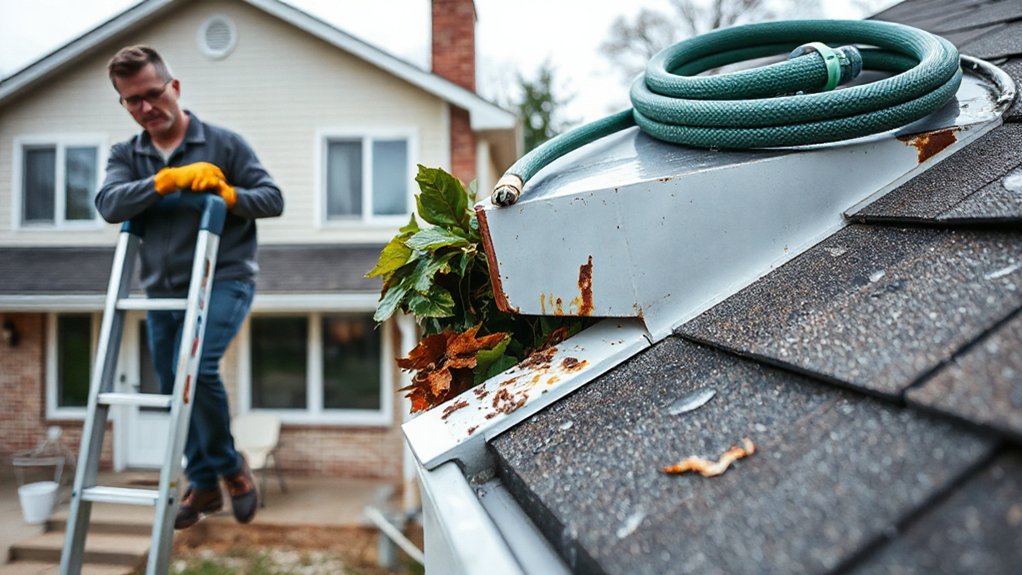
With the downspout flowing freely, use the same hose test and close-up access to inspect the gutter system for damage before you climb down. Watch for overflow at seams, drips under hangers, and water tracking behind the fascia, which signals misalignment or hidden gaps.
Run a gloved hand along edges to find sharp burrs, cracks, or separated joints. Perform a gutter material inspection: look for aluminum pitting, steel rust blooms, vinyl brittleness, and UV-chalked surfaces.
Check fasteners for back-out and confirm hangers keep a consistent slope by sighting down the run. Note any sagging spans, crushed corners, or ladder dents; mark them for minor dent repair later.
Photograph defects from the ladder, maintain three points of contact, and don’t overreach.
Fix Common Gutter Issues Before They Leak
Before small defects turn into fascia rot or basement leaks, tighten up the common failure points you just spotted while you’re still set up safely on the ladder.
Re-seat loose hangers and spikes, replacing stripped fasteners with stainless screws into solid rafters.
Reset slope to about 1/4 inch per 10 feet toward downspouts, then re-caulking end caps and miters with exterior gutter sealant on clean, dry metal.
At joints, remove old sealant, brush off oxidation, and overlap sections fully before riveting or screwing.
Clear and reattach downspouts, then extend outlets so discharge won’t undercut beds for better Landscaping integration.
Touch up bare metal to match your Gutter color and stop corrosion.
Finish by running water to confirm no drips at seams or outlets.
Add Gutter Guards to Reduce Gutter Cleaning
You can cut gutter-cleaning frequency by adding gutter guards, but you’ll need to choose the right type—mesh, screen, reverse-curve, brush, or foam—based on your roof pitch, debris load, and local rainfall.
Install them per the manufacturer’s specs with compatible fasteners and sealed end caps, and verify they don’t interfere with shingle edges or water flow into the trough.
Use a stabilized ladder and gloves to reduce fall and cut risks.
Even with guards, you’ll still inspect after storms and clear the cover surface and downspout inlets so clogs don’t develop under the guard.
Types Of Gutter Guards
Although regular cleaning keeps gutters flowing, installing gutter guards can sharply cut the amount of debris that reaches the trough and reduce ladder time. You’ll typically choose among screen, mesh, micro-mesh, foam, brush, and surface-tension (helmet) styles.
Screen and coarse mesh block leaves but can pass grit; micro-mesh intercepts fine shingle granules yet needs adequate roof runoff capacity to avoid overtopping. Foam inserts filter needles but can hold moisture, so check compatibility with your climate.
Brush guards shed larger debris but may trap seeds along the bristles. Surface-tension systems use a curved cover to direct water into the slot, but they’re sensitive to roof pitch and flow rate.
Compare gutter guard materials and installation techniques for your system’s profile.
Guard Installation And Upkeep
When you install gutter guards with the correct fasteners, slope alignment, and end sealing, they’ll cut clog frequency without starving the gutter of intake capacity during heavy runoff.
Use manufacturer-specified screws, not nails, and predrill to prevent fascia splitting.
Set panels tight to the roof edge, keep the nose pitched into the gutter, and overlap seams in the flow direction.
Add sealant at miters and end caps where debris bypass commonly starts; check for shingle lift and maintain proper drip-edge contact.
For safety, you’ll use a stabilizer ladder, gloves, and eye protection, and you won’t overreach.
For upkeep, you’ll brush surface debris quarterly, rinse screens, and inspect for UV cracking, fastener loosening, and corrosion affecting gutter guard durability.
Document repairs.
Set a Gutter Cleaning Schedule by Season

Because debris loads and rainfall patterns shift throughout the year, set a seasonal gutter-cleaning schedule that matches local weather and tree cover to prevent clogs, overflow, and ice-related damage.
In spring, clear pollen mats, seed pods, and roof granules; then flush downspouts to confirm full flow and tight joints.
In summer, inspect after thunderstorms, check hangers for pull-out, and remove nesting material before it compacts.
In fall, prioritize leaf drops and pine needles as seasonal debris; clean at peak drop and again after the last shed.
In winter, keep channels open so meltwater drains; watch for icicles and add-safe deicing measures without chipping metal.
While planning, note gutter color options can affect heat gain and snowmelt, changing inspection frequency.
Use stable ladders, gloves, and eye protection.
Know When to Hire a Gutter Cleaning Pro
If your gutters sit high, run complex rooflines, or show persistent overflow after you’ve cleaned them, hire a gutter cleaning pro to reduce fall risk and catch hidden failures early. Pros use stabilized ladders, roof anchors, and PPE, then verify slope, hanger spacing, seam integrity, and downspout flow with flush testing.
Call them if you see rust, pinholes, joint separation, fascia staining, or recurring clogs from valley runoff. They’ll match repairs to your gutter material (aluminum, steel, copper, vinyl) and avoid galvanic corrosion from wrong fasteners.
They can also preserve gutter color by using non-abrasive tools and compatible sealants, preventing paint lift and oxidation. You’ll get photo documentation, debris disposal, and recommendations for guards, extensions, or re-pitching.
Frequently Asked Questions
How Do Gutters Affect My Home’s Foundation and Basement Moisture Levels?
Gutters route roof runoff away, so you reduce hydrostatic pressure, soil saturation, and foundation settlement; you’ll also limit basement seepage. Proper Gutter installation and Gutter design prevent overflow, erosion, and unsafe slip hazards.
What Are Signs My Gutters Are Undersized for My Roof Area?
You’ll notice undersized gutters when Roof drainage overflows during moderate rain, downspouts back up, water sheets past fascia, and you see erosion or basement dampness. Check Gutter sizing if outlets can’t clear flow safely.
Do Different Gutter Materials Require Different Maintenance Routines?
Yes—like gears in a clock, each Gutter material needs a tailored Maintenance routine. You’ll inspect aluminum for dents, seal steel for rust, tighten vinyl brackets, and handle copper carefully. Use gloves, stable ladders, and eye protection.
How Much Does Professional Gutter Cleaning Typically Cost in My Area?
You’ll typically pay $120–$300 for professional Gutter cleaning locally; two-story, heavy debris, or guards push $350+. Do a Cost comparison with insured crews, fall-protection gear, and post-clean flush/photos to confirm downspout flow.
Are Gutter Cleaning and Maintenance Requirements Different for Rental Properties?
Yes—rental properties often differ: you follow lease terms and local codes for Rental property upkeep. Define Tenant responsibilities for debris checks and reporting. You schedule insured professionals, document inspections, and use fall protection, ladder stabilizers.
Conclusion
Clean gutters protect your siding, fascia, and foundation by controlling roof runoff. If you stay safe—stable ladder angle, three points of contact, gloves, and eye protection—you’ll cut risk while you scoop debris, hose-flush sediment, and confirm downspouts discharge freely. Fix loose hangers, failed sealant, and bad pitch before leaks start. Consider guards to reduce buildup. One compelling stat: clogged gutters cause about 1 in 5 home water-damage insurance claims, so schedule seasonal checks.