
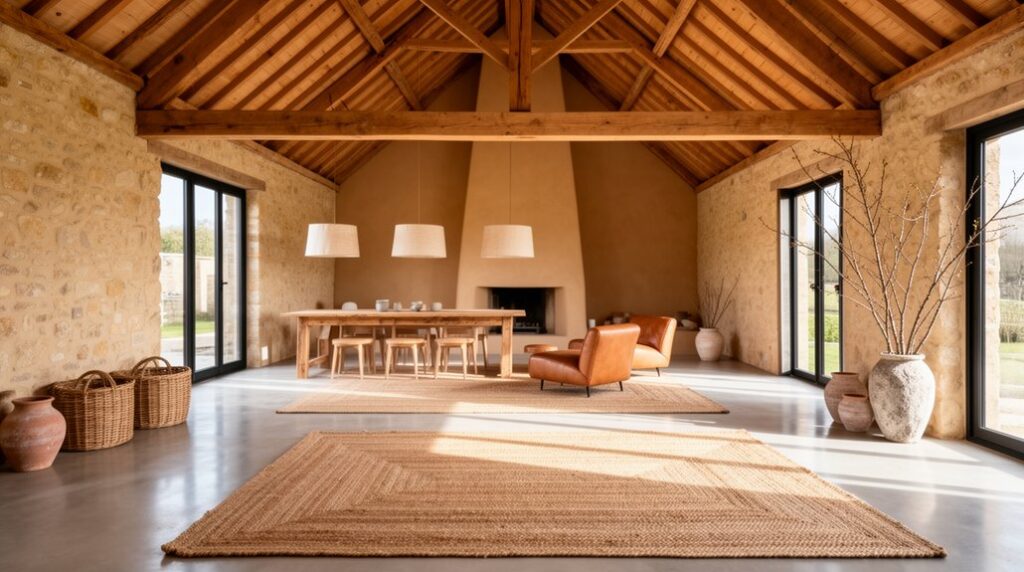

You’re working with big volume and honest structure, so start by choosing a calm natural palette—soft whites, clay tones, and muted greens that won’t fight the beams and stone. Then you’ll zone the open plan with jute rugs, reclaimed wood pieces, and low seating that keeps sightlines open. Add linen, wool, and rattan to soften echoes, and use warm, dimmable lighting to pull texture forward. But the real shift happens when you decide what stays raw—and what gets refined…
Choose a Cohesive Natural Palette for Your Barn Conversion
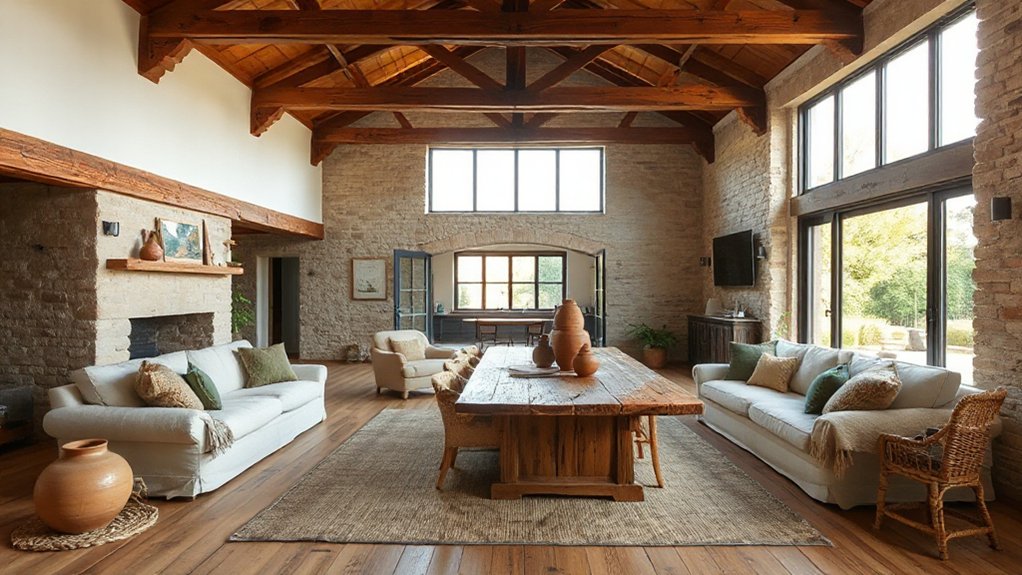
If you start with the barn’s original materials, your colour palette almost chooses itself. Pull tones from weathered oak, aged brick, limewash, and iron hardware, then repeat them in small, precise moves.
Keep walls breathable with soft whites or clay tints so daylight bounces and the volume feels calm, not cavernous.
For color coordination, limit yourself to three neutrals and one muted accent: peat, stone, and warm timber, plus a restrained green or inky blue. Choose matte finishes to reduce glare on big planes and let texture do the work.
Practice sustainable sourcing by specifying reclaimed boards, mineral paints, and natural fibres dyed low-impact. You’ll get continuity without matching, and the whole shell reads intentional and spacious.
Plan Open-Plan Barn Conversion Zones With Rugs and Layout
Because open-plan barn conversions can read as one big echoing volume, you’ll want to carve the space into clear zones using layout first and rugs second.
Start with Furniture placement: float the sofa and chairs to define a living bay, then align a console behind the sofa to create a subtle “hall” without walls. Keep walking lines generous so the room still breathes.
Layer rugs as your zoning strategies. Choose flatweaves or low piles that sit cleanly on wide planks and don’t fight the grain.
Size matters: run the front legs of seating on one rug, tuck the dining chairs fully on another, and leave a strip of bare floor between zones for visual pause.
Repeat textures—wool, jute, leather—so the segmentation feel intentional.
Anchor High Ceilings With Timber, Stone, and Tile
Once you’ve zoned the floor with furniture and rugs, look up and give the height a place to land. Expose or add timber beams to draw the eye horizontally, softening the vertical sweep and restoring Rustic charm without clutter.
Keep finishes matte: limewash, smoked oak, or clear oil so the grain reads from below. If you need definition, run a slim timber picture rail or a plank soffit over the kitchen to visually “lower” that zone.
Ground the volume with stone: a hearth wall, chimney breast, or stacked-stone pier that feels original and boosts Structural integrity.
Tie it together underfoot with hardwearing tile—terracotta, slate, or encaustic—laying it in large formats to calm the space.
Layer Linen, Wool, and Rattan to Warm Open Plan
While open-plan barns can read cool and echoey, you can warm the whole volume by layering breathable linen, weighty wool, and tactile rattan in deliberate bands from seating to windows.
Start at the sofa: slip in washed-linen covers, then stack wool throws and felted cushions to deepen textile textures without visual clutter.
Define zones with a flatweave wool rug under dining and a chunkier weave by the hearth, so circulation stays clear.
Bring rattan in at mid-height—armchairs, pendants, basket storage, and a cane-front sideboard—to break up hard planes and soften acoustics.
Choose undyed, durable fibres, repairable weaves, and vintage rattan for material sustainability, then repeat tones—oat, charcoal, flax—to unify the span.
Light Your Open-Plan Barn Conversion With Warm Layers
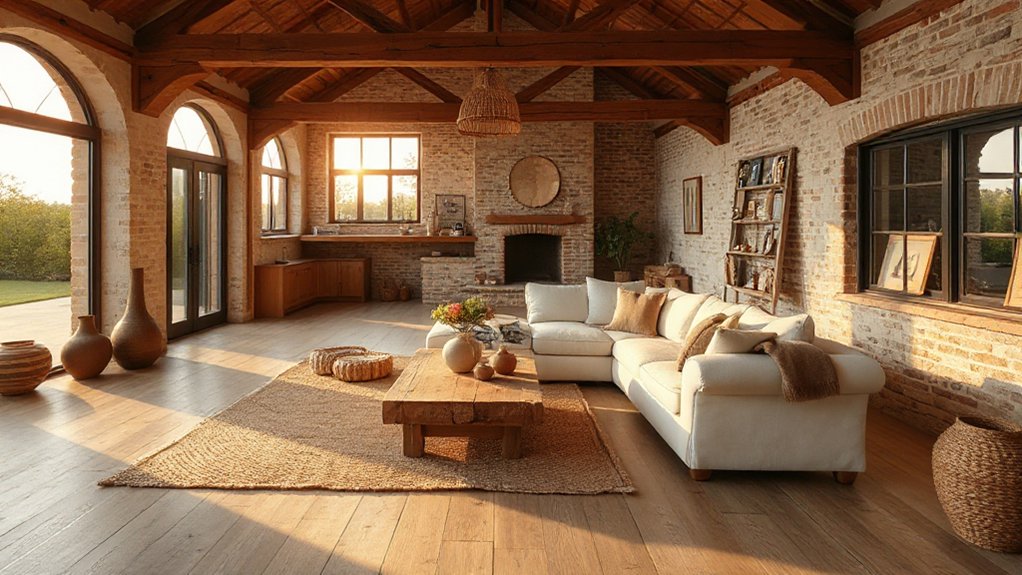
Even if your barn’s glazing pulls in big daylight, you’ll still need warm layers of light to stop the open plan from feeling stark after dusk. Start with dimmable downlights on timber beams for clean task light, then add pendants in aged brass or clay above the dining table to anchor scale.
Bring glow to seating zones with low lamps on oak side tables and a shaded floor lamp by the sofa; smart furniture placement lets each pool of light define a “room” without walls. Use lantern-style wall lights to graze stone and highlight texture.
Finally, soften reflections with window treatments: linen drapes, woven shades, or relaxed Roman blinds. Choose 2700K LEDs and matte finishes so light reads like firelight, not a showroom.
Frequently Asked Questions
How Do I Improve Acoustics in an Open-Plan Barn Without Ruining Character?
Add wool rugs, thick linen curtains, and slatted timber baffles to absorb echo while keeping beams visible. Use Furniture arrangement to break sound paths. Layer Interior lighting on acoustic panels, hiding tech in rustic textures.
Which Natural Materials Are Best for Underfloor Heating in Barn Conversions?
Choose dense stone, slate, or clay tiles for underfloor heating; they store heat steadily. Pair Eco friendly insulation like cork or sheep’s wool, and Sustainable flooring options like engineered oak, keeping floors slim, warm, characterful.
How Can I Control Humidity to Protect Timber and Stone Finishes?
You’ll control humidity by sealing slabs with Moisture barriers, running steady Ventilation solutions, and keeping RH near 45–55%. Use dehumidifiers in wet zones, vent kitchens and baths, and heat gently to stabilize timber.
Do I Need Special Sealants for Lime Plaster Near Kitchens and Bathrooms?
Yes, you’ll likely need breathable protection, not heavy film sealers. Use Lime plaster with soap or silicate treatment; plan careful sealant application on splash zones only, keeping walls open and moisture‑balanced in compact, hardworking spaces.
What Building Regulations Affect Exposed Beams and Reclaimed Materials?
You’ll face Building permissions for structural integrity, load paths, and moisture detailing on exposed beams; reclaimed materials need grading and traceability. You must meet Fire safety regulations: charring rates, surface spread, escape routes, and protected connections.
Conclusion
Keep your barn conversion grounded by sticking to a calm, earthy palette, then let rugs and furniture layouts carve out clear zones without walls. Balance soaring volume with timber beams, stone, and honest tile underfoot. Soften the hard edges with linen drapes, wool throws, and rattan accents that add quiet warmth. Finish with dimmable, warm lighting that skims textures. Can you see dusk settling over reclaimed oak and clay-toned walls?