
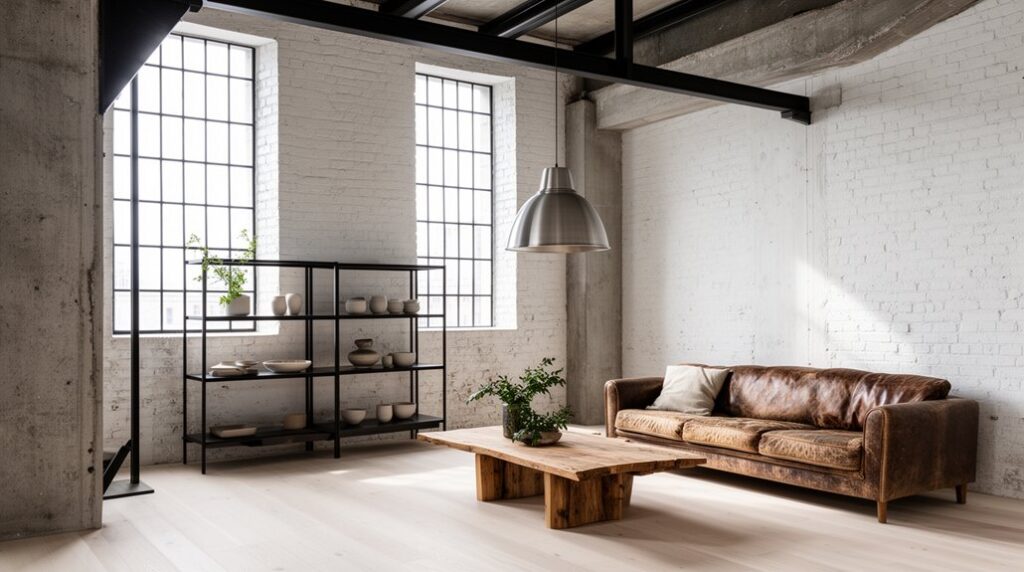

You don’t need a loft or exposed pipes to pull off Scandinavian industrial style. You just pair Nordic restraint with honest, hard-working materials—warm wood against cool metal, soft wool against raw concrete, matte finishes against crisp lines. You keep the palette muted, the layout practical, and the light layered so the space feels calm, not cold. Get the balance wrong and it turns harsh; get it right and it holds you.
What Is Scandinavian Industrial Interior Design?
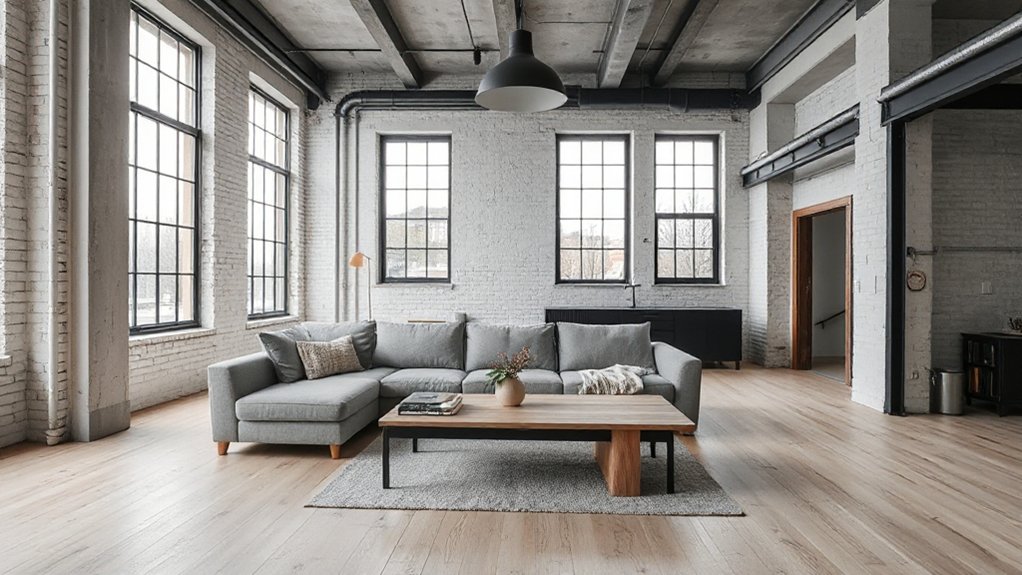
Although it blends two distinct aesthetics, Scandinavian industrial interior design feels cohesive because it pairs Nordic simplicity with raw, utilitarian edge. You get clean lines, pale woods, and generous light set against steel, concrete, and exposed hardware.
The mood stays calm, but the surfaces feel honest and tactile: matte metals, worn leather, rough brick, crisp linen. You choose furniture that works hard—streamlined silhouettes, practical storage, sturdy joinery—then let texture do the talking.
Color stays restrained: whites, greys, charcoal, and muted earth tones, with black details anchoring the room. You can add warmth through Vintage accents like a patinated stool or factory lamp, and keep it personal with Eclectic accessories that still feel purposeful, not precious or fussy.
The 5 Rules That Make It Work
To make Scandinavian industrial work, you balance raw materials with refined finishes so the space feels crisp, not cold.
You keep a neutral palette—whites, grays, black, and muted wood tones—to let concrete, steel, and grain carry the texture.
You prioritize warm minimalism with clean lines, soft lighting, and a few tactile textiles that you’ll actually use.
Balance Raw And Refined
When you mix Scandinavian calm with industrial edge, the room can tip cold or chaotic fast. You fix it by pairing opposites with intent: one raw element, one refined one, repeated.
Choose Rustic authenticity in structural pieces—exposed brick, concrete, blackened steel, rough-sawn oak. Then answer it with Modern minimalism in what you touch daily: smooth cabinet fronts, slim hardware, clean-lined seating, tailored textiles.
Keep joints and details crisp so the rough textures feel deliberate, not unfinished.
Limit statement materials, but let them read clearly: a heavy worktable against light cabinetry; matte metal beside oiled wood; a factory pendant above a simple dining set.
You’re not softening the industrial—you’re editing it, so calm and grit coexist.
Keep A Neutral Palette
Edited raw-and-refined pairs look best on a quiet backdrop, so keep your palette neutral and disciplined. Start with three anchors: chalk white, soft gray, and charcoal; let them cover most surfaces. Limit accent colors to one muted note, used sparingly for wayfinding and focus.
Match undertones—cool with cool, warm with warm—to maintain color harmony across concrete, steel, and timber. Use finish shifts, not extra hues: matte walls, satin cabinetry, brushed metal, and raw stone.
Build textural contrasts through weave, grain, and patina so the room reads rich without getting busy. Repeat the same neutrals in adjacent zones to avoid visual breaks.
If you add black, keep it structural—frames, fixtures, rails—then stop.
Prioritize Warm Minimalism
Even if you love the hard edge of Scandinavian industrial, the space won’t feel livable until you build in warmth with restraint. Warm minimalism isn’t more stuff; it’s better choices, fewer of them.
Rule 1: Keep negative space clear so raw steel and pale wood can breathe.
Rule 2: Add one soft anchor—Vintage textiles on a sofa or bench—then stop.
Rule 3: Choose low-sheen, tactile finishes: linen, wool, oiled oak, matte ceramics.
Rule 4: Repeat simple geometric patterns in small doses (a rug grid, a cushion stripe) to echo beams and brick lines.
Rule 5: Edit lighting: one warm pendant, one task lamp, no glare. You’ll get calm, grit, and comfort.
Scandinavian Industrial Color Palette (Warm + Cool)
Although Scandinavian industrial spaces lean on restraint, the color palette never feels cold because it balances warm and cool on purpose. You start with soft whites, stone greys, and near-black accents to keep lines crisp and the room grounded.
Then you add warmth in measured doses: muted clay, tobacco, ochre, or a dusty blush that reads like patina, not decoration.
Use Color psychology to steer mood: cool neutrals calm visual noise, while warm earth notes restore ease and human scale. Keep saturation low and edges clean; let contrast do the work.
For depth, borrow Art deco influences through inky outlines, brassy hints, and geometric blocks of color, but keep them quiet. You’ll get a space that feels sharp, lived-in, and steady.
Material Pairings: Wood, Metal, Brick, Concrete
You balance warm wood against cool metal to keep the room grounded and crisp.
You let brick bring grit and shadow, then use concrete to hold the line with clean, quiet planes.
You mix rough and refined on purpose, so every surface feels honest and controlled.
Warm Wood, Cool Metal
When warm wood meets cool metal, Scandinavian industrial spaces feel grounded yet sharp. You balance rustic charm with metallic accents by keeping forms simple: a pale oak table on black steel legs, a walnut shelf pinned with brushed brackets, a bench framed in powder-coated tubing. Let grain and patina do the talking, not ornament.
You’ll get the cleanest contrast when you repeat each material with intention. Choose one wood tone, then echo it in doors, stools, or slatted panels. Pick one metal finish—matte black, stainless, or aged brass—and run it through pulls, lighting, and rails.
Keep edges crisp, surfaces honest, and joints visible. Add linen, wool, and leather to soften the touch without diluting the structure.
Brick Texture, Concrete Minimalism
Wood and metal set the frame; brick and concrete lock in the atmosphere. You expose a brick wall to keep the room honest, then you let concrete floors or a skim-coated ceiling quiet the palette. You don’t hide seams; you highlight joints, mortar lines, and casting marks for Textured surfaces that feel lived-in.
Keep brick matte and slightly uneven for Vintage appeal, and seal it so dust won’t travel. Choose concrete in a light grey, honed or microtopped, so it reads clean without shine.
You’ll pair these with oak, ash, or pine to soften edges, and you’ll use blackened steel or brushed aluminum for structure. Limit finishes, repeat them across rooms, and let the materials do the work.
Balancing Rough And Refined
Although brick and concrete bring the grit, a few controlled counterpoints keep the room from feeling harsh. Pair a raw wall with pale oak flooring, or a concrete counter with a warm wood stool. You’re aiming for Texture contrast: porous beside smooth, matte beside lightly oiled grain.
Let metal act like a frame, not a takeover—blackened steel legs, slim shelving, simple pulls. Keep surfaces large and honest, then refine the touchpoints you use daily. Add a woven wool runner to soften footsteps, linen curtains to diffuse light, and a single leather sling chair for warmth.
Limit decorative accents to what earns its place: a ceramic vase, an amber lamp, one graphic print. Keep it spare, but never cold.
Layering Textiles to Soften the Hard Edges
Even if your palette stays muted, textiles can shift an industrial room from stark to livable. Start with Textile layering: a flat-weave rug over concrete, then a smaller wool rug to break the grid. Add soft textures that absorb sound and cut glare from metal and glass.
Choose linen curtains that hang straight and breathe, not fussy drapes. Drape a chunky knit throw where you’ll reach for it, and add a felt cushion that holds its shape.
Mix matte and napped finishes—canvas, bouclé, shearling—so the room reads warm without looking busy. Keep colors within one temperature, then vary weave and pile for contrast. You’ll soften edges, quiet echoes, and keep the space practical, not precious.
Furniture: Clean Lines, Workhorse Pieces
You keep the furniture stripped back: streamlined silhouettes that read light against steel, concrete, and wood grain.
You choose workhorse pieces—solid tables, sturdy stools, and storage that takes hits and keeps its shape.
You let texture do the talking: matte metal, oiled oak, and worn leather, all built for daily use.
Streamlined Silhouettes
When clean lines lead the room, Scandinavian industrial style feels calm, capable, and built to last. You choose streamlined silhouettes that cut visual noise: slim-leg sofas, plank-top tables, and squared storage with crisp edges. Keep profiles low and proportional so circulation stays easy and space optimization happens naturally.
You’ll layer texture, not ornament—matte wood, powder-coated metal, and worn leather read rich without adding bulk. Use color coordination to sharpen the outline: pale oak against charcoal steel, warm whites beside concrete gray.
Let one dark anchor piece ground the room, then repeat its tone in small accents for cohesion. Skip fussy curves and heavy detailing; aim for furniture that looks precise, balanced, and quietly architectural in every view.
Durable Utility Furniture
Clean silhouettes set the framework; durable utility furniture does the daily work. Choose pieces that feel calm but tough: a solid oak table, a steel-legged bench, stackable chairs with molded seats. You’ll want joints that read honest, surfaces that take scratches, and edges that stay crisp. Keep proportions lean so the room breathes, yet let the materials show weight and grain.
Anchor storage with a low metal credenza or birch shelving that carries tools, books, and linens without fuss. Mix in Vintage accents like a worn leather stool or factory cart to add patina. Pair it with Industrial lighting—enamel pendants, wire cages, matte black sconces—so the workhorse forms look intentional, not temporary.
Lighting Plan: Ambient, Task, Statement Fixtures
Although Scandinavian industrial rooms favor restraint, lighting has to do the heavy lifting—set a calm ambient base, add focused task beams, then punctuate the space with one or two statement fixtures.
Start with dimmable ceiling or track lighting to wash concrete, plaster, and pale wood evenly without glare. Choose LED Lighting fixtures for energy efficiency and a clean color temperature (around 2700–3000K).
Next, layer task light where your hands work: a swing-arm wall lamp, a clamp lamp on a shelf, or an under-shelf strip aimed down. Keep shades matte metal or opal glass for soft edges.
Finish with one statement piece—an oversized enamel pendant or a blackened-steel cage lamp—hung low to add weight, texture, and a deliberate focal point.
Control everything with zones and simple switches.
Scandinavian Industrial Kitchen Ideas (Practical + Minimal)
With your lighting zones set, the kitchen can stay stripped back and still feel warm and workable. Keep lines clean: flat-front cabinets, no fussy trim, and a matte palette of white, charcoal, and pale oak. Let texture do the work—brushed steel pulls, honed stone, and raw timber shelves.
Choose sustainable materials where they’ll take wear: recycled stainless counters, FSC oak fronts, and low-VOC finishes. Add industrial edge with open rail storage, a pegboard, and a single slab backsplash in concrete-look porcelain.
Limit objects, but make each one earn space: stackable canisters, one knife bar, and a deep sink. Bring vintage accents in small hits—an enamel pendant, thrifted stools, or a patinaed tray. Keep it easy to wipe, easy to move, easy to breathe.
Living Room Layout: Cozy, Airy, Not Sparse
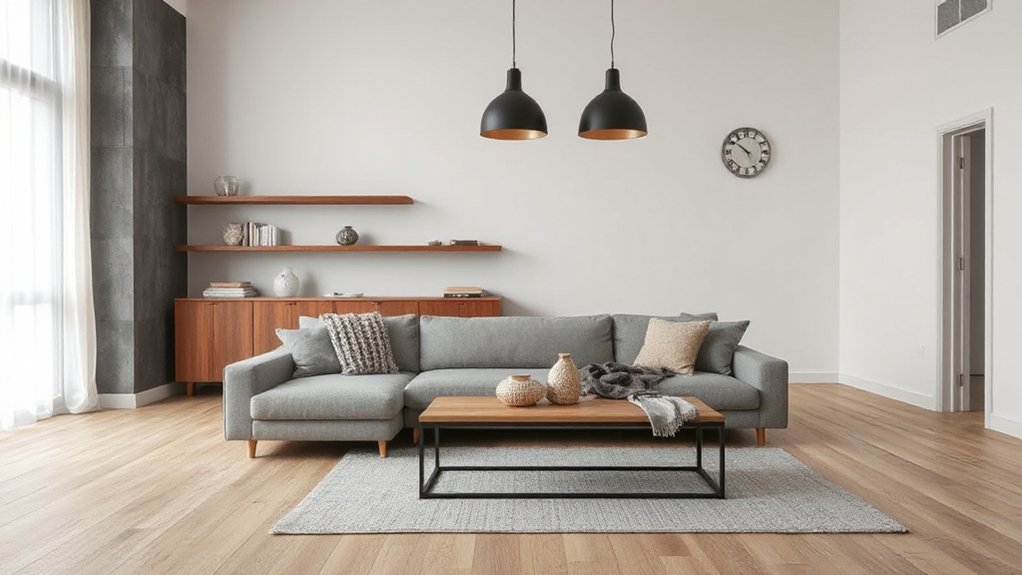
If your Scandinavian-industrial living room feels either too tight or too bare, fix the layout first, not the decor. Start with a clear circulation path: keep 30–36 inches open from entry to seating.
Float the sofa slightly off the wall to create depth, then anchor it with a wool rug that reaches under front legs.
Build a compact conversation zone: place two chairs opposite or at a right angle, and keep the coffee table within 14–18 inches.
Use one low, long media console to hold visual weight without blocking light.
Add texture through linen curtains, oak, and matte black steel.
Show Artisan craftsmanship in a hand-turned side table, then layer vintage accents—an aged leather pouf or factory stool—for warmth.
Keep negative space intentional.
Common Scandinavian Industrial Mistakes to Avoid
When you mix Scandinavian calm with industrial grit, small missteps can turn the room cold, cluttered, or unfinished. Don’t overdo raw concrete, black steel, and exposed bulbs; you’ll drain warmth fast. Balance hard surfaces with oak, wool, linen, and matte paint so light can bounce and soften edges.
Don’t treat minimalism as emptiness. Skip oversized sectionals, too many open shelves, and random wall art. Choose a few functional pieces and give them breathing room. Avoid shiny chrome and busy patterns that fight the palette.
Add Vintage accents with purpose: one aged leather chair, a patinated mirror, a worn rug. Keep Eclectic decor curated, not scattered, and repeat textures to make it feel intentional.
Frequently Asked Questions
How Do I Add Scandinavian Industrial Style in a Rental Without Renovations?
Layer in Vintage lighting, add Textured textiles, and choose matte black hardware, portable shelving, and raw-wood accents. You’ll keep walls untouched, use peel-and-stick hooks, swap rugs, and style with concrete-look trays and plants.
What Are Budget-Friendly Scandinavian Industrial Updates for a Small Apartment?
You can refresh a small apartment cheaply: like my friend’s thrifted lamp, it lit everything. Keep Color palettes pale with black accents, swap lighting fixtures, add linen, wool, metal trays, and peel-and-stick hooks.
Which Scandinavian Industrial Brands or Retailers Offer Durable, Minimalist Pieces?
You’ll find durable, minimalist pieces at IKEA, Muuto, HAY, Ferm Living, and Menu. You can shop Design Within Reach and Nordic Nest for Mixed material combinations and Vintage industrial accents—powder-coated steel, pale oak, linen, leather.
How Can I Incorporate Scandinavian Industrial Style With Pets and Kids?
Choose Pet friendly materials like leather, wool, and sealed wood; skip delicate weaves. Prioritize Kid safe decor with rounded edges, anchored shelving, and washable slipcovers. Add black metal accents, jute rugs, and matte finishes.
How Do I Maintain and Clean Concrete, Brick, and Metal Surfaces Long-Term?
Seal concrete yearly—Concrete sealing blocks stains; mop with pH-neutral cleaner. Brush brick dry, spot-clean gently, and repoint as needed. Wipe metal weekly, dry fast, and use metal polishing to stop rust.
Conclusion
You make Scandinavian industrial work by staying honest, staying calm, staying useful. You pair warm wood with cool metal, soft linen with hard concrete, clean lines with worn patina. You keep the palette muted, the layout open, the storage smart. You layer light—ambient, task, statement—and you add textiles where edges feel sharp. You choose fewer pieces, better pieces, lasting pieces. Avoid clutter, avoid glare, avoid fake finishes.