
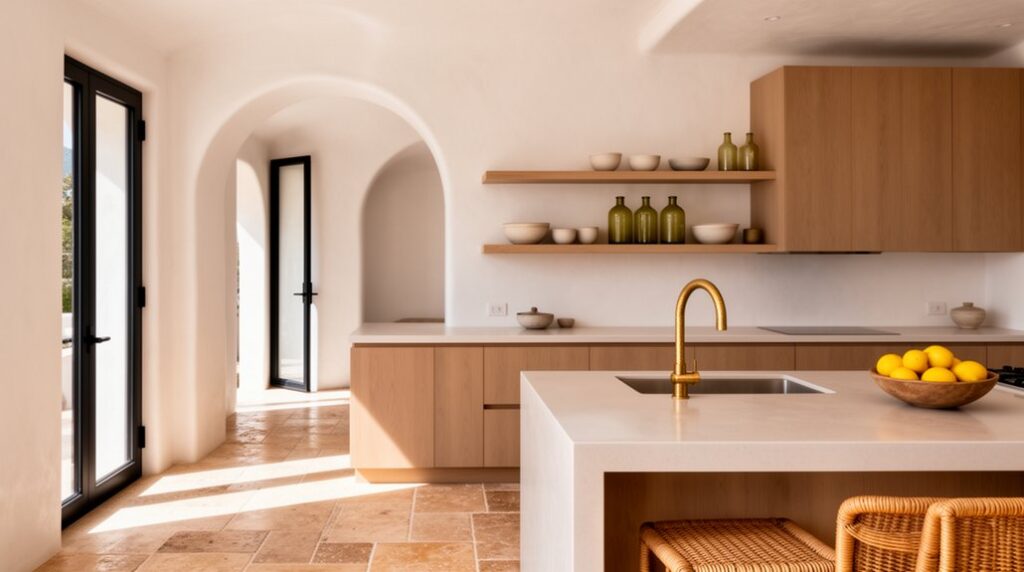

You shape a modern Mediterranean kitchen by balancing sun-washed neutrals with tactile plaster walls, honed stone, and warm wood that feels hand-finished. You layer in terracotta notes and sea-glass blues, then keep the lines clean with panel-ready appliances, quiet hardware, and ventilation that disappears. You soften it all with linen textures and amber lighting that pools gently at dusk. But the real shift happens when you choose what stays visible—and what doesn’t…
What Defines Modern Mediterranean Kitchen Design?
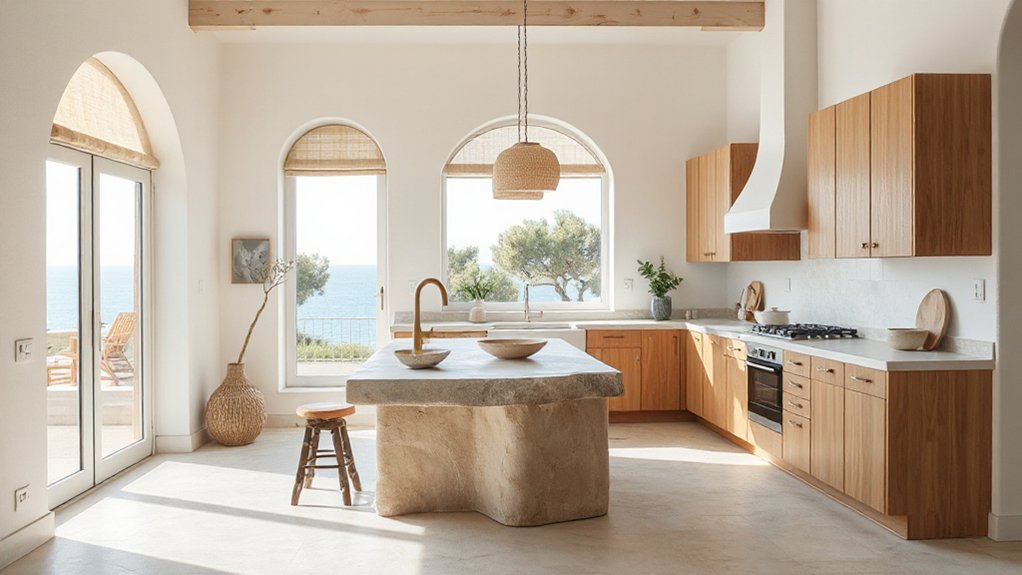
If you love sun-warmed spaces that feel both effortless and refined, modern Mediterranean kitchen design blends Old World warmth with clean, contemporary restraint. You borrow the soul of Mediterranean architecture—arched doorways, deep-set windows, and a sense of indoor-outdoor ease—then streamline the lines so the room feels calm, not crowded.
You let texture lead: honed stone counters, plaster-like walls, and handmade tile that catches light softly. You keep cabinetry simple, often flat-front or lightly framed, but you ground it with weighty details like forged hardware and substantial shelves.
Traditional motifs appear in restrained ways—an inlay band, a subtle geometric backsplash, a carved beam—so heritage reads as thoughtful, not themed.
Pick a Modern Mediterranean Kitchen Color Palette
Start with sunwashed neutrals and chalky whites that bounce light off plastered walls, stone counters, and softly grained wood.
Then weave in sea-inspired blues and greens—think glazed tile, painted cabinetry, or a linen runner—to bring a cool, coastal hush.
Finish with warm terracotta accents in clay pots, zellige details, or a matte backsplash that adds grounded heat without crowding the space.
Sunwashed Neutrals And Whites
Because Mediterranean light turns every surface into a soft reflector, sunwashed neutrals and clean whites feel tailor-made for a modern Mediterranean kitchen. You’ll get an airy backdrop that lets texture do the talking: limewashed walls, pale plaster, creamy quartz, and matte white cabinets that feel crisp, not cold.
Layer warm beiges and sandy greiges through zellige-style backsplash tile, honed limestone counters, or travertine-look porcelain, then ground it with natural oak or walnut shelving.
Choose brushed brass or aged nickel hardware to add a sun-kissed gleam. Keep linens simple—cotton runners, oatmeal-toned Roman shades—so the room stays relaxed and functional for Mediterranean cuisine.
With this palette, your kitchen echoes a coastal lifestyle: bright mornings, long lunches, and easy, unfussy elegance.
Sea-Inspired Blues And Greens
While sunlit whites set a calm stage, sea-inspired blues and greens bring the Mediterranean right into your modern kitchen with color that feels cool, clean, and lived-in. Use Sea inspired blues on lower cabinets for weight and depth, then keep uppers pale to bounce daylight across plaster walls and veined stone.
Work Oceanic greens into hand-glazed zellige, a painted island, or matte backsplash grout, so the hue reads like seawater against sand. Pair these tones with brushed brass pulls, rattan stools, and open oak shelving to add warmth without dulling the palette.
Choose satin or limewash finishes that catch light softly, and repeat the color in small hits—linen towels, glassware, or a runner—so the room feels cohesive, not themed.
Warm Terracotta Accent Tones
Sea blues and greens cool the room like a shaded cove, but warm terracotta brings the sun back in—earthy, fired, and softly bold against modern lines.
You’ll get instant depth when you echo that tone in barstools, a painted island toe-kick, or a slim backsplash band that warms up white plaster walls.
Use Rustic terracotta tiles sparingly where hands and feet notice texture: a small runner of flooring by the sink, or a niche behind the range.
Pair them with matte black hardware and pale oak to keep the look clean, not heavy.
Finish with Terracotta pottery on open shelves—pitchers, bowls, and salt crocks—so the palette feels lived-in, sunbaked, and modern.
Choose Natural Materials for a Mediterranean Look
Even in a sleek, modern layout, natural materials instantly bring that Mediterranean warmth into your kitchen. Start with Natural stone where you’ll feel it most: a cool honed countertop, a tumbled limestone backsplash, or a simple slab shelf that reads sun-washed, not showy. Let the surface stay slightly imperfect so it catches light like coastal rock.
Layer in wood with visible grain—olive, oak, or walnut—so the room feels grounded and calm. Add woven textiles to soften hard edges: a flax linen café curtain, a jute runner, or rush-seat stools that whisper of seaside markets.
Finish with hand-thrown ceramics and matte plaster textures to blur the line between old-world craft and clean modernity.
Modern Mediterranean Kitchen Cabinets and Hardware
Because cabinetry takes up the most visual real estate in your kitchen, it’s where modern Mediterranean style either sings or falls flat. Start with Mediterranean cabinetry that feels sun-warmed and grounded: rift-sawn oak, walnut, or painted wood in creamy white, clay, or muted olive.
Keep door profiles clean—shaker, slim-frame, or flat panels—then add quiet character with beveled edges, reeded inserts, or a furniture-style toe kick. Use open shelves sparingly for pottery and linen textures without cluttering the room.
For Hardware finishes, choose aged brass, satin bronze, or iron-black to echo coastal metalwork while staying crisp and current. Opt for simple pulls, rounded knobs, and a few statement latches so your kitchen reads tailored, not themed.
Add soft-close hinges for everyday ease.
Countertops and Backsplashes for Mediterranean Style
To lock in that modern Mediterranean mood, treat your countertops and backsplash like a sunlit canvas that balances cool stone with hand-touched texture. Choose marble countertops with gentle veining—creamy Calacatta, honed Carrara, or warm beige—so the surface feels soft, not showy. Keep edges slim and clean to stay modern, then add character through finish: honed, leathered, or brushed for a sea-worn patina.
For the wall, lean into mosaic backsplashes that look collected over time. Use zellige-style squares, tumbled stone, or micro-mosaics in chalky whites, terracotta, olive, and deep cobalt. Run tile to the hood for a focal moment, and pick grout a shade lighter for a sun-faded, plaster-like effect.
Mediterranean Kitchen Lighting That Feels Warm
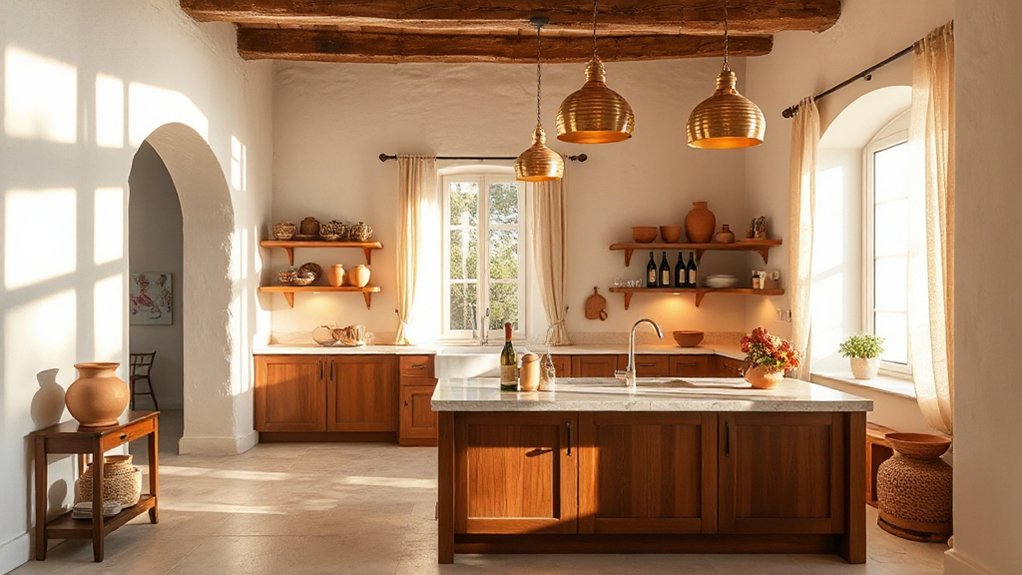
Once your marble and mosaic surfaces set that sun-washed backdrop, lighting brings the kitchen to life with a golden, late-afternoon glow. Choose Mediterranean kitchen lighting that mimics firelight: amber-tinted LEDs at 2700K, dimmable for slow evenings and bright prep.
Layer warm lighting fixtures with character—wrought-iron pendants, aged-brass sconces, and ribbed or seeded glass that scatters light like sea spray. Aim beams onto plaster walls and wood shelves so textures read softly, not harshly.
Add under-cabinet strips to skim tile relief and highlight handmade grout lines without glare. If you’ve got beams or an arched ceiling, tuck uplights between them to lift shadows and make the room feel sun-breathed.
Finish with matte shades that keep the glow calm.
Layout Ideas for a Modern Mediterranean Kitchen
If you plan the layout like a breezy courtyard—open in the middle, useful at the edges—you’ll get that Modern Mediterranean ease without sacrificing function.
Keep circulation wide, so friends can drift past the island like a shaded plaza, not a hallway. Anchor your work zone along one wall, then face it toward the room for easy conversation.
Frame the perimeter with tall pantry storage and low base runs, letting light skim across plaster and stone. Use Mediterranean tile patterns to mark a prep niche or coffee corner, guiding movement with color and geometry.
Overhead, Rustic wooden beams visually “roof” the space and define zones without walls. Add a slim banquette under a window, and you’ll create a casual eating spot that doesn’t crowd the center.
Appliances That Blend Into Mediterranean Kitchens
You’ll keep that sun-washed Mediterranean calm when you choose integrated panel-ready appliances that wear the same wood grain or plastered finish as your cabinetry.
You can tuck a concealed range hood into a beam or mantle so the air stays fresh without breaking the view of tile, stone, and warm metals.
For a seamless wall, you’ll opt for built-in refrigeration columns that read like tall pantry doors and let the textures—not the tech—take center stage.
Integrated Panel-Ready Appliances
While Mediterranean kitchens lean on sun-warmed plaster, hand-glazed tile, and veined stone for their charm, integrated panel-ready appliances keep the mood intact by disappearing into the cabinetry. You wrap a fridge or dishwasher in the same rift-cut oak, painted inset, or walnut you’ve chosen for doors, so the room reads like furniture, not machines.
Choose warm brass pulls, softened edges, and toe-kick shadows that echo arched niches and thick stone counters. With integrated panel-ready appliances, you control sightlines: tile becomes the focal point, not stainless reflections.
You’ll get a seamless kitchen design that feels calm and artisanal, even when it works hard. Match panel grain and stain carefully, align reveals, and specify quiet-close hinges so every touch stays hushed and refined.
Concealed Range Hoods
Where does all that necessary ventilation go when your Mediterranean kitchen wants to linger on plaster walls, zellige shimmer, and carved stone instead of shiny metal? You tuck it away in a concealed range hood that works hard, then disappears.
Choose a plaster-clad canopy that reads like a soft arch, or box it into a timber beam with rubbed edges and quiet joinery. With hidden ventilation, you keep sightlines calm above the cooktop while still clearing steam, smoke, and olive-oil splatter fast.
Specify a remote or in-line blower if you want the room to stay hushed during long simmers. For true aesthetic integration, match trim to warm brass, or wrap the hood in the same tile field so it feels architectural, not appliance-like.
Built-In Refrigeration Columns
How do you keep a Mediterranean kitchen feeling hand-plastered and timeless when a refrigerator wants to announce itself in stainless steel? You choose built-in refrigeration columns and let cabinetry do the talking. Panel-ready doors disappear behind rift-sawn oak, painted inset fronts, or limewashed walnut, so your arches, zellige, and honed limestone stay center stage.
Split fridge and freezer columns flank a prep zone like quiet pillars, tightening your work triangle and giving you Smart storage: adjustable bins for citrus, tall shelves for olive oil, and humidity drawers that protect herbs.
Add an internal water dispenser to avoid a plastic-studded façade. You’ll also gain energy efficiency—narrower compartments chill faster, hold temperature steadier, and waste less cold air when you open just one side.
Modern Mediterranean Kitchen Decor and Finishing Touches
Once your layout and materials are set, the decor is what brings a modern Mediterranean kitchen to life with sun-warmed character and clean restraint.
Start with layered texture: linen Roman shades, a hand-thrown ceramic fruit bowl, and a jute runner that softens stone underfoot.
Hang Mediterranean kitchen artwork—olive studies, abstract coastlines, or a framed vintage tile plate—so the walls feel collected, not crowded.
Choose wrought-iron or aged-brass hardware with simple profiles, then repeat that finish in your faucet and pendants for cohesion.
Add one sculptural branch in a terracotta vessel, plus a few matte-glass canisters for calm storage.
Finally, blur indoors and out with herbs by the door, echoing Mediterranean outdoor living and keeping the room fresh.
Frequently Asked Questions
What Is the Average Cost of a Modern Mediterranean Kitchen Remodel?
You’ll typically spend $25,000–$75,000 on a modern Mediterranean kitchen remodel, depending on layout, finishes, and labor. Mediterranean color palettes, Rustic kitchen accents, stone counters, plaster walls, and warm wood cabinetry push costs higher.
Which Mediterranean Plants Are Safe to Keep in a Kitchen?
You can keep a jungle of Mediterranean basil, rosemary, thyme, oregano, sage, mint, and bay in your kitchen—they’re Safe indoor plants. For Mediterranean herb gardening, set them in gritty pots, bright sun, and gentle airflow.
How Do I Incorporate Mediterranean Design in a Small Rental Kitchen?
You’ll bring Mediterranean charm to a small rental by adding Decorative tile accents on peel-and-stick backsplashes, choosing warm Color palette choices, layering woven baskets, linen towels, terracotta planters, and swapping hardware for aged-brass pulls.
What Maintenance Do Limewash Walls Require in Humid Kitchens?
Like a sponge in mist, you’ll keep limewash happy by ventilating, wiping splashes quickly, and avoiding harsh cleaners. Expect Humidity impact: occasional softening; Limewash durability improves with gentle soap, touch-ups, and dehumidifier use.
Where Can I Source Authentic Mediterranean Tiles Outside the Mediterranean?
You can source them through Mediterranean tile suppliers online, in major design showrooms, and via artisan importers. Ask for origin papers, handmade glazes, and traditional patterns to match Authentic tile styles with sun-warmed, tactile character.
Conclusion
Bring your modern Mediterranean kitchen design together by balancing sun-soft shades with sea-kissed color, then layering stone, wood, and handmade ceramics for soulful texture. You’ll keep lines clean with panel-ready appliances, quiet hardware, and concealed ventilation, yet still add warmth with woven textiles and terracotta touches. Choose glowing, golden lighting to flatter plastered walls and patterned tile. When you blend breezy beauty with practical planning, your kitchen feels calm, coastal, and completely current.