
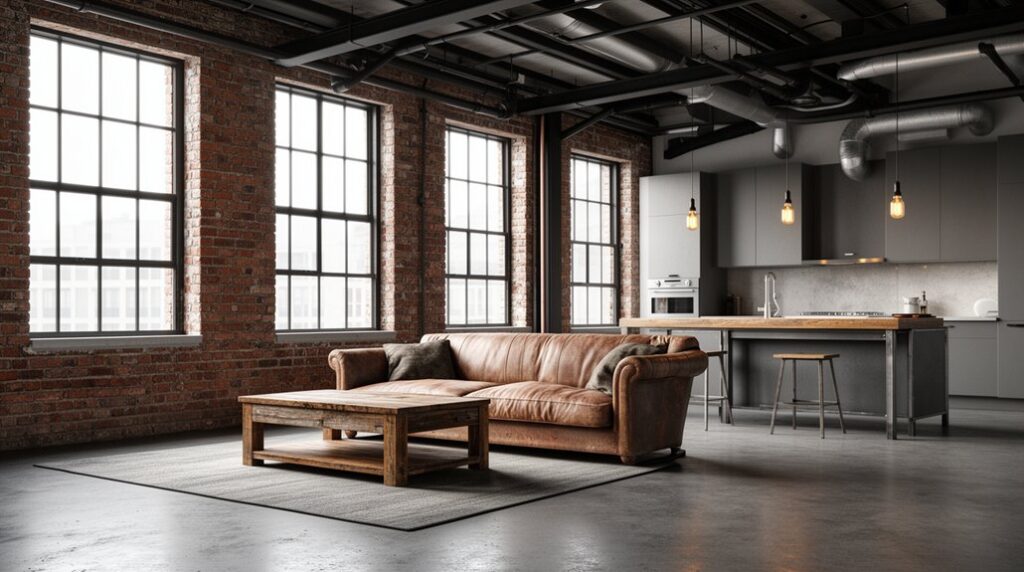

You don’t fake industrial style—you expose it. Start with structure: brick, concrete, steel, and raw wood left honest and visible. Keep the plan open, the lines clean, and the palette tight in grays, blacks, and worn neutrals, then add one controlled accent. Choose lighting that looks engineered—cage shades, bare bulbs, aged metal. The space can feel cold if you stop there, so the next choice matters most…
Define the Industrial Interior Design Style
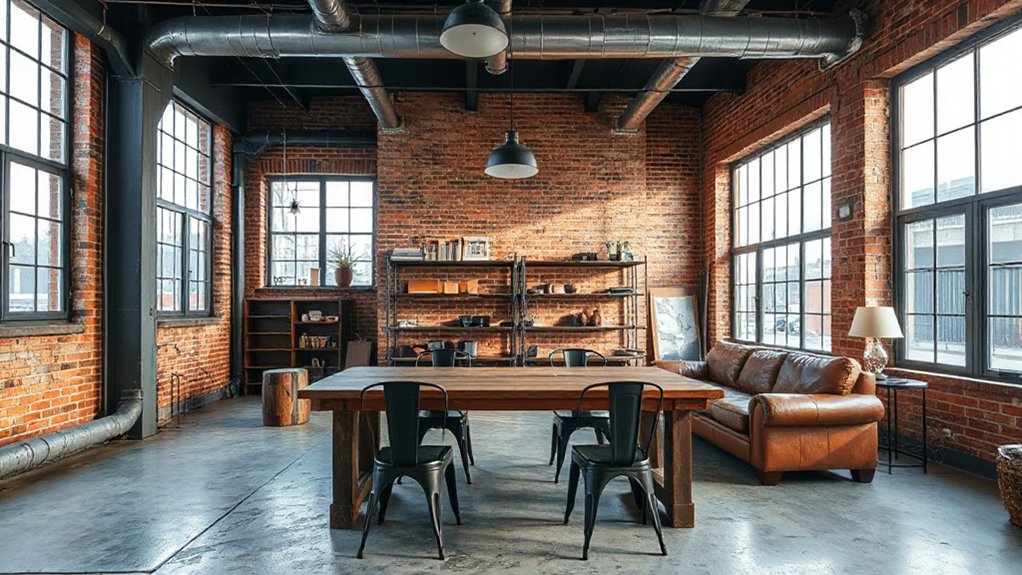
If you strip a space down to its bones, you get industrial interior design: a style rooted in converted factories and warehouses that keeps structure visible and materials honest. You don’t hide how the place works; you frame it. Lines stay clean, layouts stay open, and function leads every choice.
You build an urban aesthetic through scale, restraint, and utilitarian details: exposed runs, simple hardware, and straightforward forms. You balance that edge with vintage elements that feel salvaged, not staged—aged finishes, timeworn fixtures, and workshop silhouettes.
Color stays grounded and subdued, letting texture and patina carry the mood. You aim for spaces that read like a working shell made livable: direct, durable, and deliberately unfinished.
Use Industrial Materials: Brick, Concrete, Metal, Wood
Industrial style comes alive when you commit to raw, load-bearing materials and let them set the tone. Expose brick where you can, and patch it honestly instead of hiding repairs. Pour or polish concrete for floors and counters; keep edges crisp and joints visible.
Choose metal for structure and hardware—blackened steel shelves, pipe rails, riveted brackets—so function reads first. Bring in wood to soften impact: thick planks, butcher-block tops, or shop-worn beams with saw marks intact.
Skip delicate profiles; use square cuts, bolts, and welds. Add Vintage machinery as working decor: a factory cart table, a vise, a pulley.
Finish with reclaimed fixtures—caged lights, enamel shades, cast-iron sinks—that look built to last.
Choose an Industrial Color Palette (and Accents)
Because the materials already carry the visual weight, keep your palette tight: charcoals, concrete gray, matte black, off-white, and weathered browns. Use one dominant neutral, then layer two supporting tones so the space reads calm, not busy.
Let brick, steel, and raw wood show their natural variance instead of competing with saturated paint.
Add accents with purpose. Choose rust, tobacco, or deep olive in small doses: a canvas cushion, a worn rug, a single painted door. Repeat that accent twice, then stop.
Vintage furnishings work best when their patina matches your browns and blacks. Treat exposed ductwork as part of the scheme; keep surrounding walls muted so the lines stay crisp.
If you need contrast, use off-white for trim or textiles, not loud color blocks.
Choose Industrial Lighting and Metal Finishes
A tight palette sets the backdrop; lighting and metal finishes bring the edge. Choose fixtures that look engineered, not ornate. Go for exposed bulbs, cages, and rigid arms. Use pendant lighting to drop a clean cone of light and highlight work surfaces.
Vintage fixtures add patina and honest wear; keep the silhouettes simple.
Stick to a few metals and repeat them. Prioritize steel, iron, and brushed nickel; add blackened or oil-rubbed finishes for depth. Let weld marks, rivets, and seams show. Match hardware to your luminaires so the space reads as one system.
Skip high-gloss chrome unless you want a sharp, modern note. Keep cords, chains, and conduit visible and tidy.
Style Industrial Decor by Room (Keep It Warm)
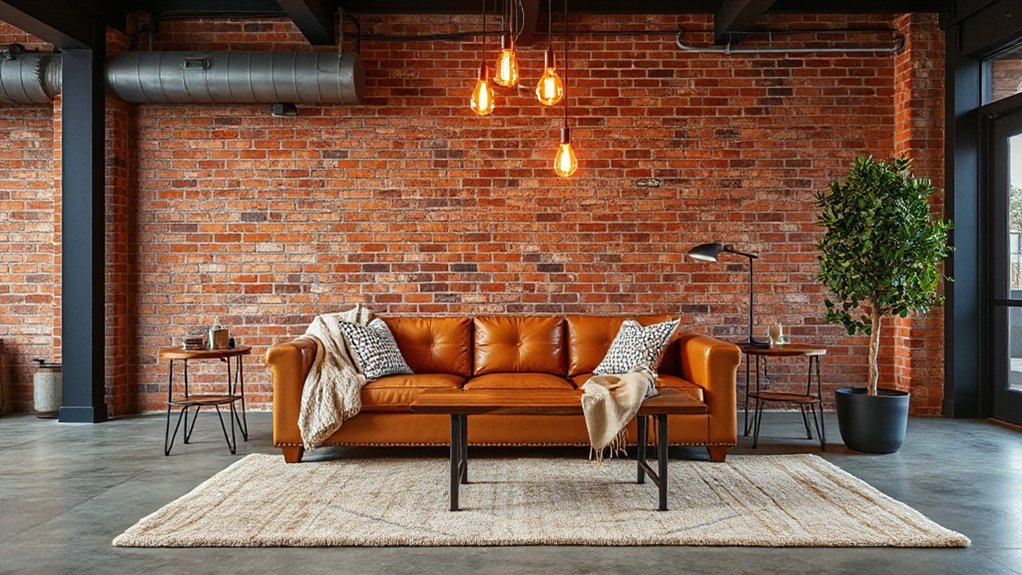
When you style room by room, keep the industrial shell but add warmth through texture, scale, and a few lived-in pieces.
In the living area, anchor concrete and steel with a wool rug, a leather sofa, and Vintage furniture in solid wood. Keep lines clean; let patina do the work.
In the kitchen, pair matte black hardware with butcher-block or oak fronts, then soften with linen towels and a single ceramic crock.
In the bedroom, use a metal bed frame, but layer flannel, quilted cotton, and a heavyweight throw. Add one bedside lamp with an aged brass stem.
In the bath, balance tile and pipe with teak slats, a cotton robe, and warm bulbs.
Urban lofts feel human when surfaces stay honest and tactile.
Frequently Asked Questions
What Is the Difference Between Industrial and Rustic Interior Design?
You’ll see industrial design emphasize hard utility: steel, concrete, Exposed brick, clean lines, warehouse lighting. You’ll find rustic design favor warmth: rough wood, stone, handmade patina, Vintage furniture, softer textures, cabin comfort.
How Do You Make Industrial Style Work in a Small Apartment?
In your 450-square-foot studio, you’ll keep industrial style by scaling pieces down: choose Vintage lighting on a slim rail, add Metal accents via shelving, and keep palettes neutral. You’ll hide clutter with closed storage.
Is Industrial Interior Design Expensive to Achieve on a Budget?
No, it doesn’t have to be expensive if you choose budget friendly materials and prioritize cost effective upgrades. You’ll source reclaimed wood, steel shelving, matte black hardware, and thrifted lighting, then keep finishes raw and functional.
How Do You Improve Acoustics in an Industrial-Style Room?
Coincidentally, you improve acoustics by adding mass and absorption: mount acoustic panels on bare walls, hang heavy curtains, and lay rugs. Seal gaps with soundproofing materials, add bookcases, and suspend baffles overhead.
What Are Common Mistakes to Avoid When Decorating Industrial Spaces?
You’ll overdo raw finishes, ignore comfort, and clutter. Don’t skimp on Lighting fixtures—layer task and ambient. Keep color schemes disciplined, not muddy. Balance metal with wood, add textiles, hide cables, scale furniture correctly.
Conclusion
You start with bare structure, and it starts working back. You leave brick exposed, and it happens to match the concrete you already like. You add steel, and it coincides with the clean lines you need. You keep the palette neutral, then one worn leather chair lands as the accent. You hang a cage light, and its hard glow turns warm on reclaimed wood. In the end, nothing’s hidden, and everything’s useful.