
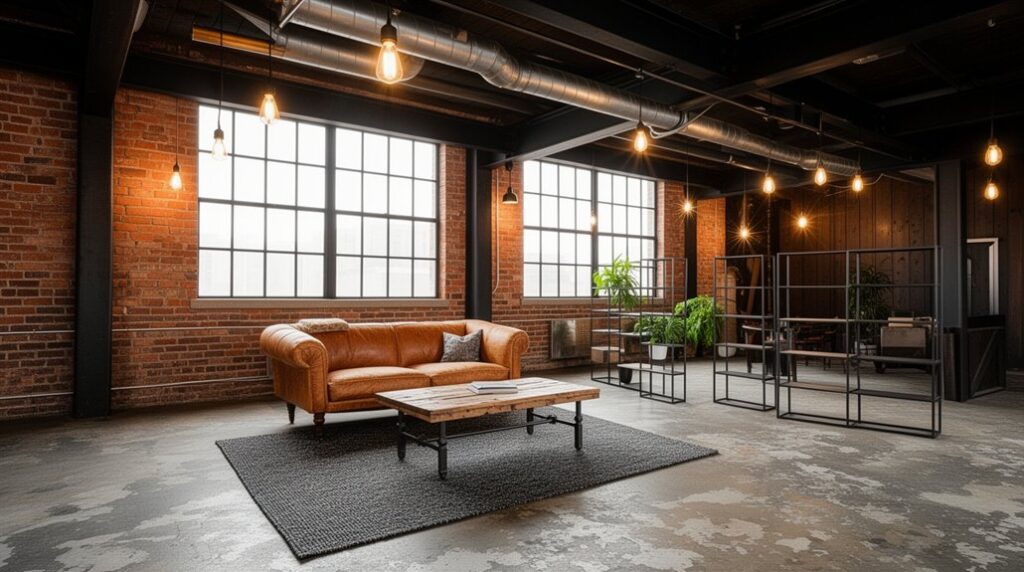

Like a modern loft scene from a classic New York film, you can make industrial chic feel intentional instead of harsh. You’ll keep the honest bones—brick, concrete, steel—then counter them with warm oak, textured textiles, and lighting that flatters at night. You won’t fake distressing or pile on factory props; you’ll curate contrast and negative space so it looks polished, not themed. The next choice you make sets the tone for everything that follows…
Define Industrial Chic (and What It Isn’t)
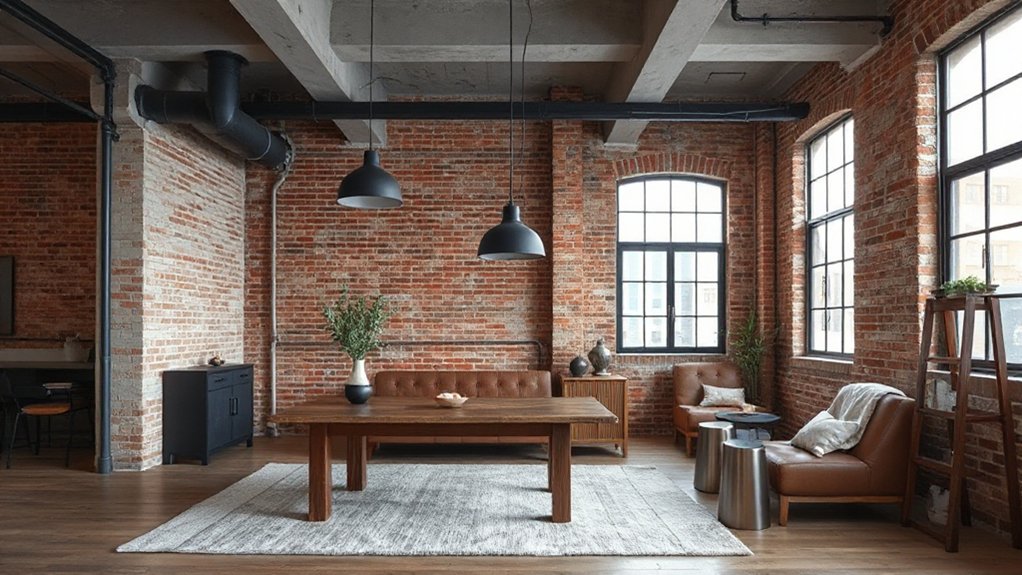
Although the look nods to old factories and converted lofts, industrial chic is really about balance: you pair raw, structural elements—exposed brick, steel, concrete, visible ductwork, and utilitarian lighting—with refined finishes, comfortable upholstery, and intentional styling that feels curated, not cold.
You’re telling a modern story that respects Industrial history without turning your home into a theme set. That means you don’t overdo distressed surfaces, faux rust, or “warehouse” signage; those read costume-y, not chic.
You also don’t confuse industrial with minimalist: you can layer texture, art, and warmth as long as the architecture still leads.
Choose sustainable materials—reclaimed wood, recycled metals, low-VOC finishes—so the grit feels current, responsible, and tailored to how you actually live.
Start With These Industrial Chic Essentials
Once you’ve steered clear of the “factory set” look and focused on that curated raw‑meets‑refined balance, it’s time to build your base. Start with a tailored palette: inky charcoals, warm grays, and a single muted accent that feels current, not themed.
Anchor the room with one hero piece—think a streamlined leather sofa or a substantial worktable—then layer in mixed metals through hardware, lighting, and frame details. Add character with Vintage machinery as sculptural decor: a restored vise, pulley, or drafting tool reads authentic when edited.
For softness, use oversized textiles in wool or washed linen and keep patterns minimal. Borrow the openness of Urban lofts by prioritizing negative space and purposeful zoning. Keep sightlines clean, storage closed, and styling intentional.
Brick, Concrete, Steel: Best Finishes
When you treat industrial finishes like tailored materials—not set dressing—you get that sharp, modern edge without tipping into warehouse cosplay.
Start with brick: choose authentic, slightly irregular faces, then seal matte to control dust and sheen. If you’re adding veneer, align courses cleanly and keep mortar joints tight for a current, architectural look rooted in Industrial history.
For concrete, specify a honed or microtopped finish with subtle aggregate; it reads refined, not raw. Use control joints deliberately and match edge details to your cabinetry lines.
Steel lands best in thin profiles—blackened, brushed, or clear-coated to prevent fingerprints. Mix hot-rolled texture with crisp fabrication for urban influence, and repeat the finish in hardware, shelving brackets, or window frames so it feels intentional throughout.
Warm Color Palettes for Industrial Spaces
You can warm up industrial finishes fast by pairing earthy neutrals—clay, sand, and greige—with burnished metals like brass, bronze, and blackened steel. Keep the base matte and tonal so the space still reads crisp and architectural. Then let metal sheen add depth without feeling flashy.
For accents, you’ll get the most impact by choosing one or two warm hits—rust, terracotta, mustard, or oxblood—and repeating them in textiles, art, and small décor. This creates a controlled, trend-right look.
Earthy Neutrals And Metals
Although industrial interiors lean on steel and concrete, earthy neutrals and warm metals keep the look elevated instead of cold. Start with clay, sand, mushroom, and warm gray on walls and large upholstery to soften hard lines without losing that loft edge.
Then layer brass, bronze, and aged copper in lighting, hardware, and shelving brackets so your space reads intentional, not stark. Specify matte or brushed finishes to cut glare against polished concrete and blackened steel.
Ground seating with Vintage textiles—think faded kilims, nubby wool throws, and linen cushions—so the palette feels lived-in. Tie it to Urban landscaping by echoing soil tones found in planters, greenery, and natural stone.
You’ll get a cohesive, market-ready industrial scheme clients can live with daily.
Warm Accent Colors Strategy
Because industrial backdrops skew cool and hard-edged, a warm accent-color strategy keeps the space feeling curated instead of cavernous. Start with Industrial color psychology: rust, terracotta, cognac, and ochre read as human, handmade, and inviting against concrete and steel.
Keep your base neutral, then choose one “hero” warm tone and two supporting shades so the look stays intentional.
For Warm accent application, layer color in small, high-impact moves: leather dining chairs, a clay-toned rug, amber glass pendants, or a burgundy art print. Repeat the accent three times across the room—textiles, lighting, and décor—to create rhythm.
If your space runs dark, pick warm tones with higher value (apricot, honey) to lift it without losing the industrial edge.
Lighting Ideas That Add Warmth Fast
You can warm up an industrial chic space fast by layering Edison bulbs at different heights, letting that amber filament glow soften concrete, brick, and steel.
Pair them with metal sconces that cast a controlled wash of light, so your walls feel richer and your corners read intentional, not dim.
With the right mix of vintage warmth and crisp metal finishes, you’ll get a trend-forward look that still feels welcoming for everyday living.
Edison Bulb Layering
How do you add instant warmth to an industrial-chic space without losing that clean, edited edge? Try Edison layering: mix pendants, exposed sockets, and clustered drop cords at different heights, all using Vintage filament bulbs. You’ll get that amber glow that softens concrete, steel, and brick while keeping the look purposeful.
Start with one statement fixture over the dining table, then echo it with a trio above the island or a linear cluster in the entry. Keep bulb shapes consistent (ST64 or G95) so it reads curated, not chaotic.
Put everything on dimmers, and aim for 2200K–2700K to flatter skin tones and evening gatherings. Finish with matte black or aged brass hardware to stay on-trend and polished.
Metal Sconces With Glow
Where can an industrial-chic room pick up warmth in seconds without adding visual clutter? Install metal sconces with a soft glow. They keep the ceiling clean, highlight texture, and make brick, concrete, and reclaimed wood feel inviting.
Choose aged brass, blackened steel, or gunmetal to echo pipes and hardware, then opt for opal glass or perforated shades to diffuse glare.
Place sconces at eye level beside a sofa, flanking a bed, or framing art to create instant focal points. Use dimmable, warm LEDs (2700K–3000K) so you can shift from task to ambient lighting fast.
If you’re styling a small space, plug-in styles deliver impact without rewiring and keep your layout flexible. Pair with matte switches for a seamless finish.
Furniture and Décor to Soften the Look
While industrial interiors thrive on steel, concrete, and exposed brick, the right furniture and décor keep that edge from feeling cold or unfinished. Start with a low-profile sofa in cognac leather or a nubby bouclé to add tactile warmth against hard surfaces.
Layer Vintage textiles—kilim runners, washed linen curtains, or a plush wool rug—to soften acoustics and make lounging feel inviting. Choose mixed-wood coffee tables or reclaimed oak shelving to balance black metal frames.
Add curves: an arched floor lamp, rounded side chairs, or a pedestal table breaks up rigid lines. Finish with large-scale Artistic murals or graphic prints to bring color and personality without losing the loft vibe.
A few oversized plants in matte clay pots complete the softened, lived-in look.
Common Industrial Style Mistakes to Avoid
Once you’ve warmed up an industrial space with tactile upholstery, layered textiles, and softer curves, don’t let a few common missteps undo that effort.
Skip the “all metal, all gray” trap; contrast matte black with warm oak, burnished brass, or cognac leather to keep it current. Don’t overdo faux patina—authentic wear reads elevated, but staged distressing can feel costume-y and ignores Industrial chic history.
Scale matters: tiny factory pendants over a big island look underpowered, while oversized pieces can crowd circulation.
Watch your finishes; too many competing sheens create visual noise.
Finally, avoid common decorating pitfalls like bare, echoing rooms—add acoustic rugs, drapery, and art so the space feels polished, not unfinished.
Frequently Asked Questions
How Do I Industrialize a Rental Without Permanent Changes?
You can industrialize your rental with peel-and-stick concrete wallpaper, removable pipe shelving, and plug-in sconces. Choose industrial furniture in matte black, layer vintage decor, swap hardware back later, and use large rugs.
What’s the Best Way to Improve Echo and Acoustics in Industrial Rooms?
You’ll improve echo fastest by adding sound absorption: layer thick rugs, lined drapes, and upholstered seating, then mount acoustic panels as statement art. You’ll also break up surfaces with bookcases, plants, and textiles.
How Can I Hide Exposed Cables and Pipes While Keeping the Industrial Vibe?
You’ll tame the “factory dragon” by routing concealed wiring through matte-black conduit and cable trays, then using pipe disguises like removable metal shrouds, paint-matched wraps, or slatted soffits—so your space stays edgy, intentional, and clean.
Which Indoor Plants Thrive in Low-Light Industrial-Style Spaces?
You’ll get the best results with indoor greenery like snake plant, ZZ plant, pothos, and cast-iron plant—reliable low light plants. Style them in matte-black planters, cluster by height, and rotate weekly for even growth.
What’s the Average Cost to Achieve an Industrial Chic Makeover?
You’ll typically spend $2,000–$10,000 for an industrial chic makeover, depending on room size and finishes. Prioritize Vintage lighting and Metal accents, then allocate budget for paint, reclaimed furniture, and pro installation.
Conclusion
You’ve defined industrial chic by what you keep raw and what you finish with intent—no fake distressing, no themed clutter. Coincidentally, the moment you pair matte black steel with warm oak, your space feels both loft-cool and livable. Layer textiles, add burnished brass, and let lighting do the heavy lifting: dimmable pendants, soft sconces, warm LEDs. Choose fewer, better pieces—reclaimed wood, recycled metals—so your home looks current, curated, and quietly sustainable.