
You walk into a small studio where one oak table handles dining, work, and storage, and the whole room feels calm. You can get that same effect when you follow a few minimalist rules: edit what stays, set clear zones, and stick to warm neutrals with one quiet accent. You’ll choose clean-lined pieces that earn their footprint, then style with intent so clutter doesn’t creep back. Next, you’ll start with the first cut…
Follow 5 Minimalist Interior Design Rules
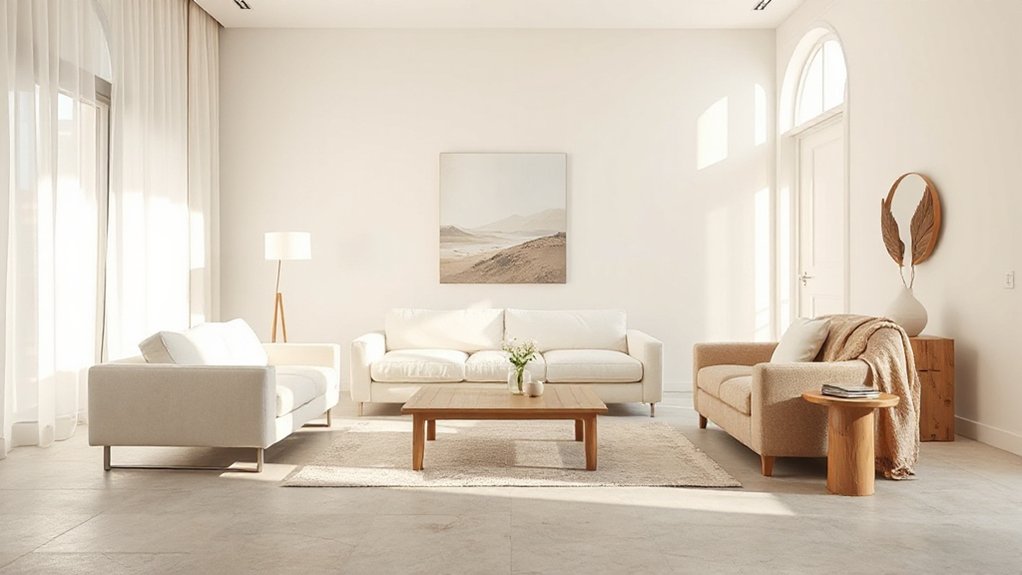
If you want a minimalist home that still feels warm, follow five core rules.
First, commit to a tight palette: two neutrals plus one accent, repeated across rooms.
Second, choose fewer, better pieces with clean lines and visible legs to keep sightlines open.
Third, prioritize space optimization with built-ins, wall-mounted storage, and multiuse furniture that folds, nests, or slides.
Fourth, balance hard surfaces with one or two tactile materials—linen, wool, light wood—to soften the look without adding clutter.
Fifth, apply lighting techniques: layer ambient, task, and accent light; aim fixtures upward to bounce glow; and use dimmers for evening calm.
You’ll get a crisp layout that feels airy, practical, and inviting every day.
Edit Your Space: Declutter and Set Zones
Because minimalist rooms only feel calm when every item earns its footprint, start by editing what you already own and giving the space clear zones. Pull everything out by category, keep only what you use or truly value, and remove duplicates. Create a “maybe” box with a one-week deadline, so decisions don’t linger.
Next, apply Functional zoning techniques to make each area work harder. Anchor zones with one purpose: reading, dining, work, or sleep. Use rugs, lighting, and furniture placement to define boundaries without adding clutter.
Then choose Personal storage solutions that hide mess fast: lidded baskets, drawer dividers, under-bed bins, and vertical shelving. Store items at point-of-use, label discreetly, and leave a small buffer of empty space in every zone.
Choose a Warm Minimalist Color Palette
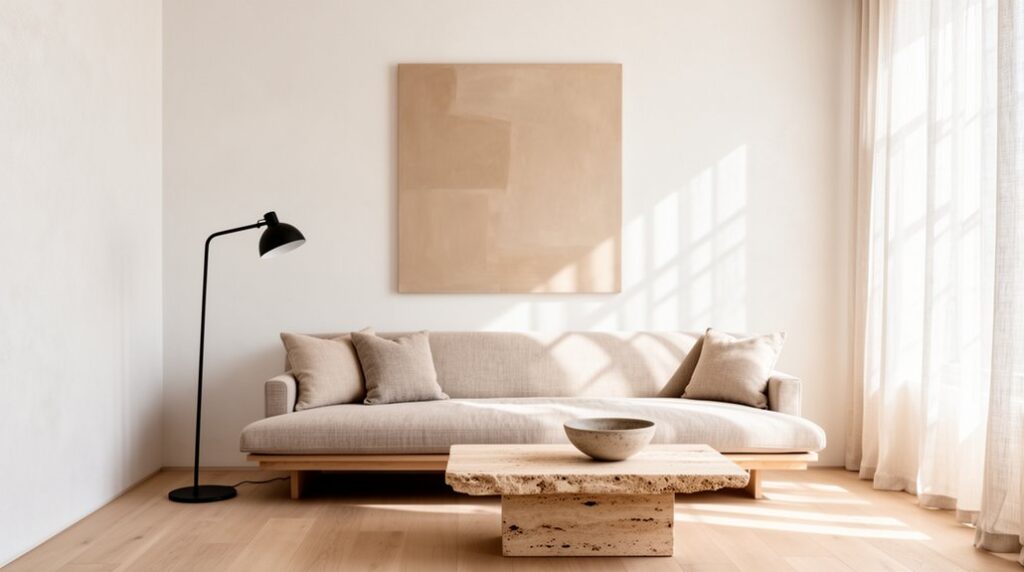
With the clutter edited and each zone clearly defined, your color palette now sets the mood and makes the whole space read as one. Start with warm neutral tones—creamy white, oatmeal, greige, clay, and soft taupe—to keep light bouncing and surfaces calm.
Stick to two or three core shades and repeat them across walls, textiles, and decor so you don’t need extra objects to create cohesion.
Layer warmth through undertones: choose paint, wood, and metals that lean honey, sand, or bronze, not icy gray. Use matte or eggshell finishes to reduce glare and visual noise.
Then add restraint with accent colors: one muted terracotta, olive, or ink blue, used sparingly in art, a throw, or a single vessel. This keeps impact high and storage low.
Pick Minimalist Furniture With Clean Silhouettes
Once your palette feels cohesive, choose furniture that keeps the lines quiet and the footprint light. Prioritize low-profile sofas, straight-arm chairs, and platform beds that sit close to the floor. Look for tapered legs and open bases so light passes underneath, making the room feel larger.
Aim for multipurpose pieces: a nesting coffee table, a bench with hidden storage, or a dining table that extends only when needed. Keep materials simple and durable—oak, ash, matte metal, and solid upholstery in tight weaves.
For a calm look, lean into Sleek Scandinavian forms with gentle curves and minimal hardware. If you want more edge, add one Modern geometric piece, like an angular side table, to sharpen the silhouette without crowding the layout.
Style Minimalist Décor and Stay Clutter-Free Daily
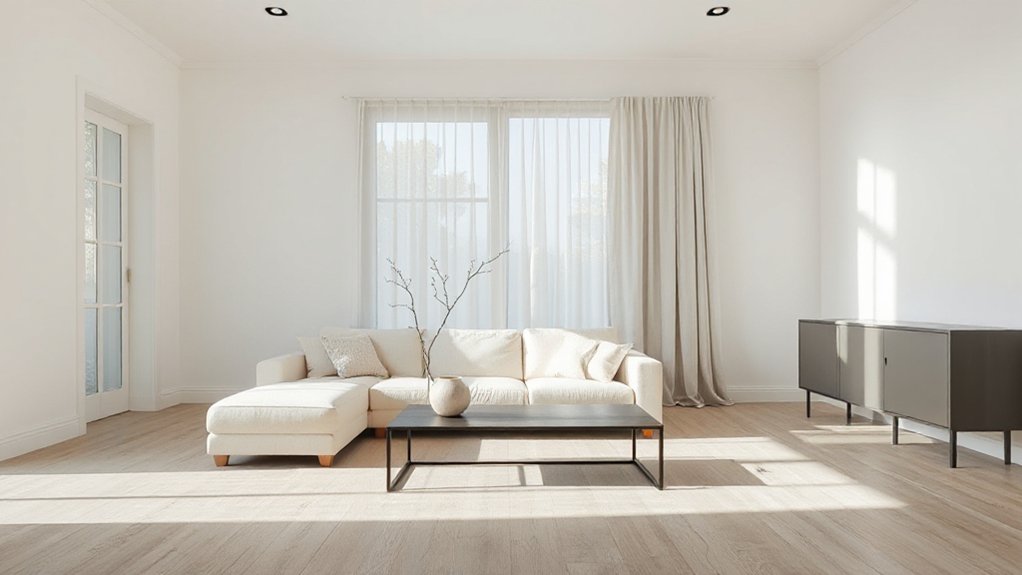
Although minimalist rooms look effortless, they stay that way only when you style décor with intention and build tiny daily reset habits. Choose one focal piece per zone: a sculptural vase, a slim lamp, or Artistic wall accents that lift the eye without eating floor space. Keep surfaces breathable by grouping items on a tray, then leaving the rest empty.
Add warmth through Texture and patterns in controlled doses—think a nubby throw, a matte ceramic, or a subtle rug weave—so the room feels rich, not busy.
To stay clutter-free, give every category a home and a limit: one basket for mail, one hook per bag, one shelf per hobby. Each night, do a three-minute reset: clear counters, return strays, and stage tomorrow’s essentials.
Frequently Asked Questions
How Can I Make Minimalist Design Work With Kids and Pets?
Choose durable, washable materials and limit decor to sturdy pieces. Use decor storage like closed bins and wall hooks. Anchor furniture, cover cords, and add gates for safety considerations. Keep zones clear, rotate toys, declutter.
Is Minimalist Interior Design Expensive to Implement?
Minimalist interior design isn’t necessarily expensive; you’ll manage costs with smart budget considerations and careful material selection. You’ll buy fewer, better pieces, choose durable finishes, and use built-in storage to keep spaces clean, functional, and airy.
How Do I Blend Minimalism With Vintage or Heirloom Pieces?
Like a gallery for your life, you blend minimalism with vintage or heirloom pieces by choosing one statement item per room. Use Vintage accents sparingly, prioritize heirloom integration, and keep storage hidden so air and light lead.
What Lighting Choices Best Complement Minimalist Interiors?
Choose layered ambient lighting with dimmers to keep surfaces calm and flexible. Add one sculptural statement fixtures for focus. Use slim floor lamps, recessed LEDs, and wall sconces to save space. Keep bulbs warm, consistent.
How Can I Create a Minimalist Look in a Small Rental Space?
You build a minimalist look like packing for a swift journey: keep only essentials. Stick to calm color schemes, hide clutter with vertical storage, choose foldable furniture, and limit decorative accents to one meaningful piece.
Conclusion
You’ve got everything you need to create a calm, minimalist home: follow a few clear rules, edit what’s in your space, and give each area a purpose. Stick to warm neutrals with a restrained accent, and choose clean-lined, hardworking furniture that keeps sightlines open. Add décor sparingly, like punctuation that sharpens a sentence, then reset daily to stop clutter from creeping back in. Keep it simple, and your space will feel lighter.