
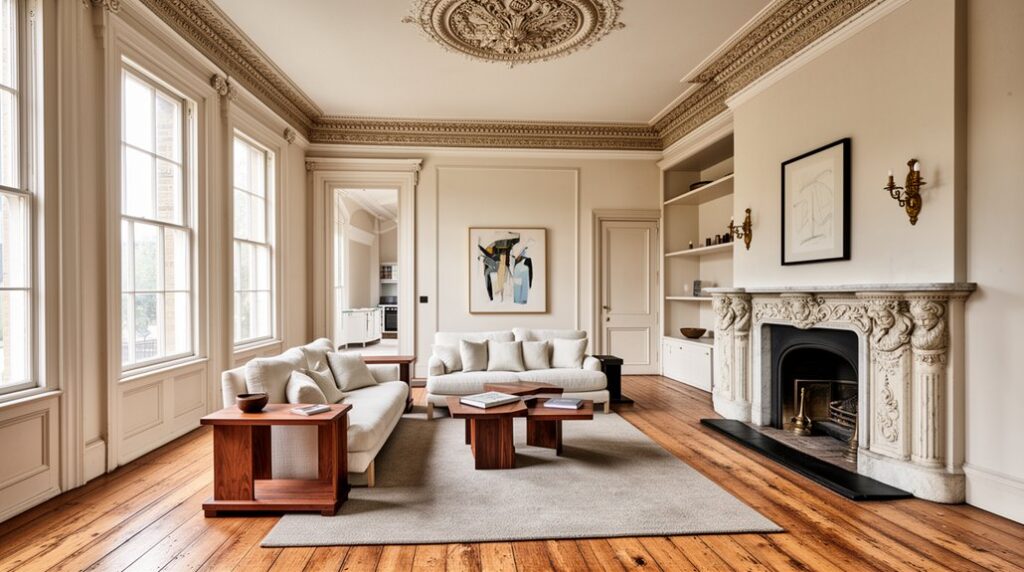

You start by treating your period home like a document: you survey cornices, skirting, floorboards, sash windows, and fireplaces for what’s original, what’s altered, and what’s failing. You check proportions, joinery marks, plaster profiles, and paint layers, then choose repairs that stabilise rather than replace. You plan modern wiring, heat, and storage so they disappear behind familiar materials. The real test comes when you must decide what stays untouched—and what can change without breaking the story.
Audit Original Features in Period Home Interiors
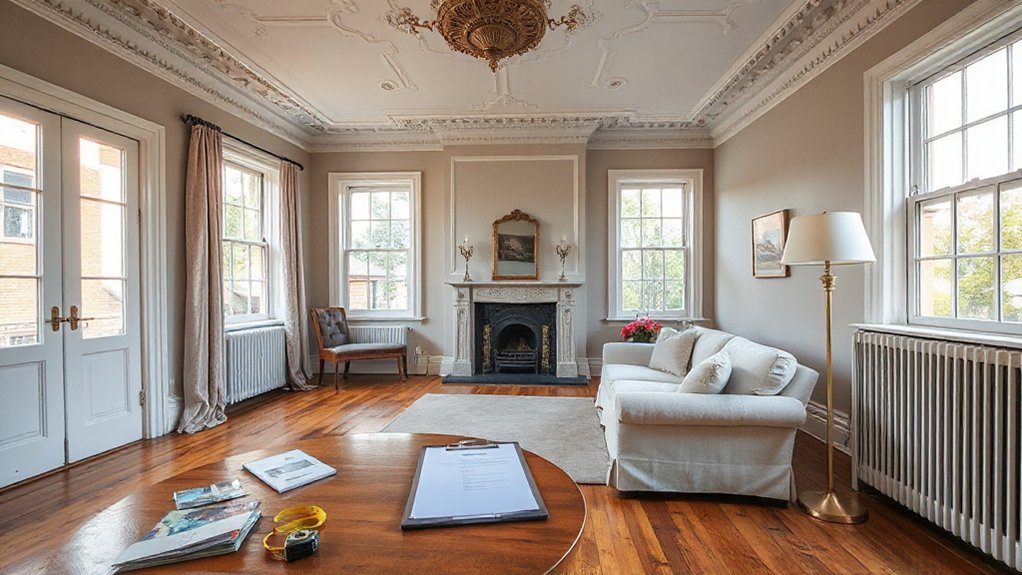
Before you choose paint, lighting, or new joinery, walk the house room by room and audit what’s original—and what’s later but historically sympathetic. Carry a notebook, tape measure, and camera, and record profiles, hardware patterns, timber species, and tool marks.
Note inconsistent skirting heights, shifted door openings, or plaster that changes texture; they often flag later work. Check attic and cellar edges for earlier finishes, and map where services chased walls.
Date rooms by proportion and construction logic, not just decorative taste. Collect paint scrapes and paper fragments so you can match period specific wallpaper rather than guess.
Inventory surviving fittings and decide what’s missing so you can source authentic furniture that fits scale, function, and circulation without forcing alterations.
Restore Cornices, Floors, Windows, and Fireplaces First
Once you’ve mapped what’s original, put your first budget and fastest decisions into the elements that set the house’s proportions and performance: cornices, floors, windows, and fireplaces. Stabilise them before you decorate, so you don’t trap moisture or hide damage.
Repair cornices with compatible lime plaster, run moulds to match profiles, and keep crisp shadow lines for historical authenticity. Lift and relay loose boards, fix joist deflection, and splice in reclaimed timber rather than blanket sanding away patina.
Overhaul sash windows: ease cords, replace parting beads, and fit discreet draught seals instead of uPVC swaps. For fireplaces, clear blocked flues, repoint with lime, and retain original surrounds; use reversible hearth repairs. These preservation techniques protect both fabric and room geometry.
Modernise Kitchens and Extensions Without Losing Character
Although kitchens and extensions demand modern services and hard-working finishes, you can update them without erasing what makes a period house legible. Route new plumbing and electrics through existing chases, floor voids, or secondary studwork so you don’t hack original masonry or joists.
Keep chimney breasts, hearths, and structural beams expressed where they survive, and let new cabinetry stop short of historic mouldings rather than trimming them back.
In an extension, align openings with original axes and keep sightlines to stair halls and windows clear. Use furniture placement to preserve circulation patterns typical of the plan, not force awkward pinch points.
Add decorative accents that reference historic joinery proportions—simple rails, framed panels, or unfussy hardware—so new work reads as respectful, not counterfeit.
Choose Era-Suitable Colours, Materials, and Lighting
With the kitchen and extension working hard without cutting into original fabric, your next job is to make the finishes feel native to the house’s date. Start by researching local precedents: Georgian rooms suit muted stone, chalky whites, and restrained greens; Victorian schemes welcome deeper ochres, claret, and complex papers; Arts and Crafts favours earthy reds and mossy tones.
Let your Color palettes follow natural pigments and historically plausible contrast, not high-chroma modern brights.
Match Material selection to what the building already uses: lime plaster, timber, and honed stone read truer than glossy veneers and high-shine porcelain.
Choose lighting with period-appropriate scale—simple pendants, shaded sconces, and warm lamps—so fittings complement cornices and joinery without stealing attention.
Hide Heating, Wiring, Tech, and Storage in Period Homes
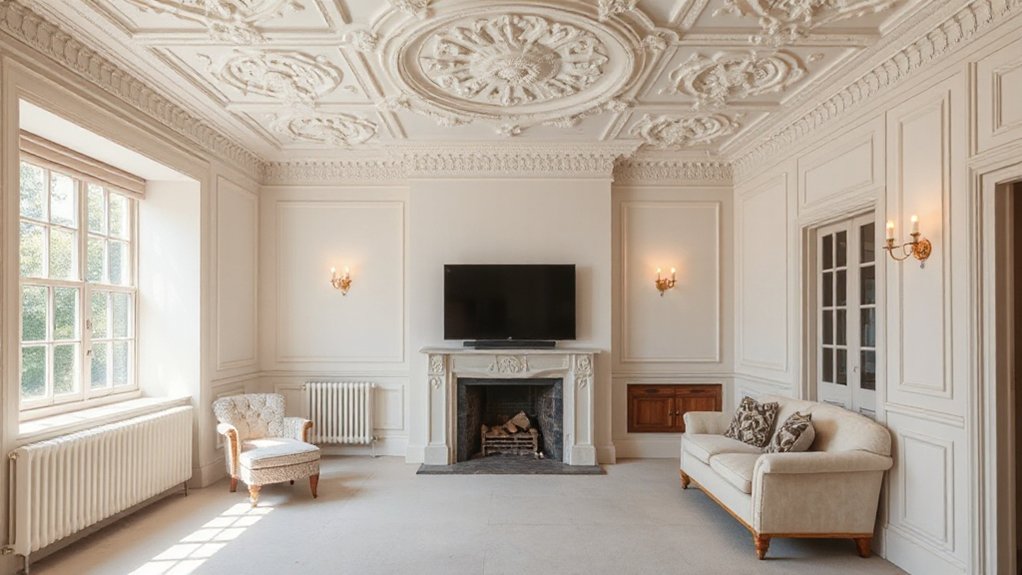
Because modern comfort can quickly telegraph itself in a period room, you’ll get the most authentic result when you plan concealment as carefully as you plan cornices and paint. Route concealed wiring through existing voids—skirtings, chimney breasts, service risers—so you don’t chase historic plaster or cut joists.
Where you must open fabric, lift floorboards whole, label, and refix with original nails or screws.
For heat, favour cast-iron style radiators on traditional pipe runs, or hide slim underfloor systems beneath breathable build-ups that won’t trap damp.
Tuck trunking behind picture rails, and place Wi‑Fi hubs in cupboards with ventilation. When integrating smart technology, choose discreet switches and sensors, and keep controls in secondary rooms.
Build storage into alcoves with flush doors, matching mouldings and shadows.
Frequently Asked Questions
Do I Need Planning Permission or Listed Building Consent for Interior Changes?
You’ll often need listed building consent for interior changes to a listed home; planning permission’s rarer. You should check your council before altering Victorian ornamentation, moving walls, or upgrading Interior lighting, since fabric, joinery, and finishes matter.
How Do I Balance Resale Value With Preserving Original Period Details?
You balance resale value by prioritising Historical authenticity: keep mouldings, fireplaces, and original floors, and repair not replace. You’ll boost appeal through Modern integration—discreet services, reversible fittings, and sympathetic finishes that photograph well.
What Insurance Covers Restoration Work and Unexpected Historic Property Discoveries?
By the book, you’ll need builder’s risk or renovation Insurance coverage, plus add endorsements for ordinance-and-law and hidden damage; you’ll limit restoration costs. You should also notify your insurer promptly if you uncover archaeological or structural surprises.
Which Professionals Should I Hire for Sensitive Period-Home Interior Renovations?
You should hire a preservation architect, conservation specialist, and heritage carpenter first, then bring in a period-savvy interior designer and structural engineer. They’ll assess Historic materials, source Authentic furnishings, and coordinate discreet MEP upgrades.
How Can I Improve Energy Efficiency Without Breaching Heritage Restrictions?
You improve efficiency by sealing, insulating, and ventilating discreetly. Fit modern insulation in lofts, floors, and voids; add secondary glazing and draught-proofing. Use reversible fixes, document changes, and pursue renewable energy via hidden solar slates.
Conclusion
When you design with a period home’s bones in mind, you’re not just decorating—you’re stewarding craft. You’ve audited what’s original, restored cornices, floors, windows, and fireplaces first, then slipped in kitchens, wiring, and heating so quietly they don’t compete. Keep colours muted, materials honest, and lighting era-aware. It’s worth the care: Historic England estimates pre-1919 homes make up roughly 21% of England’s housing stock, so your choices help protect a living majority.