
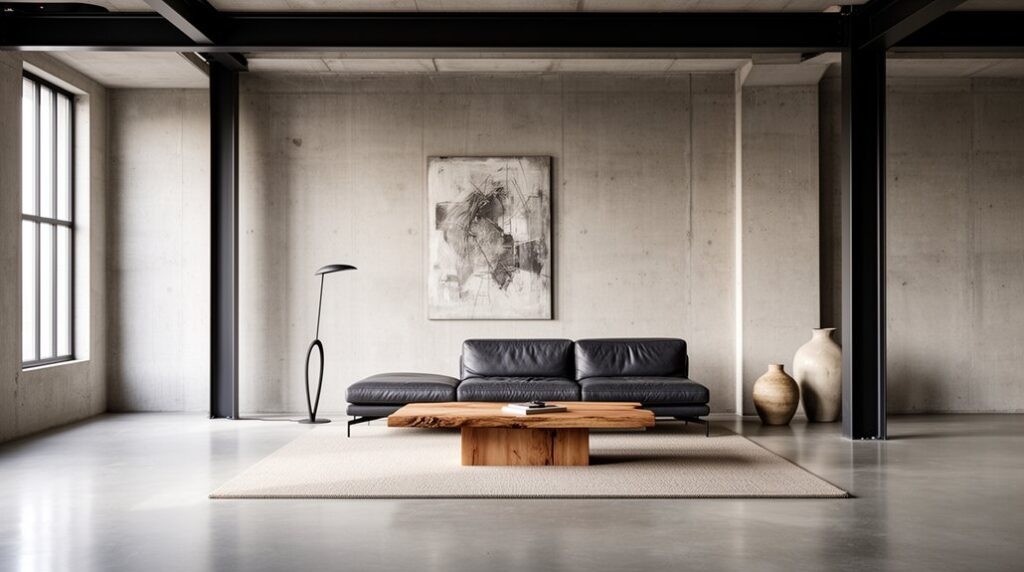

You’re aiming for a space that feels tough, simple, and intentional. You keep the layout open, define clear zones, and let one raw focal point lead the room. You choose concrete, brick, steel, and reclaimed wood, then lock in a tight palette of whites, grays, and black. You pick furniture that works hard and lasts, then soften the edges with controlled texture. The part most people miss comes next.
Define Industrial Minimalist Interior Design
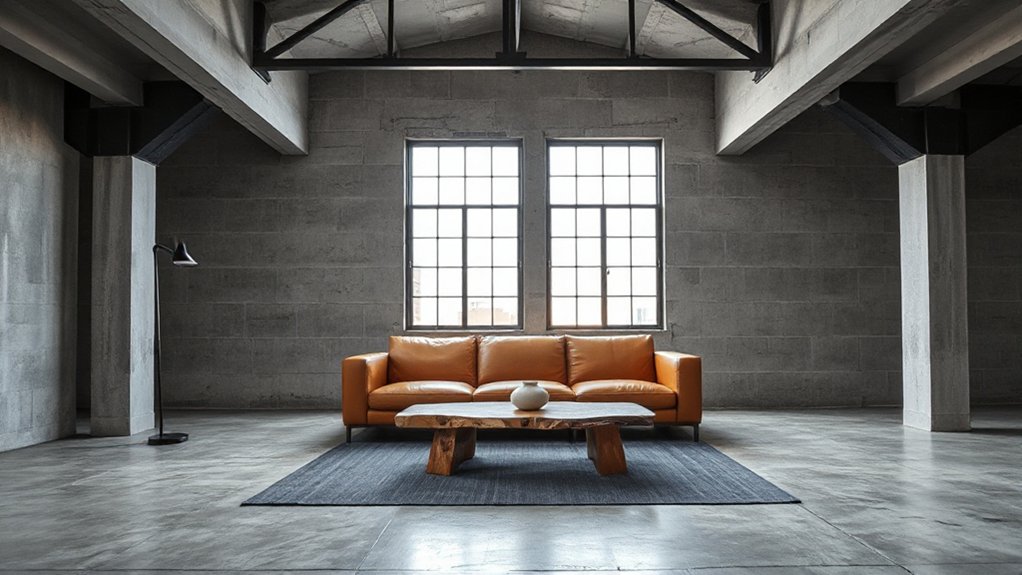
Although it looks stripped down, industrial minimalist interior design is a deliberate mix of industrial grit and minimalist discipline. You keep the bones honest: exposed concrete, brick, steel, and visible fasteners, then cut everything nonessential.
You choose hard-working forms, straight lines, and open surfaces that read clean and tough.
You control the palette with muted neutrals, blackened metals, and raw wood, letting texture do the talking instead of decoration. Storage stays closed or strictly edited, so tools, cables, and clutter don’t hijack the space.
When you add character, you do it with Vintage accents like a factory stool, salvaged signage, or patinated hardware—one or two, not a collection.
You also plan acoustic treatments early: felt panels, rugs, or slatted baffles that tame echo without softening the edge.
Plan the Layout: Zones, Flow, Focal Points
Before you buy furniture or hang lights, map the space like a workshop: set clear zones for work, rest, and storage, then lock in the paths between them.
In open plan zones, use rugs, shelving lines, and lighting footprints to mark borders without building walls.
Keep traffic flow straight and wide; you shouldn’t weave around chairs or detour past clutter.
Place the biggest piece where it supports the zone’s job, not where it “fills” a corner.
Choose one hard focal point per zone—an exposed column, a large table, a clean media wall—and aim seating and sightlines at it.
Leave negative space as a buffer. If it doesn’t serve movement or function, cut it fast.
Then test it by walking it.
Pick Core Materials: Concrete, Brick, Steel, Wood
Four materials do most of the heavy lifting in industrial minimalism: concrete, brick, steel, and wood.
Start with concrete for floors, counters, or a single wall; it’s durable, honest, and easy to keep visually quiet.
Use brick where you want texture without ornament—expose it, patch it, leave the joints readable.
Bring in steel for structure and function: blackened frames, shelving, railings, hardware. Keep profiles thin and connections visible.
Add wood to stop the space from feeling cold; choose solid planks, butcher block, or veneer with straight grain and simple edges.
You’re not decorating—you’re specifying Industrial materials that earn their place.
Limit finishes, repeat them, and you’ll lock in minimalist aesthetics with grit.
Build a Restrained Industrial-Minimalist Color Palette
When you keep the palette tight, the materials do the talking and the space stays calm. Start with a base of matte white, warm gray, charcoal, and black. Let concrete read as gray, brick read as rust, steel read as gunmetal, and wood read as its natural tone—don’t repaint what already works.
Use one muted highlight for Color accents: oxidized green, navy, clay, or ochre. Limit it to small hits so it doesn’t turn decorative. Control saturation; industrial minimalism looks better dusty than bright.
For Mood setting, choose temperature and stick to it. Cool neutrals feel sharper and cleaner; warm neutrals feel grounded. Match paint, grout, and metal finishes so the whole envelope reads deliberate, not busy.
Choose Simple, Durable Furniture (Loft-Ready Basics)
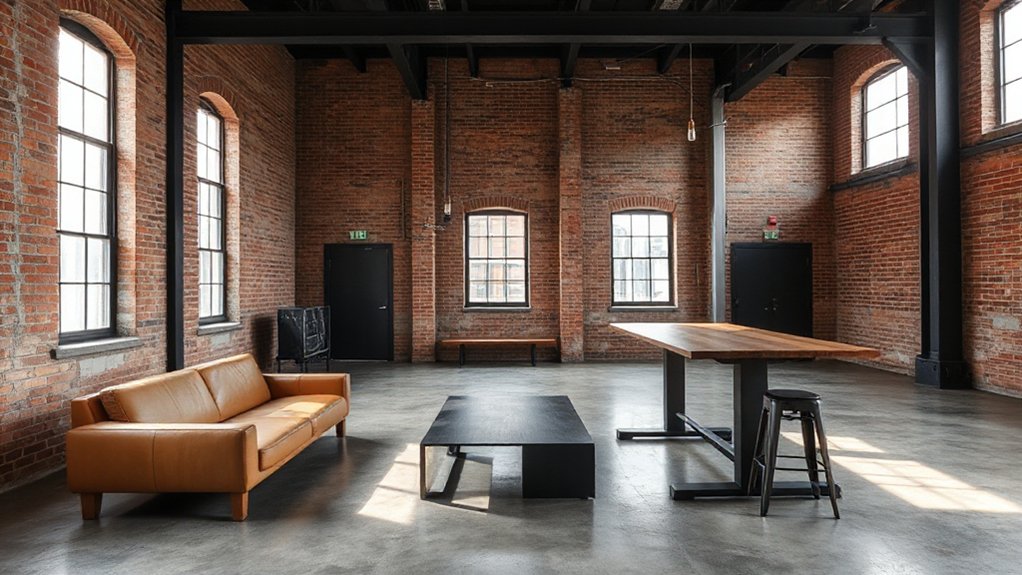
You don’t buy furniture for looks alone—you buy it to take hits and keep working. Choose solid-core materials like steel, hardwood, and thick leather, and skip anything hollow or fragile.
Then lock in modular, multiuse pieces that reconfigure fast and earn their floor space.
Prioritize Solid Core Materials
Why gamble on hollow builds in a space defined by steel and concrete? You don’t. You pick solid-core pieces that match the room’s weight and wear. Choose hardwood, thick plywood, or metal frames with real welds, not thin tubing and staples. Look for dense tops, tight joinery, and hardware you can tighten, not glued-on fixes.
Let Industrial materials do the work: oak, ash, blackened steel, cast iron, stone. Keep finishes matte, sealed, and easy to wipe down. Solid cores stay square, take hits, and age with a clean patina instead of sagging.
This supports minimalist aesthetics because you can own fewer items, rely on them longer, and keep the layout spare. Your furniture should feel anchored, not temporary.
Select Modular, Multiuse Pieces
Although industrial minimalism looks stripped down, it works best with modular, multiuse pieces that earn their floor space. Start with modular furniture you can reconfigure fast: a steel-and-wood shelving grid, stackable stools, and a sectional that splits into seats. Pick items that handle hard use and move easily when you change the layout.
Choose multiuse designs that cover daily needs without extras. A bench becomes extra seating, a coffee table lifts to desk height, and a storage ottoman holds tools, throws, or cables.
Go for straight lines, exposed hardware, and matte finishes that won’t show wear. Keep dimensions tight so circulation stays clear. If a piece can’t store, seat, or adapt, skip it. You’ll keep the room open and working.
Get Lighting and Hardware Right (Black, Brass, Steel)
If the walls and furniture set the industrial minimalist baseline, lighting and hardware lock it in. Choose lighting fixtures that read like tools: exposed bulbs, cage pendants, linear LEDs, track heads. Keep lines clean, shade profiles thin, and mounting obvious. Match color temperature across the space so it doesn’t feel patched together.
Commit to a tight metal palette: matte black for edge and contrast, brushed brass for controlled warmth, stainless or raw steel for shop-grade honesty. Don’t mix five tones; pick two, maybe three, and repeat them.
Specify durable hardware finishes on pulls, hinges, faucets, and switch plates, then carry the same finish to door levers and rail brackets. Use dimmers and hardwired runs to reduce visual noise.
Add Texture Without Clutter: Textiles, Art, Greenery
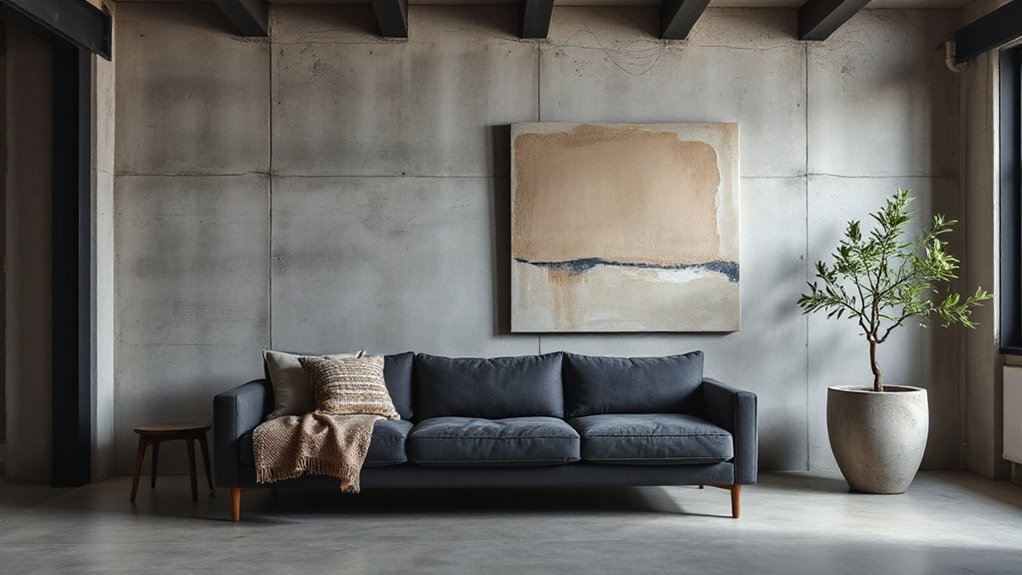
Where does an industrial minimalist room get its warmth without getting busy? You add tactile hits that stay disciplined. Start with Textile layering: one flatweave rug, one heavy throw, and a pair of linen cushions. Keep colors pinned to charcoal, sand, off-white. Let seams, weave, and weight do the work, not pattern.
Use art like signage: one large piece, matte frame, simple subject—architectural photo, line drawing, or abstract block. Mount it low and straight, or lean it on a shelf with nothing else competing.
For Greenery placement, go structural: a single tall plant in a black pot, or two small plants spaced wide. Put them where hard edges meet—corner, window, end of bench.
Fix Common Mistakes: Cold Rooms, Echo, Visual Noise
If your industrial minimalist room feels cold, you need warmth through texture, not more stuff.
If it echoes, you add soft surfaces and break up hard planes so sound doesn’t bounce.
If it looks noisy, you cut visual clutter fast—fewer items, tighter lines, cleaner zones.
Warmth Through Texture
Even when you nail the concrete, steel, and clean lines, an industrial minimalist room can still feel cold, loud, and visually restless. You don’t fix that with more stuff; you fix it with better surfaces. Build in textural warmth so the hard edges read intentional, not sterile.
Choose one or two honest materials and repeat them: oiled oak, wool felt, heavy linen, saddle leather, matte plaster. Keep the palette tight, then let texture do the work. Swap glossy finishes for brushed metal and honed stone.
Add a thick, low-pile rug underfoot, a wool throw on the sofa, and linen drapes that hang clean. You’re not decorating—you’re tuning. The result is tactile comfort that still looks stripped-down, durable, and industrial.
Reduce Echo And Clutter
Because industrial minimalism leans on hard planes—concrete floors, brick, steel, glass—it tends to amplify echo and turn small messes into visual noise. You fix it by adding soft mass where it counts: a dense rug with pad, heavy canvas drapes, felt-backed art, and upholstered seating.
Use soundproofing techniques that stay honest—acoustic panels in black wool, slatted wood with insulation, door sweeps, and sealed gaps around windows. Keep the palette tight so fixes disappear into the structure.
Then cut the clutter. Run strict clutter reduction strategies: one surface, one purpose; hide chargers in a cable tray; store tools in labeled bins; mount shelves, don’t stack. Edit décor to a few large pieces, not many small ones.
Frequently Asked Questions
How Can Renters Achieve Industrial Minimalism Without Permanent Renovations?
You can achieve industrial minimalism by using peel-and-stick concrete wallpaper, metal shelving, and Industrial decor accents. Choose Minimalist furniture with clean lines, add plug-in track lighting, use rugged textiles, and keep clutter locked away.
What’s the Typical Cost Range for an Industrial Minimalist Room Makeover?
You’ll typically spend $300–$3,000—coincidentally, that’s what most people hit when they swap in Industrial lighting and Minimalist furniture. Stick to paint, thrifted metal, concrete-look rugs; you won’t need contractors.
Which Cleaning Products Are Safest for Sealed Concrete and Exposed Brick?
You’ll keep sealed concrete and exposed brick safest with Eco friendly cleaners and pH neutral solutions. Use diluted castile soap or gentle stone cleaner. Avoid acids, bleach, ammonia, and harsh degreasers; they etch and weaken.
How Do You Childproof Industrial Minimalist Spaces With Sharp Metal Edges?
ER visits show falls cause about 50% of child injuries, so cap Sharp edges fast. You’ll add rubber U-guards, sand burrs, swap cornered tables, anchor furniture, and keep clear zones for real Child safety.
Where Can I Source Authentic Salvage Materials Without Overpaying?
Hit your local Salvage yard first; you’ll pay less if you buy dirty and haul it yourself. Hunt Reclaimed furniture at estate sales, demolition auctions, and reuse centers. Bring cash, measure twice, negotiate hard.
Conclusion
You don’t need a huge loft or a big budget to pull off industrial minimalist design. Start with what you’ve got: clear the layout, define zones, and let one honest material lead—concrete, brick, steel, or worn wood. Keep the palette tight, choose furniture that works hard, and use lighting like a tool, not decoration. If you worry it’ll feel cold, add textiles, control echo, and stop clutter at the door.